What is the Dutch signature dish?

Determining the single "signature dish" of the Netherlands is a delightful culinary puzzle, as the country’s food landscape is shaped by its maritime history, its rich dairy traditions, and the agricultural bounty from its low-lying lands. While outsiders might expect one definitive plate, Dutch cuisine reveals itself as a collection of strong regional identities and iconic snacks that have achieved national, and sometimes international, fame. The answer shifts depending on whether you are talking about a formal dinner, a historic staple, a street food favorite, or a simple breakfast choice.
# Staple Dinner Avg
Traditionally, the common person's evening meal, especially outside the historically grander southern regions, revolved around what is famously abbreviated as AVG: aardappelen, vlees, groente (potatoes, meat, and vegetables). This format forms the bedrock of what many consider truly traditional Dutch fare, historically designed to replenish the calories of laborers working long, hard hours.
The potato component is most often transformed into Stamppot, which takes mashed potatoes and mixes them with one or more vegetables. The name itself speaks to its character—a mashed or "stamped" preparation. The most classic version, the one people often mean when they simply say stamppot, is boerenkoolstamppot, which features curly kale mixed in. Other common vegetable additions include endive (Andijviestamppot), sauerkraut (Zuurkoolstamppot), or a mix of carrots and onions, which results in Hutspot.
Hutspot holds a special cultural place, particularly due to its association with the relief of Leiden in 1574. A historical anecdote notes that before potatoes arrived from South America, hutspot was originally made with parsnips, carrots, and onions. When serving hutspot, it is customary to create a small well, or kuiltje, in the center of the plated mash to hold the gravy from the accompanying slow-cooked meat, such as a karbonade (meat chop). This little dimple of gravy acts as a focal point, suggesting that the presentation of this humble meal is almost as important as its hearty components. Stamppot is a winter staple, often served with a thick, smoked sausage called rookworst.
# Maritime Pride
If the "signature" dish must represent the nation's history as a seafaring power, then Herring, specifically Hollandse Nieuwe (New Dutch Herring), takes the lead. The tradition dates back to the invention of gibbing in the 14th century, a curing method that extended the herring’s shelf life and paved the way for the Dutch Empire’s trade routes.
Hollandse Nieuwe is raw herring that has been pickled according to a specific process, and it only earns this title when caught between May and July. The classic presentation is an experience in itself: the fish is traditionally lifted by the tail, dipped into chopped raw onions, and eaten whole, dangling over the face. While this method might be an acquired taste for visitors, it is a direct link to the nation’s fishing heritage. It is worth noting that this raw preparation is eaten differently in Amsterdam, where the herring is often cut into pieces before serving.
# The Street Snack Pantheon
The Netherlands possesses an incredibly strong culture of fast food, often centered around deep-fried items served from snackbar windows or vending machine walls. While there isn't one single winner, a few deep-fried contenders vie for the title of most Dutch street food experience.
# Fried Icons
The Kroket (croquette) is one such icon. While the croquette exists elsewhere, the Dutch version is distinguished by its thick, crunchy breadcrumb crust and a savory ragout filling, commonly veal (kalfsvleeskroket) or beef (rundvleeskroket), though chicken, shrimp, or vegetable versions exist. It is frequently served simply with a side of mustard, or even placed on a slice of bread to make a broodje kroket. An estimated 75% of Dutch people consume them, leading to an average consumption of 29 per person annually, making it second only to the frikandel as a popular snack.
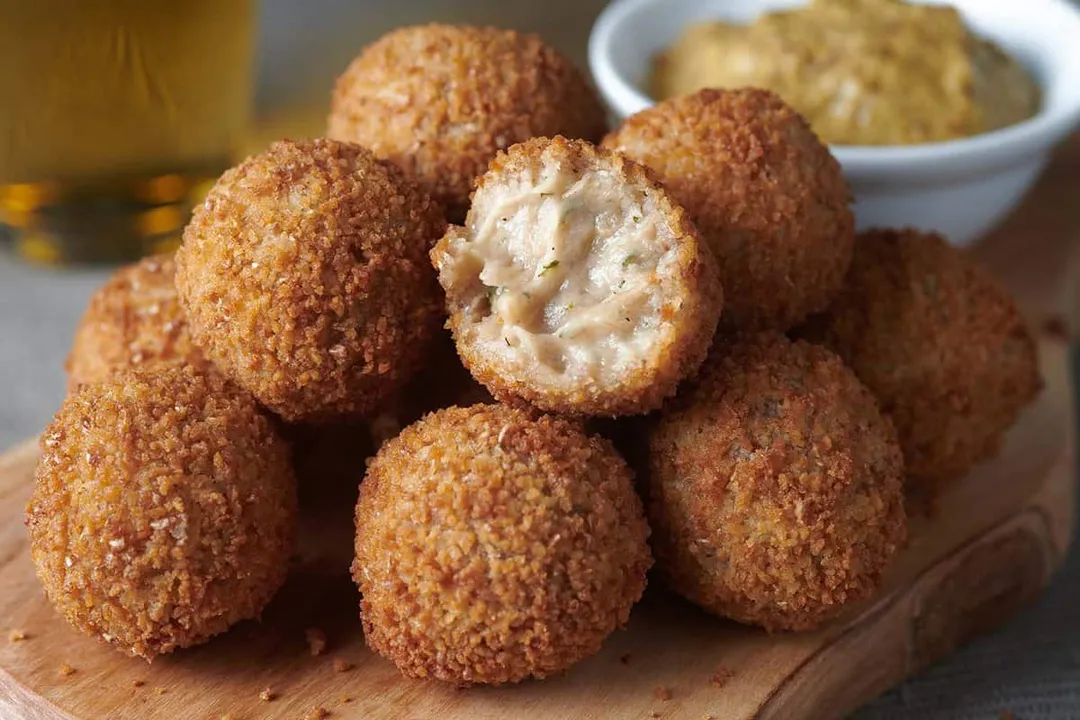
Its smaller, round cousin is the Bitterbal. These are essentially miniature, bite-sized versions of the kroket, filled with beef broth and butter-based ragout. They are essential for borreltijd (drinks time). A key point for anyone indulging is the extreme heat of the interior; the molten, savory broth inside remains scalding long after the exterior has cooled slightly.
When comparing the Kroket and the Bitterbal, one sees an interesting reflection of Dutch efficiency in snacking: the Kroket is often a quick lunch replacement (broodje kroket), a more substantial meal component, whereas the Bitterbal, being smaller and served in groups of three or more, is perfectly engineered for communal nibbling alongside drinks.
# Fry Fixation
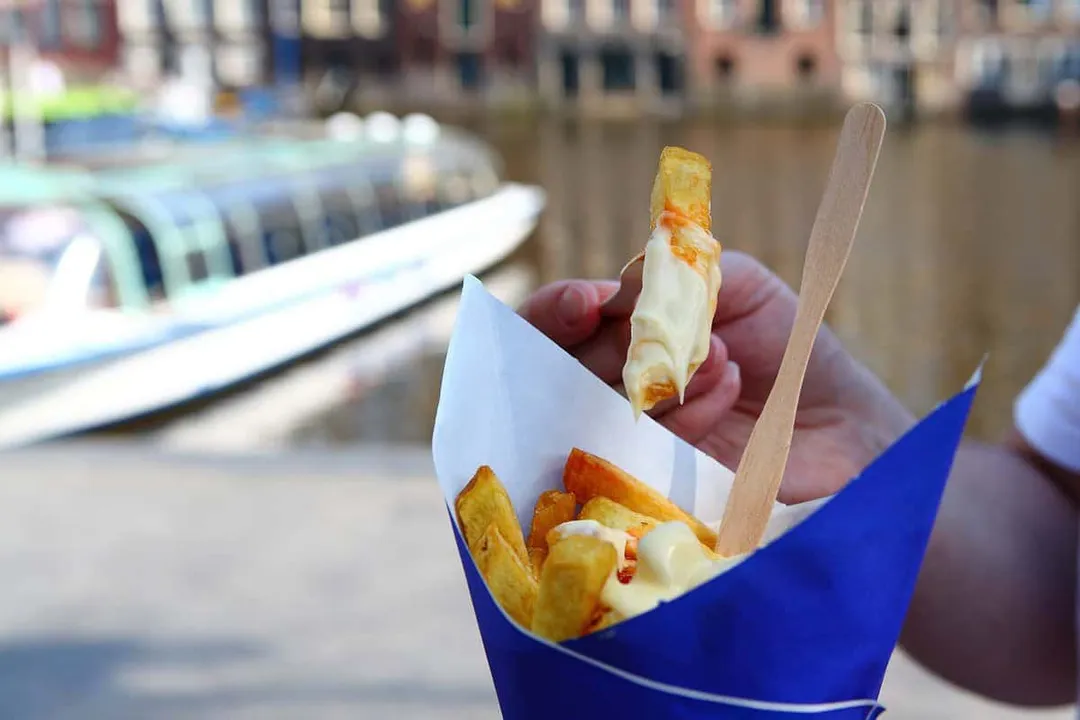
French fries, known as Patat or Friet, are central to the Dutch fast-food identity, often thicker than their American counterparts and rarely eaten with mere ketchup. The true signature preparation involves the choice of sauce. The most famous combination is patatje oorlog, or "fries at war," which involves smothering the fries in a mix of mayonnaise, peanut sauce (pindasaus), and chopped raw onion. The deep reliance on peanut sauce, which itself stems from Indonesian culinary influence, showcases how global trade shaped local snacking habits.
# Colonial Crossover
The colonial relationship with Indonesia profoundly shaped modern Dutch eating habits, leading to dishes that are now considered uniquely Dutch, even though their origins lie elsewhere. The most elaborate example of this fusion is Rijsttafel (rice table). This is an elaborate Indonesian feast offered in Dutch restaurants, involving dozens of small dishes served alongside white rice, showcasing everything from satay to sambal.
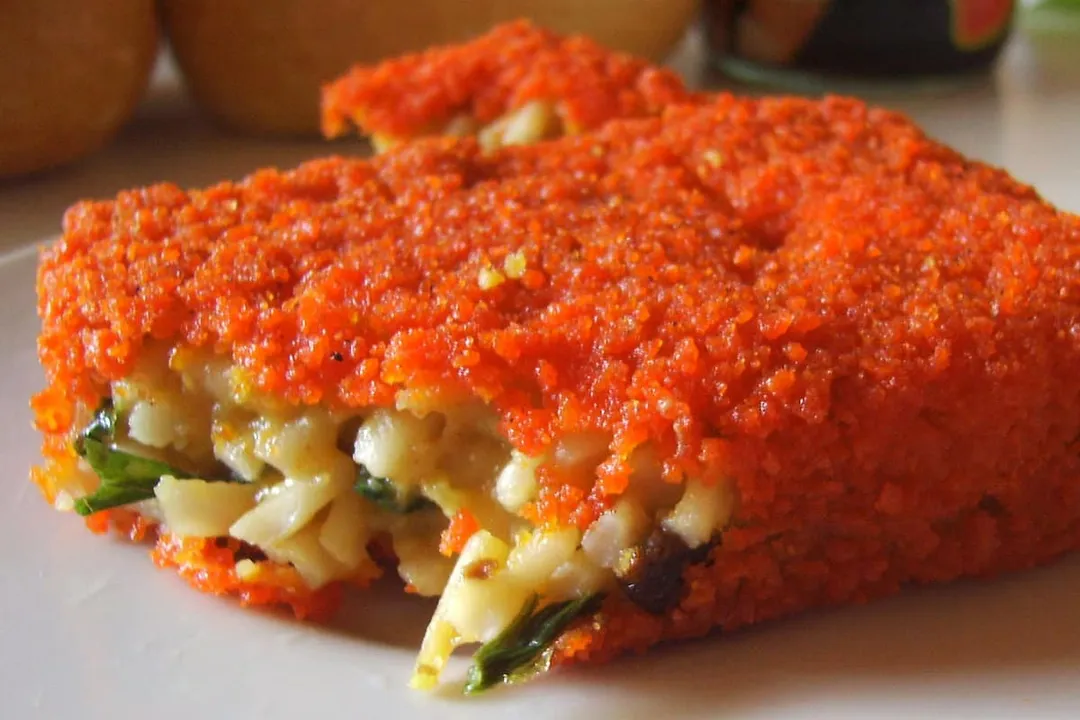
This influence permeates snack culture too, visible in fried items like Bamischijf (a breaded, fried disk of bami goreng noodles) and Nasischijf (a similar patty made from fried rice). The fact that the Chinese-Indonesian restaurant culture, which facilitated these fusions, has been acknowledged as Dutch intangible cultural heritage underscores its deep integration into the national culinary fabric.
# Sweet Icons and Daily Rituals
When the discussion turns to sweets, two items stand out: the iconic cookie and the historical winter treat.
# Waffles and Sugar
The Stroopwafel is arguably the dessert most recognized internationally. Originating in Gouda in the 19th century, bakers sought a way to use leftovers by pressing together thin layers of baked waffle batter with a sticky, sweet syrup (stroop) filling. While widely available, the true experience is having one made hot and fresh, where the caramel filling is warm and gooey.
For a taste of history, Oliebollen (literally "oily balls") are essential, though seasonal. These yeast-dough balls, akin to doughnuts, are deep-fried and heavily dusted with powdered sugar, primarily sold by mobile stands during the New Year's Eve celebrations. Interestingly, Dutch settlers brought a version of these treats to the American colonies, where they evolved into the modern doughnut.
# The Everyday Sweetness
Perhaps the most surprising aspect to visitors is the Dutch approach to breakfast and lunch, where sweetness reigns supreme on bread. The ubiquitous topping is Hagelslag, or chocolate sprinkles. The sheer scale of this habit is striking; the Dutch consume a staggering 14 billion kilos of hagelslag annually, indicating that this simple combination of buttered bread and sprinkles is a cultural institution for all ages.
For larger baked goods, the Appeltaart (apple pie) is a staple, often served warm with whipped cream. It's important to note that the version known in the US as "Dutch apple pie" (with a crumb topping) is just one style, contrasting with the traditional Dutch appeltaart which can feature a lattice top.
# Cheese and Dairy Depth
Given the geography—flat grasslands ideal for cattle—dairy, especially cheese, forms a critical pillar of Dutch cuisine. While Edam gets international recognition, Gouda is the most famous contribution. Gouda cheese production arguably dates back to 1184. The signature Dutch approach to cheese making involves aging, resulting in distinct textures and flavors that are legally defined by maturity. For instance, Jonge kaas (young cheese) is soft and mild (aged about 4 weeks), while Oude kaas (old cheese) is rich, savory, hard, and may exhibit a slight crumble due to salt crystals formed during 10 to 12 months of aging. This variation in aging means that a block of Gouda bought in Amsterdam is fundamentally different from a block aged for over a year, offering layers of flavor that factory-produced versions often lack.
# Regional Nuances
While national favorites exist, looking at the regions reveals distinct culinary personalities. The Northeast is meat-centric, known for hearty rye bread (roggebrood) and sausages like Gelderse rookworst. The South, particularly Limburg and Brabant, leans toward the Bourgondisch (Burgundian) style, featuring richer stews like hachee (beef stew with onions) and opulent pastries such as Limburgse vlaai.
The West—home to Amsterdam, Gouda, and the coast—is where many famous items converge: seafood like Hollandse Nieuwe, dairy products, and sweet pastries like the stroopwafel. This region is also the hub for the chocolate industry, thanks to the Van Houten process developed in Amsterdam, which allowed for the creation of cocoa powder and solidified chocolate. This history explains why chocolate-based items, from hagelslag to chocolate-covered snacks like Chocoladekruidnoten during the holidays, are so prevalent.
If one had to select the most essential Dutch food, it would likely be a tie between Stamppot for representing the nation's historic, caloric, and vegetable-forward domestic eating habits, and the Stroopwafel for being the universally recognized, sweet export. The true signature, however, is the blend—the ability to enjoy a spoonful of Indonesian-inspired peanut sauce on fried patat after eating a hearty potato and kale stamppot, all washed down with local beer.
Related Questions
#Citations
20 Traditional Dutch foods you must try in the Netherlands
Dutch cuisine - Wikipedia
12 Dishes to Try in the Netherlands | Be Inspired to Travel