What is the meaning of regional food?
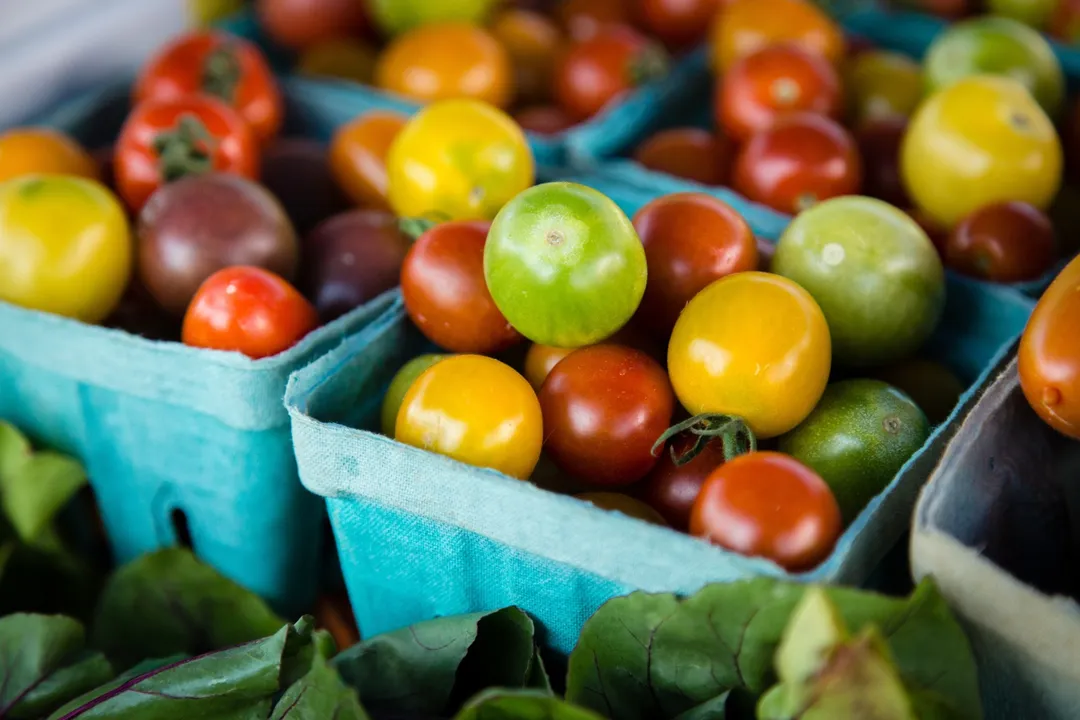
The meaning of regional food centers on geographic proximity and economic connection, yet it remains surprisingly fluid. While the term implies a clear boundary, it frequently shifts depending on whether you are asking a policymaker, a consumer, or an ecologist. In essence, regional food refers to agricultural products either originating from a specific geographic area or processed and distributed within that area, often with the intent of distinguishing it from globally sourced goods. [1][3]
# Defining the Area
The concept of "regional" lacks a single, legally protected definition across the board, leading to varied interpretations in practice. [4][9] The U.S. Department of Agriculture (USDA), for instance, uses several definitions depending on the program. The Agricultural Marketing Service (AMS) often employs a boundary where the distance between the product’s origin and the point of sale is no more than 400 miles, or where both the origin and final market reside within the same State, US territory, or Tribal land. [2] However, some community initiatives, like the Park Slope Food Coop, have established a much wider local radius, sometimes defining "local" as up to 500 miles. [9]
The term "regional" is also used to describe a scope that is generally larger than what is considered strictly "local," perhaps covering a whole county or several counties, or even an entire state. [4] This flexibility allows different communities to define their parameters based on local needs, product availability, and the specific values a purchaser wishes to promote with their food dollar. [2]
# Biophysical Limits
A purely administrative distance, like a set number of miles, often clashes with ecological reality. Research analyzing cities like Avignon suggests that even a relatively generous foodshed, sometimes proposed for fresh produce, is insufficient to supply all the food commodities a region consumes. [5] This is particularly true for animal products, which generally require more extensive grazing lands located at greater distances from the urban center. [5]
In response to this limitation, some analysts propose moving beyond simple circles around a city. The concept of the archipelago foodshed suggests redefining the regional boundary as a combination of different surrounding agricultural areas that are functionally linked to the city to ensure a full regional food supply. [5] This approach seeks to integrate biophysical realities—like soil type and geography—with necessary socio-economic dimensions, regardless of neat administrative lines. [5]

# The System Network
Understanding regional food requires looking past simple distance metrics to the system itself. A regional food system is complex, weaving together the entire network of food handling: production, aggregation, storage, processing, distribution, consumption, and even food loss and waste management. [2][6][10] The goal is to keep these steps concentrated within the geographical area where the final product is sold. [2] This contrasts sharply with the globalized system, where the average food item travels an estimated 1,500 to 2,500 miles to reach a consumer. [4]
A key characteristic of a regional food system is fostering meaningful connections between the people who grow the food and the people who eat it, ensuring consumers receive information about origin at the point of purchase. [2][6] This is often facilitated through direct-to-consumer channels like farmers' markets, roadside stands, or Community Supported Agriculture (CSA) programs, though these markets can overlap with, but do not entirely define, the regional scale. [2]
# Cuisine and Culture
The concept of "regional" also applies to traditional cuisine, which is a coherent tradition of food preparation rising from the daily lives and kitchens of a people over a long time in a specific area. [3] These regional food preparation traditions, customs, and ingredients combine to create unique dishes specific to that locale. [3] The variation in cuisine is dictated by factors such as local food availability, trade, varied climates, and distinct cooking practices. [3] Furthermore, consumers often show a preference for food originating nearby; for instance, nearly two-thirds of Germans prefer food from their own region. [7]

# Economic and Resilience Benefits
The shift toward regional food systems is driven by significant tangible benefits, particularly in economics and community security. When food dollars remain local, they circulate within the community for a longer time, building local wealth rather than extracting it to distant shareholders. [2][4][9] Independent, family-owned farms associated with local sales often provide more local jobs than their large-scale counterparts. [4] The resilience of these systems was brought into sharp focus during disruptions like the COVID-19 pandemic, when local producers were often the first to pivot and fill shortages, serving as an important safety net. [2][10]
Shorter supply chains resulting from regional sourcing translate into several advantages:
- Environmental Gains: Reduced reliance on fossil fuels for long-distance shipping, which lessens air and water pollution and lowers greenhouse gas emissions. [4]
- Quality: Food is often fresher, having spent less time in transit, which can translate to higher flavor and nutritional value since vitamin production often ceases after harvest. [1][4][7]
- Access: Local systems can be more responsive to specific community demands, such as specialized ethnic foods or varying organic standards, provided there is community involvement and control. [4]
A dedicated focus on regional infrastructure—spanning processing, aggregation, and distribution—is frequently cited as a method for bolstering this economic engine. [2] For example, USDA funding initiatives specifically target strengthening infrastructure in the "middle of the food supply chain" for locally and regionally produced goods. [2]
# Navigating the Regional Label
Given the marketing cachet the term "local" carries, and the lack of universal definitions for "regional," consumers and policymakers must navigate vague or misleading labels. [5][9] Terms like “from the region,” “from here,” or “home” are not reliable indicators of a true regional product unless accompanied by precise origin information. [7] Often, a product labeled as regional may only have one production step completed within the claimed region, with the rest of the process being globalized. [7]
The challenge for an authentic regional food enterprise is convincing consumers that the true cost of food produced using high-quality, smaller-scale methods is worth paying, as the global system often externalizes costs like environmental degradation or health impacts through low prices. [9]
The true measure of whether a product supports a regional system lies in whether the overall supply chain—from production to retail—is intentionally localized and supports community economic aims. One helpful method for assessing this is to look at the degree of integration.
| Indicator of True Regional System | Indicator of Globalized/Washed Product |
|---|---|
| Primary processing occurs within the region. [2] | Ingredients are sourced from multiple continents. [1] |
| Multiple touchpoints (farm, market, processor) are local entities. [10] | Product moves through massive, centralized distribution centers. [9] |
| Sales channel (e.g., CSA, local distributor) strengthens regional farmer income. [2][9] | Farmer receives less than $0.15$ of the consumer dollar. [9] |
| System actively addresses local food security and equity concerns. [4][10] | Labeling relies on vague geographic terms without verifiable sourcing data. [7] |
In many regions, the very infrastructure needed to support a scaled-up regional food system—like small-scale slaughterhouses or canneries—has consolidated or disappeared over the last fifty years, leaving a gap for mid-sized producers who are too large for a farmers' market but too small for global distributors. [9] Therefore, defining and supporting a regional food system means strategically investing in this missing infrastructure, such as processing and aggregation capacity, to create a network that is both economically viable and geographically logical based on biophysical factors. [2][5] This focus builds community engagement and creates a food system better equipped to handle supply shocks than one wholly reliant on distant transportation networks. [2]
Related Questions
#Citations
Regional cuisine - Wikipedia
[PDF] USDA Local and Regional Food Systems Resource Guide
FAQ's: Local and Regional Food Systems - WhyHunger
Regional Food Definition → Area → Sustainability
What does regional food mean? - FoodSHIFT 2030
What is a Regional Food System?
Regional and seasonal food - Teamfit
Why is there regional food? : r/NoStupidQuestions - Reddit
Local and Regional Food Systems - FoodPrint
The Regional Food System - ArcGIS StoryMaps