What foods are high in preservatives?
The existence of preservatives in food is fundamentally tied to how we get food from the farm to our tables safely and affordably across long distances and timeframes. These compounds are intentionally added to foods to slow down or prevent spoilage caused by microbial growth, such as mold, yeast, and bacteria, or to stop undesirable changes like fat oxidation, which causes rancidity. [1] Without them, many staples we rely on daily would spoil rapidly.
When we talk about foods high in preservatives, we are usually discussing items that have undergone significant processing to achieve extended shelf stability, moving them far away from their raw state. While nearly all packaged foods contain some form of additive to maintain quality, the concentration and variety of preservatives tend to increase with the degree of processing. [4][6]
# Function Safety
Preservatives broadly fall into categories based on what they are fighting. Antimicrobial preservatives inhibit the growth of microorganisms, which is critical for preventing foodborne illness and obvious spoilage. [1] Antioxidants, on the other hand, work against chemical deterioration. They stop fats from going rancid and prevent color changes that might make food unappetizing. [1]
Common examples found across many product labels include sulfites, which are often used in wine and dried fruits, and benzoates, frequently added to acidic foods like soft drinks and fruit juices to inhibit mold and yeast growth. [1] Sorbates are another common antimicrobial agent used in cheese, baked goods, and dried meats. [1]
A special, highly discussed group involves nitrites and nitrates. These are primarily used in cured meats, like bacon and hot dogs, not only to prevent the growth of Clostridium botulinum (the bacteria that causes botulism) but also to maintain the characteristic pink/red color and savory flavor we associate with cured products. [1]
# Common Sources

To identify foods rich in these additions, it helps to think about the necessity of the preservative. A fresh apple needs none; a shelf-stable, pre-sliced apple ring submerged in syrup needs several. Foods that remain edible, attractive, and safe at room temperature for months are clear indicators of substantial preservative use. [4]
The National Health Service (NHS) categorizes processed foods based on how much they have been altered. Minimally processed items, like bagged salad or pasteurized milk, retain most of their original nutrients and use few, if any, synthetic preservatives. [6] However, the category that raises the most concern regarding high preservative content is ultra-processed foods. These items are ready-to-eat formulations often containing ingredients not used in home cooking, designed for maximum convenience and shelf life. [4][6]
Foods that consistently appear on lists of items likely to contain multiple preservative types include:
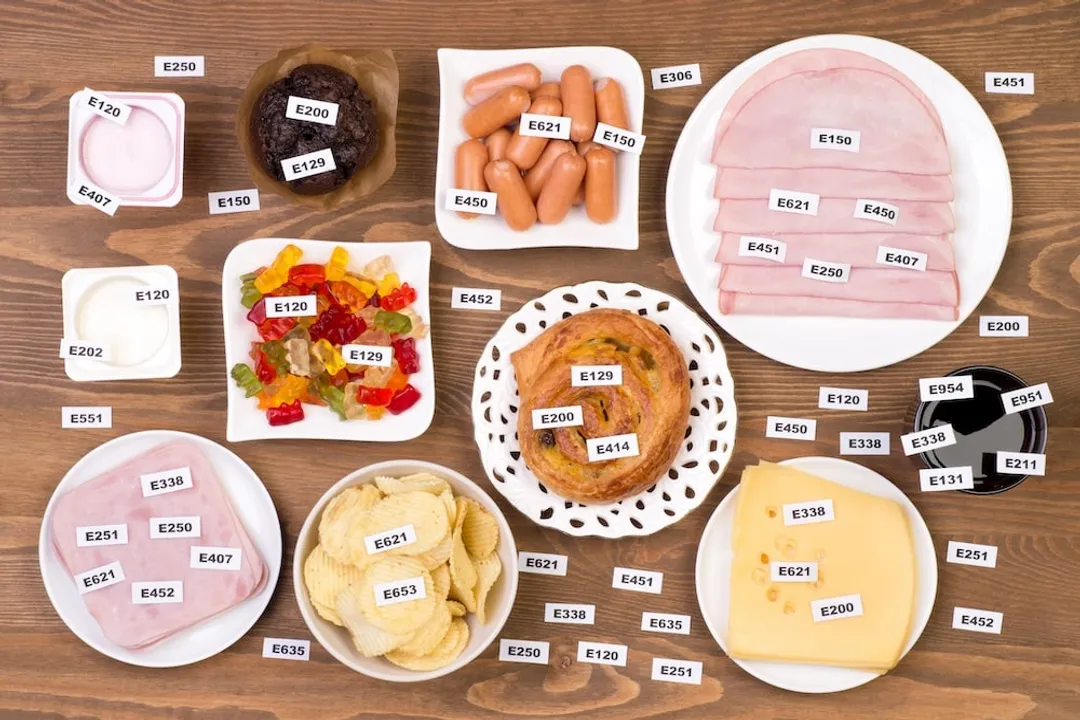
- Processed Meats: Bacon, sausages, hot dogs, and deli slices often rely on sodium nitrite to ensure safety and color stability. [2][7]
- Packaged Baked Goods: Shelf-stable breads, pastries, and cakes utilize mold inhibitors to keep them soft and safe long after they leave the oven. [4]
- Snack Foods: Chips, crackers, and dry snack mixes often contain antioxidants to prevent the oils from oxidizing and turning rancid. [4]
- Frozen Dinners and Ready Meals: These combinations of ingredients need various compounds to manage texture and inhibit microbial activity during freezing and reheating cycles. [4]
- Condiments and Sauces: Items like salad dressings, jarred pasta sauces, and ketchup often contain benzoates or sorbates to manage acidity and water content. [1]
# Additive Names

Reading the ingredient list is the only way to know for sure, but consumers looking to minimize their intake of synthetic preservatives often look for specific names that appear frequently across various high-preservation categories.
Several compounds are frequently flagged by consumer advocates for potential negative effects or being linked to long shelf life:
- BHA (Butylated hydroxyanisole) and BHT (Butylated hydroxytoluene): These are synthetic antioxidants often added to fats, oils, cereals, and chewing gum to prevent rancidity. [2][7] They are chemical cousins that serve the same purpose: preserving fat stability. [5]
- TBHQ (Tertiary butylhydroquinone): Another synthetic antioxidant, TBHQ is effective in preventing fats and oils from spoiling, commonly found in cooking oils, peanut butter, and processed crackers. [2][7]
- MSG (Monosodium Glutamate): While technically a flavor enhancer, it is frequently grouped with additives people choose to limit. It is present in many savory processed snacks, canned soups, and frozen meals. [2][3][7]
- Artificial Colors: While not strictly preservatives, colors like Yellow 5 and Yellow 6 are often necessary in highly processed items (like candies, bright drinks, or imitation cheese products) to restore the visual appeal lost during intense processing or to mimic natural pigments that degrade quickly. [5][7]
- High-Fructose Corn Syrup (HFCS): Though primarily a sweetener, its high concentration often contributes to shelf stability in beverages and processed baked goods, leading many concerned consumers to monitor its presence alongside traditional preservatives. [2][3][5]
# Gut Effects
The additives we consume aren't just interacting with the food; they are interacting with our bodies. Recent research has focused on how some of these common additives might affect the delicate balance of the gut microbiome—the trillions of bacteria living in our digestive tracts. [8]
While preservatives like nitrates are necessary for botulism prevention in certain products, other common additives, such as certain emulsifiers (compounds used to blend ingredients that normally separate, like oil and water), have been studied for their impact on gut health. [8] Emulsifiers, which are abundant in creamy sauces, ice creams, and some baked goods, are designed to keep textures smooth over time, but they may influence the gut lining or the microbial populations residing there. [8]
For someone aiming for a diet rich in whole foods, minimizing exposure to these specific compounds is easier because whole foods haven't needed the chemical intervention that extends the shelf life of their manufactured counterparts. [6]

# Reading Labels
Decoding ingredient lists is perhaps the most direct action a reader can take. Because preservatives are often legally required to be listed by name, ingredient lists can act as a direct inventory of the chemical additions. [1]
When standing in the grocery aisle, a good first step is to check the presence of the common chemical endings we discussed, like sulfates or benzoates. However, a more efficient approach for rapid assessment might be to prioritize looking for the specific acronyms that signal the use of synthetic antioxidants, as these are often used specifically to fight spoilage in fats and oils, which are common carriers of flavor and texture in processed foods. If a product high in vegetable oils or fats lists BHA, BHT, or TBHQ, it indicates that significant chemical intervention was used to stabilize those fats for a long shelf life.
This focus provides a quick filter: if you are buying a dry cracker that lists soybean oil followed by BHT, you know the primary preservation goal was fat stability. Conversely, if you pick up a jar of pickles listing sodium benzoate, the goal was antimicrobial action in an acidic environment. It is important to note that while sodium nitrite is essential for curing meat, seeing it on the label of a product you intend to eat regularly—like deli turkey—warrants consideration regarding intake frequency, especially since cured meats are also often high in sodium and saturated fat already.
An interesting consideration arises when looking at "natural" alternatives. Traditional food preservation methods, like heavily salting fish or using large amounts of sugar in fruit preserves, are technically effective preservatives that rely on creating an environment hostile to microbes (osmotic pressure). While these items are often perceived as "healthier" than chemically preserved versions, they frequently present high levels of sodium or sugar, shifting the health concern from synthetic chemicals to macronutrient overload. Therefore, a food preserved via a very high sugar content in a can should be mentally grouped with the ultra-processed items because the reason for preservation (shelf stability) necessitated a significant, non-natural alteration of the original food matrix. This means that even when avoiding the acronyms, the reader is still dealing with a highly manufactured product.
To put this into a simple checklist for routine shopping:
- Scan for length: Does the ingredient list exceed 10 items? Longer lists often correlate with more preservatives/additives.
- Check for acronyms: Immediately look for BHA, BHT, TBHQ.
- Look for -ates and -ites: Search for benzoates, sorbates, nitrites, or nitrates.
- Evaluate the base: Is the product shelf-stable (e.g., bread, jarred sauce, chips)? If yes, expect preservatives even if they aren't the most notorious ones.
By understanding why preservatives are used—to mimic the stability nature provides through freshness—it becomes clearer which categories of food are most dependent on them, allowing for more informed choices when navigating packaged aisles.
Related Questions
#Citations
What are preservatives and what are common examples used in food?
7 Food Additives And Preservatives To Avoid - Chefs for Seniors
12 Common Food Additives — Should You Avoid Them? - Healthline
7 examples of processed food | MD Anderson Cancer Center
7 Preservatives to Watch Out For - Small Axe Peppers
Processed foods - NHS
Top 5 Worst Food Preservatives in Processed Food - The Picky Eater
Common food preservative has unexpected effects on the gut ...