What are the sensors for food spoilage?

The shift away from relying solely on printed "best by" dates is gaining traction, driven by new technologies designed to give consumers and supply chains a direct measure of food quality. Instead of tracking time and temperature history, which are indirect measures, modern spoilage sensors aim to chemically detect the actual byproducts of microbial breakdown. [9][5] These sensors essentially act as highly sensitive noses embedded in or near the food package, reporting when the invisible chemical signals of decay become significant. [1][8]
# Volatile Indicators
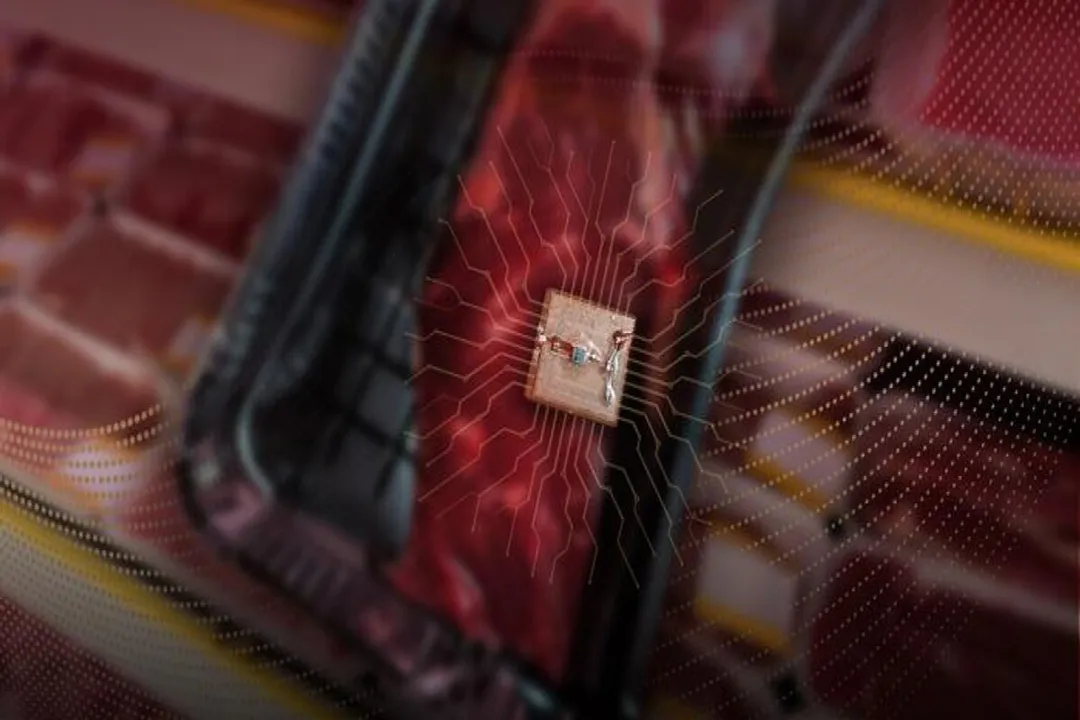
The fundamental principle behind most advanced food spoilage sensors is the detection of volatile organic compounds (VOCs). [1] When bacteria, yeasts, or molds begin to colonize food—whether it’s fresh meat, dairy, or produce—they metabolize the food's components and release characteristic gases into the headspace of the packaging. [3] These gases, which include amines, sulfur compounds, or alcohols, are the true indicators of spoilage. [9][5]
These chemical fingerprints are unique based on the type of spoilage organism and the substrate (the food itself). [3] Traditional quality control might rely on broad measurements of total volatile load, but newer research focuses on creating sensors that are specific to certain decay pathways. For example, a sensor tuned for high concentrations of ammonia might be exceptionally effective for tracking the spoilage of fish or poultry, where nitrogenous bases accumulate quickly. [3][5] Conversely, identifying specific short-chain fatty acids might be more relevant for dairy breakdown. While many systems detect general microbial activity, the real advancement lies in creating selective sensors. A sensor tuned for sulfur compounds might be perfect for aged fish, whereas one sensitive to ammonia might be better suited for poultry spoilage, demonstrating that a single "spoilage sensor" might not fit all food types. [3]
# Material Chemistry

The way these VOCs are detected varies widely, representing a fascinating intersection of chemistry, materials science, and engineering. [6] One of the most user-friendly concepts involves color-changing sensors integrated directly into packaging labels. [4] These smart labels are engineered so that when the target spoilage gases interact with a specific material layer, a chemical reaction occurs that alters the material's light absorption or reflection properties, causing a visible color shift. [4] This provides immediate, easy-to-read feedback directly to the consumer without needing special equipment. [4]
At a more complex level, researchers are developing highly advanced materials, such as those described by a team at MIT, which utilize structures resembling Velcro. [1] These microscopic structures are designed to have an extremely high surface area, allowing them to efficiently capture and concentrate the target gases from the surrounding environment. [1] Once trapped within this porous matrix, the presence of the VOCs can alter an electrical signal or an optical property, providing a measurable output. [6] This mechanism allows for high sensitivity, even when the concentration of spoilage gases is very low, early in the process. [1]
Other sensor designs rely on functionalized polymers that swell, change impedance, or alter their fluorescence upon binding with specific chemical species. [6] The material choice is critical; it must be inert toward the food itself, safe for food contact, and stable over the required shelf life, yet highly reactive to the minute amounts of spoilage markers. [7] When considering the implementation of these new sensor types, remember that the response time is as critical as the sensitivity. A sensor that takes 24 hours to show a color change when the food degrades in 12 hours is practically useless for preventing illness, even if technically accurate later on. Always inquire about the time-to-detection threshold for any specific sensor technology you encounter or consider for quality control. [8]

# Real Time
The drive behind these inventions is to move spoilage detection from the laboratory, which is slow and expensive, to the point of consumption or throughout the supply chain, in real time. [5][7] This is where the application of these sensors becomes truly disruptive.
# Supply Chain Monitoring
For logistics and distribution, sensors integrated into shipping containers or storage units can provide continuous data logs far superior to simple thermocouple readings. If a refrigeration unit briefly fails at a distribution hub, a chemical sensor within the affected pallet might register the resulting gas spike immediately, allowing for targeted inspection and diversion of compromised goods before they reach retail shelves. [8] This offers accountability across various handling points. [9]
# Consumer Feedback
For the end-user, the goal is to replace the binary, often misleading, printed date with an analog assessment of freshness. A smart label or an integrated sensor acts as a personalized freshness indicator for that specific product, factoring in its actual handling history, not just the manufacturer's best estimate. [9] This capability has the potential to significantly reduce consumer food waste by providing confidence to use food that is past its "sell-by" date but is still perfectly good, while simultaneously flagging items that spoiled prematurely due to unnoticed handling errors. [7]
While many initial consumer-focused systems are passive, relying on a visible change, the trend points toward connectivity. Imagine a future where the sensor data is wirelessly transmitted to a smartphone app, logging the food's life story directly from harvest to refrigerator, creating an objective record of safety and quality. [1][8] This move from simple time-temperature indicators to chemical indicators represents a maturation of food safety monitoring. [9]
# Future Assessment
The widespread adoption of chemical spoilage sensors hinges on several factors, primarily cost and scalability. Creating a highly selective, highly sensitive chemical sensor that can be mass-produced for pennies, like a standard barcode or label, remains the engineering hurdle. [7] However, as fabrication techniques improve, particularly those involving printed electronics or low-cost polymer casting, the cost barrier is expected to fall. [6]
It is important to recognize that these sensors are not intended to replace rigorous microbiological testing in manufacturing environments, but rather to serve as an essential, dynamic layer of quality assurance for the consumer and logistics partners. [5] By directly measuring the gaseous byproducts of decay, food spoilage sensors offer a chemical reality check, promising a safer food supply and a reduction in perfectly edible food being discarded prematurely. [9]
Related Questions
#Citations
Velcro-like food sensor detects spoilage and contamination
What sensor should I use for detecting food spoilage - Reddit
Recent advancements in chemosensors for the detection of food ...
A smart color-changing sensor detects food spoilage in consumer ...
pH sensor could be next-gen freshness predictor for food - SMU
Miniaturized wireless sensor enables real-time monitoring of food ...
5 Top Food Spoilage Detection Solutions for Packaging
Sensor detects food spoilage in real time & sends info to your phone
Forget expiration dates. Spoilage sensors could tell us when food ...