Why shouldn't food be cooked in a pressure cooker?
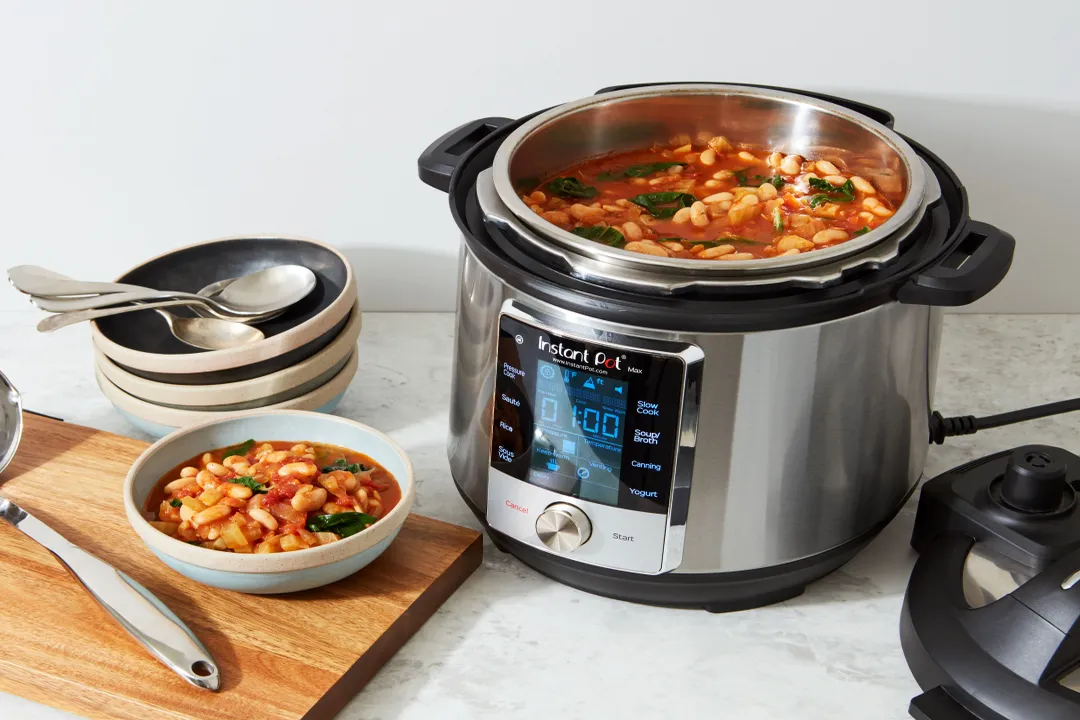
The intense heat and pressure found within this popular kitchen appliance, while lauded for drastically cutting down meal preparation time—sometimes by as much as two-thirds—are precisely the characteristics that cause many cooks and nutritionists to pause before relying on it for every dish. While proponents often point to its superiority over methods like prolonged boiling, the high-energy environment is not universally beneficial. The argument against the pressure cooker doesn't usually stem from outright danger—modern units are far safer than their predecessors—but rather from the trade-offs made in nutritional integrity and the final sensory experience of the food itself.
# Nutrient Leaching Risk
One of the main areas of concern revolves around the fate of delicate vitamins and minerals when exposed to the extreme conditions inside a pressurized vessel. Water-soluble vitamins, such as Vitamin C and various B vitamins, are inherently vulnerable to degradation under high temperatures. While the cooking time is compressed, the temperature inside a pressure cooker can reach around (or ), which is significantly hotter than regular boiling water.
When vegetables are cooked in the liquid, which is often the case unless steaming baskets are employed, these water-soluble compounds have a dual threat: destruction by heat and leaching into the surrounding water. Researchers have noted that while pressure cooking might outperform long boiling times for certain nutrients, if the method involves fully submerging the food, significant nutrient loss into the cooking liquid still occurs. For instance, in one comparison focusing on cruciferous greens, boiling eliminated about three-quarters of the cancer-fighting glucosinolates, while pressure cooking eliminated less than half; however, steaming—where the greens are not dunked in water—retained the highest levels overall. This suggests that for highly sensitive components, the immersion aspect of the standard pressure cooking process is the primary detractor when compared to methods like steaming.
This phenomenon was highlighted in a discussion where a study comparing cooking methods was found to have a significant methodological flaw: the pressure-cooked samples were placed in an ice-water bath for five minutes after cooking before freezing for nutrient analysis, unlike the other samples. Because water-soluble nutrients dissolve in water, this post-cooking soak likely caused an artificial, method-specific leaching of folates, carotenoids, and Vitamin C, rendering that specific comparison data questionable. Even without this extra step, the fact that nutrients leach out and are lost if the cooking liquid is discarded illustrates a point of consideration for those prioritizing micronutrient intake above all else.
# Texture Overkill
The very mechanism that makes the pressure cooker exceptional—its speed and ability to break down tough materials—can be a detriment to foods requiring a specific, delicate structure. The high temperatures and increased pressure cause proteins to denature more rapidly than they would in traditional cooking. For more tender ingredients, this speed translates directly into a mushy or overcooked outcome.
Delicate proteins, such as those found in fish, are notorious for becoming flaky in a good way when cooked gently; the same appliance can easily turn that desirable flakiness into a uniform, over-processed texture. Similarly, while tough cuts of meat and dried legumes benefit immensely from this breakdown of connective tissue and starches, the same process applied to softer vegetables can render them past their prime long before the timer signals completion. If the goal is a slight tenderizing while maintaining a desirable al dente bite, the narrow window of safety offered by a pressure cooker can be hard to manage.
When we consider foods where surface texture is crucial, the pressure cooker is fundamentally incapable of providing the desired result. Dishes relying on the Maillard reaction—that complex chemical process that develops deep, savory flavors and browning on meats or the crispness on vegetables—cannot achieve this within a sealed, wet, high-pressure environment. If you want a roast with a deep, browned crust or caramelized vegetables, the pressure cooker will not suffice; these reactions require direct, dry, high heat typically achieved through roasting or searing.
To better visualize this trade-off between speed and structural integrity, consider this breakdown based on typical kitchen goals:
| Desired Outcome | Best Method (Based on Source Insights) | Pressure Cooker Suitability | Reason Why Not (If Applicable) |
|---|---|---|---|
| Maximum Anti-Nutrient Reduction (Beans/Legumes) | Pressure Cooking (with pre-soak) | Excellent | N/A (It is beneficial here) |
| Maximum Vitamin C Retention (Leafy Greens) | Steaming | Fair to Poor | Immersion in water causes leaching, even if quick. |
| Tender, Flavorful Tough Cuts (Stew Meat, Brisket) | Pressure Cooking | Excellent | N/A (It excels here) |
| Crisp/Seared Exterior (Vegetables, Steak) | Sautéing / Roasting | Not Applicable | Cannot achieve browning or necessary dry heat. |
This comparison clarifies that the question isn't whether the appliance is inherently "bad," but whether the necessary culinary outcome requires sacrificing time for a result the appliance simply cannot produce.
# Flavor Development Gap
While saving time is a significant draw, that same acceleration often comes at the expense of flavor complexity. Conventional cooking methods, particularly slow simmering or braising, allow time for components within the food—fats, acids, aromatics, and proteins—to interact, break down, and meld into deeper, more nuanced profiles. This gradual integration creates complexity that a 15-minute cooking cycle simply cannot replicate, even if the texture is technically "done".
For items like stocks or bone broths, traditional cooks often insist on hours of low simmering to extract the deepest essence from the bones and connective tissues. While a pressure cooker can achieve this in a fraction of the time, some argue the resulting liquid lacks the same depth of character because the chemical changes occurred too rapidly. If your priority in the kitchen is achieving a profound, slow-simmered richness—a trait often associated with classic, time-intensive cuisine—the pressure cooker forces a significant compromise.
# Process Control Limits
A practical drawback that often gets overlooked until you’re halfway through cooking is the complete lack of mid-cook intervention. In a standard stovetop pot or even an oven, a cook can lift the lid, taste the sauce, add a pinch of salt, introduce an herb, or check the tenderness of a vegetable. Once a pressure cooker is sealed and pressurized, that control vanishes.
This inability to adjust seasoning or correct a slight over-seasoning mid-cycle is a major reason why some cooks, particularly those used to constant tasting and adjustment, prefer traditional methods. Even modern electric cookers have built-in safety mechanisms to prevent opening the lid when under pressure, meaning any flavor correction must wait until the entire (though short) cooking cycle is complete. For home cooks who manage multiple elements simultaneously, relying on a device that requires absolute faith in the initial measurements can be stressful. If you forget to add the herbs or realize you need more acidity, you are locked in until the pressure is released.

# Safety Precautions
While the safety profile of modern electric pressure cookers has improved significantly over older stovetop models—with features designed to prevent opening the lid prematurely—risks are not entirely absent. The most immediate concern is the handling of the intense, high-pressure steam released during depressurization, which poses a genuine risk of severe burns or scalding if proper caution is not exercised.
Furthermore, while rare with well-maintained contemporary units, the potential for component failure leading to over-pressurization still exists. One critical, non-malfunction-related safety issue arises when using the quick-release valve on thick mixtures. Recipes involving items like chili, porridge, or thick bean dishes risk trapping steam pockets within the food itself; a sudden pressure release can cause these pockets to rupture explosively, spraying hot food everywhere. This necessitates using a natural pressure release for dense recipes, adding time back into the process and undermining some of the primary benefits of speed. Even for the beginner, knowing the precise fill lines—never exceeding two-thirds full, and only half-full for expanding foods like grains or legumes—is vital to preventing issues like blockages in the release valve.
To manage these potential pitfalls, the cautious home cook should internalize a few operational non-negotiables, even when aiming for maximum speed. If you are cooking something that expands or foams (like beans or grains), you must not fill the pot more than half full, regardless of the "max fill" line indicated for slow cooking. Also, always perform a natural release for thick recipes; if a quick release is absolutely necessary, a gentle jiggle of the appliance beforehand can help release trapped steam pockets, minimizing the chance of a messy eruption.
# Flavor Development Gap
While the acceleration is fantastic for achieving basic doneness, the resulting flavor profile often lacks the depth that comes from extended, low-and-slow cooking. This is particularly relevant when cooking savory dishes where Maillard reactions and the slow melding of fat and moisture build character over time. The pressure cooker creates a tender final product, but that tenderness can mask a lack of flavor integration.
For those accustomed to cooking with time as an ingredient—allowing wine to reduce, connective tissue to slowly dissolve into gelatin, or spices to infuse deeply—the pressure cooker feels like a shortcut that bypasses necessary chemical stages. A good way to mitigate this for dishes where the liquid is retained is to use the pressure cooker for the initial tough cook, then transfer the contents to an open pot on the stove to reduce the liquid for an extra twenty minutes to concentrate those flavors. This hybrid approach acknowledges the time savings of pressure cooking while addressing the flavor development gap inherent in the sealed environment. You are essentially trading a few minutes of stovetop time for a noticeable increase in flavor complexity that the pressure cooker alone sacrifices.
#Videos
Is your Pressure Cooker Destroying Nutrients? - YouTube
Related Questions
#Citations
I found research on NEGATIVE effects of pressure cooking ... - Reddit
Is your Pressure Cooker Destroying Nutrients? - YouTube
What are the disadvantages of pressure cooker food? | ZHENNENG
Is Pressure Cooking Healthy and Safe? % Kitchen Stewardship
Are Nutrients Preserved by Pressure Cooking? | NutritionFacts.org