Who came up with food preservation?
The necessity of keeping food from spoiling predates recorded history; it is a fundamental requirement for human civilization, allowing populations to survive winters, endure long voyages, and sustain large armies far from fertile fields. [2] Before the scientific understanding of bacteria and decay mechanisms, methods were empirical, relying on harsh environments or chemical changes. People mastered drying under the sun, burying meats in salt, or using smoke from fires, all techniques designed to create conditions hostile to spoilage organisms. [2] Yet, these ancient methods had limitations: dried food was often poor quality, and heavily salted or smoked items didn't appeal to everyone, especially not the state looking to provision troops efficiently.
# Military Demand
The real catalyst for the next great leap in preservation came not from a kitchen, but from a battlefield, or rather, the preparation for one. In the late 18th and early 19th centuries, supplying the massive armies of the Napoleonic Wars became a logistical nightmare for the French government. [5][7] Feeding soldiers effectively across long campaigns was crucial to Napoleon Bonaparte’s success, leading him to recognize the urgent need for a reliable way to transport non-perishable rations. [5] In 1809, Napoleon offered a substantial reward—a prize of 12,000 francs—to anyone who could devise a practical, effective method for preserving food in large quantities that could be transported easily. [4][5][7] This challenge transformed food preservation from a domestic art into a matter of national security and industrial innovation. [5]
# The Confectioner
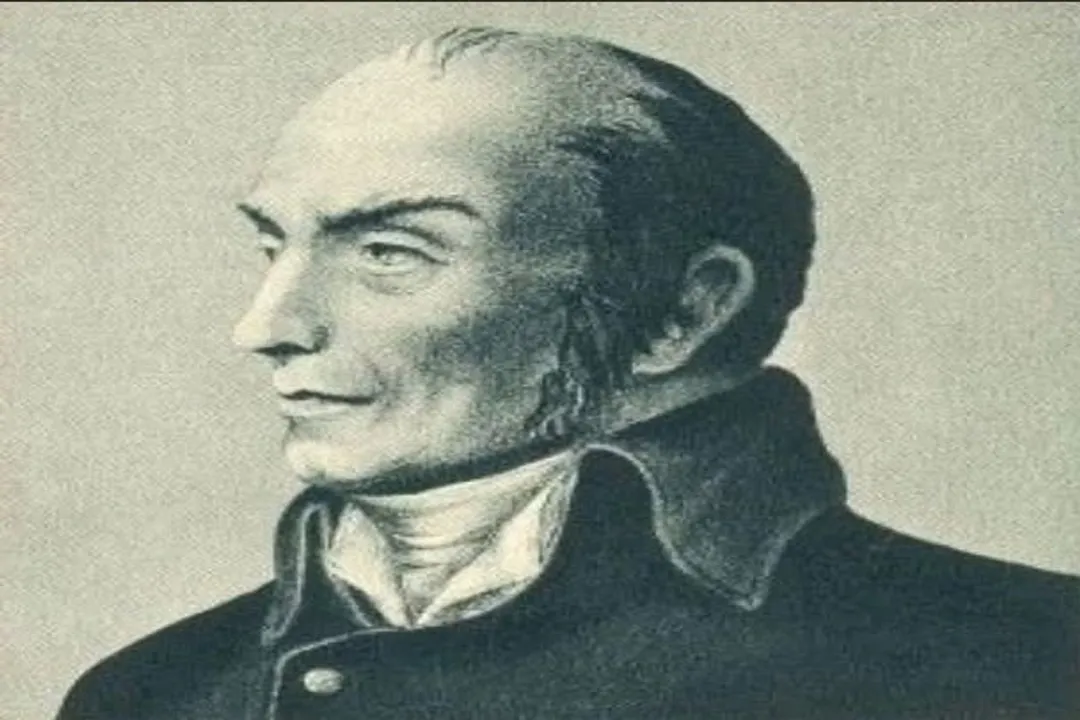
The man who answered this call was Nicolas Appert, a French confectioner, brewer, distiller, and even an early photographer, hailing from Châlons-en-Champagne. [1][4][6] Appert began experimenting with food preservation possibly as early as 1795, long before the official prize was announced. [6] His approach was purely practical; he was not a scientist steeped in microbiology—that knowledge would come later with Louis Pasteur. [5] Appert simply observed what worked. He noticed that sealing wine in bottles and then heating them seemed to keep the wine fresh for extended periods. [6] He then applied this empirical observation to solid foods. [5]
Appert’s process, which eventually won him the prize in 1810, involved carefully packing food—meats, vegetables, dairy products—into thick glass bottles, sealing the tops with cork and wax, and then submerging the bottles in boiling water for varying lengths of time. [1][4] The key realization was that the combination of sealing and heating was what protected the contents. [6] When the process was complete, the food inside remained edible months later, even after being transported across rough terrain. [5] Appert had essentially discovered pasteurization and thermal sterilization without understanding the underlying microbial theory. [5] He simply knew that sealing the air out and applying heat stopped the rot. [5] It is a fascinating example of innovation born from necessity, where practical success precedes scientific explanation. [5]
# Glass Limits
While Appert’s method was revolutionary, it had practical drawbacks, particularly for the military use Napoleon intended. Glass bottles, even thick ones, were heavy and prone to breakage, which was disastrous for bulk transport and field rations. [4][7] The innovation needed a more durable container.
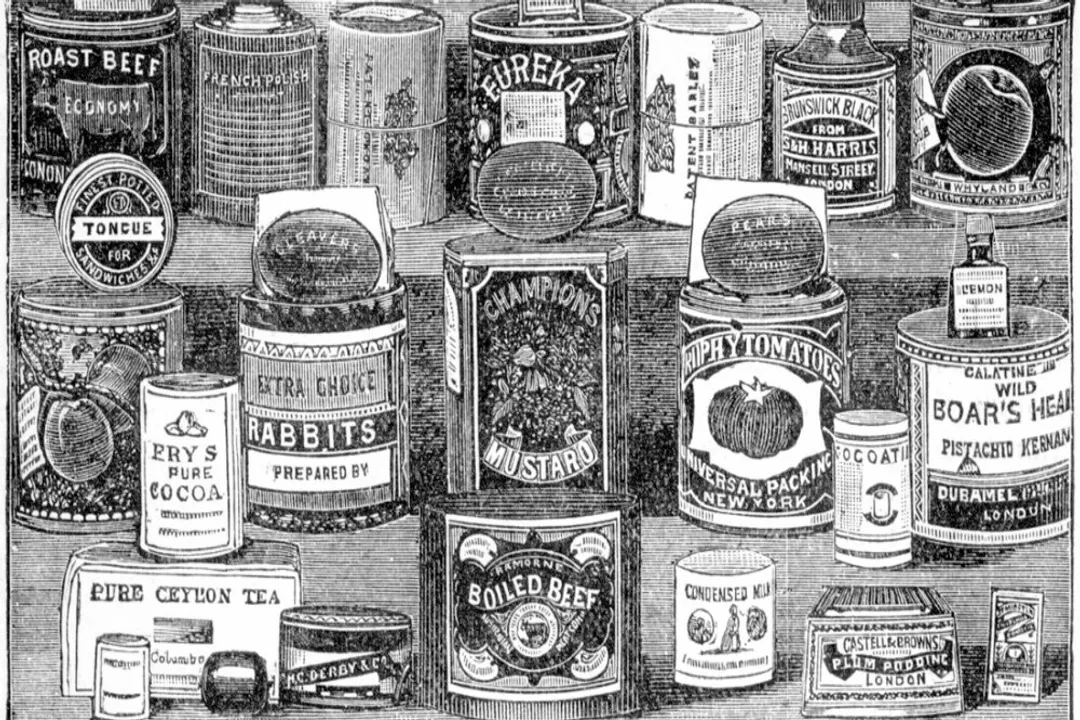
Almost immediately after Appert secured his prize, the focus shifted to metal. In 1810, the same year Appert received his reward, an Englishman named Peter Durand patented a container made of tin-plated iron—the tin can. [4][7] This substitution of glass with metal was the final piece of the puzzle needed to transform Appert’s kitchen technique into a large-scale industrial process. [5] The early cans, however, were far from the easy-open containers we know today. They were often crudely made, very thick, and heavy, requiring a hammer and chisel to breach their seal. [7] Opening one required significant effort and could easily damage the contents. [7]
| Preservation Stage | Inventor/Contributor | Approximate Date | Key Material | Primary Goal |
|---|---|---|---|---|
| Empirical Methods | Ancient Peoples | Prehistory | Salt, Smoke, Sun | Immediate Survival |
| Thermal Sterilization | Nicolas Appert | 1809 | Thick Glass Bottles | Reliable Military Rations |
| Canning Patent | Peter Durand | 1810 | Tin-Plated Iron | Durability and Transport |
This historical progression highlights a crucial point in technological adoption: the concept (heat processing sealed food) is established by one person in one material, but mass adoption often requires a secondary innovator to adapt the concept to a superior, more scalable material. [4]
# Scientific Confirmation
For several decades following Appert’s breakthrough, food was preserved using his empirical methods, but the why remained a mystery. People knew sealing and boiling worked, but they didn't know what they were killing. [5] It took the work of Louis Pasteur in the mid-19th century to provide the scientific foundation for Appert's success. [5] Pasteur’s studies on fermentation and spoilage demonstrated the existence of microorganisms, proving that heating food sufficiently high and sealing it in an airtight container killed these "germs" and prevented new ones from entering. [5] This scientific validation turned food preservation into a field understood by chemistry and biology, not just observation. [5]
# The Home Front
The adoption of canning technology was slow initially, tied up with military logistics and the expense/difficulty of early canning equipment. [7] However, the utility for civilian life soon became apparent, especially as the containers became slightly more refined and less brutally heavy. [5] During the American Civil War, for instance, canned goods became an important food source for soldiers, further cementing the practice's viability beyond the original Napoleonic context. [5] As the 20th century dawned, the process became more industrialized and accessible. The introduction of safer, thinner cans and improved sealing techniques meant that these preserved foods moved from being a novelty or a military staple to being a fixture in the average pantry. [7]
It's interesting to note that while Appert is celebrated for canning, the general principle of preservation—that of removing water or inhibiting microbial growth—continues to evolve. For example, freeze-drying, a modern technique that removes water at very low temperatures to preserve texture and nutrients better than traditional drying, owes its philosophical lineage to the initial quest to defeat decay. [2] Appert's work provided the blueprint: control the environment inside the package.
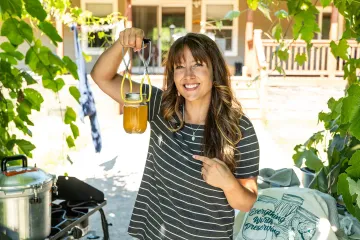
Beyond the high-stakes military origins, the knowledge filtered down to the domestic sphere. The introduction of home canning equipment, which allowed families to process their own garden harvests, democratized the concept. [5][8] This transition from an industrial, government-sponsored project to something done seasonally in a home kitchen shows the true staying power of the innovation. When you look at a modern jar of pickles or a can of soup, you are witnessing the direct legacy of a French confectioner trying to solve a supply problem for an emperor nearly two centuries ago. [3][7] The development wasn't a single, sudden event, but rather a chain reaction: an urgent need inspired an empirical solution, which was then improved by material science, and finally explained by microbiology. [5]
Related Questions
#Citations
Nicolas Appert - Wikipedia
Historical Origins of Food Preservation
The practice of canning was invented by Frenchman Nicolas Appert ...
Nicolas Appert | Biography & Facts - Britannica
The Evolution of Home Canning: From Napoleon's Prize to Modern ...
Food preservation - La Naucelloise, canning regional products
How Canned Food Revolutionized The Way We Eat | HISTORY
Can It: A History of Food Storage | The Square PHX - Rosson House