Health Benefits of Plantain
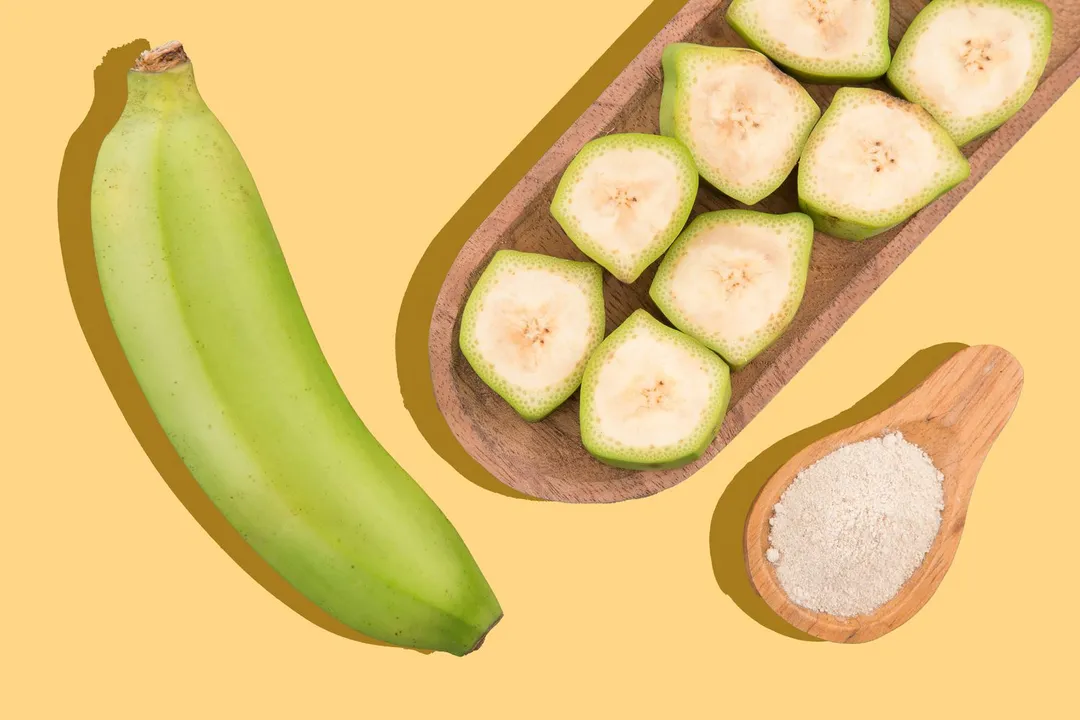
This close relative of the banana, often mistaken for its sweeter counterpart, is a foundational food across tropical latitudes, serving as a versatile, starchy cornerstone in African, Caribbean, and Latin American diets. Unlike the Cavendish banana common in Western markets, the plantain is significantly starchier, contains less natural sugar when unripe, and is almost universally consumed cooked, treating it more akin to a vegetable like the potato than a raw fruit. This fundamental difference in preparation dictates its nutritional impact, transforming its chemical composition from a high-starch, low-sugar base to a source of readily available energy and essential micronutrients when ripe. Because plantain trees fruit year-round, they represent a reliable and accessible food source, establishing themselves as the tenth most important staple food feeding the world today, according to data from the Plantain Council.
# Nutritional Base

A detailed look at the plantain's composition reveals why it holds such importance in traditional diets. Taking a one-cup serving of raw plantain (approximately 148 grams) as a baseline, the fruit delivers about 181 calories, dominated by carbohydrates at nearly 47.2 grams. It offers a respectable 2.5 grams of dietary fiber in this raw state. Crucially, the sugar content is relatively low in the raw form, sitting around 25.9 grams, while fat and protein remain negligible, around 0.5 grams and 1.9 grams, respectively.
When the plantain ripens and is then baked—a common preparation for yellow plantains—the nutrient profile shifts. A one-cup serving (about 139 grams) of baked plantain shows an increase to roughly 215 calories, with carbohydrates climbing to 57.5 grams and sugars rising to about 29.6 grams. Fiber also sees a slight increase to 3.1 grams, but the most important observation is the stability of key minerals. For instance, this serving provides 721 mg of potassium in its raw state, dropping slightly to 663 mg when baked. This mineral density is a consistent feature across ripeness stages. For comparison, a cup of boiled green plantain is leaner, registering 166 calories, 40 grams of carbohydrates, but a robust 4 grams of fiber, with only 3 grams of sugar, and nearly negligible fat (0 grams). These figures illustrate that the preparation method—boiling versus baking versus frying—significantly alters the final caloric load, fat content, and vitamin retention, making a blanket statement about "plantain nutrition" incomplete without context.
# Digestive Support
The plantain shines brightly as a digestive aid, primarily due to its significant fiber content and the presence of resistant starch, especially in its unripe, green phase. Dietary fiber is essential because it adds necessary bulk to food intake, which directly facilitates regular bowel movements. This bulkiness helps prevent issues such as constipation, and may also lower the risk associated with developing hemorrhoids or the small pouches in the large intestine known as diverticular disease. Fiber further contributes to weight management by increasing the sensation of fullness after a meal, thereby potentially curbing the urge to snack on less healthy options.
The presence of resistant starch elevates the digestive benefits beyond simple bulk. This specific type of fiber resists complete digestion in the small intestine, allowing it to travel to the large intestine where it is fermented by beneficial gut bacteria. This fermentation process yields short-chain fatty acids (SCFAs), which are vital for improving both gut and metabolic health. Furthermore, resistant starch functions as a prebiotic, effectively acting as fuel to help healthy colon bacteria thrive. In terms of mineral stability, potassium and magnesium—both present in the fruit—also contribute to digestive wellness by supporting smooth muscle contraction necessary for regular function.
# Blood Sugar Management
Managing blood glucose is a key area where the plantain's starch structure offers advantages, though this benefit is highly dependent on the fruit's maturity. Green, unripe plantains are notably high in resistant starch, which, by its nature, does not cause the immediate spike in blood sugar associated with easily digestible simple sugars. Research specifically measuring the glycemic index (GI) of plantain products shows that when unripe plantains are boiled (BUP), the GI value registered as low as 44.9. Even roasted ripe plantain (RRP) showed a very low GI of 38 in one evaluation. This slower rate of glucose release suggests plantain-based meals, particularly those prepared by boiling, can promote a lower postprandial (after-meal) blood glucose response, which is beneficial for those tracking their sugar levels.
However, it is important to contrast these findings with preparation styles common in staple food preparation. A review noted that certain fufu preparations made from plantains in Nigeria exhibited high GI values ranging from 75.0% to 97.0%. This significant difference underscores the point that the final glycemic impact is determined not just by the inherent starch content, but by how the food is processed, combined, and served. For individuals with diabetes or insulin resistance, pairing the carbohydrate source with protein and additional fiber is a critical strategy to promote steady energy and prevent sharp blood sugar excursions. This concept of utilizing complex carbohydrates that digest slowly for sustained energy is a core principle, making plantains an ideal energy source for active lifestyles, even while acknowledging that very ripe, sweet varieties will inherently contain more simple sugars.
When analyzing the relationship between cooking and mineral stability, an interesting pattern emerges: minerals like potassium and magnesium, vital for metabolism and insulin regulation, tend to remain relatively concentrated even after boiling or frying. This contrasts sharply with water-soluble vitamins like C and folate, which degrade when subjected to high heat. Therefore, plantains serve as a reliable source of minerals that support glucose regulation regardless of cooking method, while their efficacy for acute antioxidant needs is contingent upon minimal processing. For instance, pairing boiled green plantains with a protein source right after cooking creates a meal that delivers slow-release energy from complex carbs alongside blood-sugar-stabilizing minerals, achieving an efficiency that simple-carb snacks cannot match.
# Essential Micronutrients
Beyond fiber, plantains are powerhouses of vitamins and minerals that support numerous bodily systems. Among the most abundant is potassium, a critical electrolyte ranking as the third-most abundant mineral in the human body. Potassium plays a significant role in counteracting the effects of high sodium intake, which is prevalent in many Western diets, thereby helping to naturally regulate blood pressure. Adequate potassium is linked to a lower risk profile for stroke, osteoporosis, and renal disease, while also ensuring proper skeletal and smooth muscle contraction, which affects digestion and heart rhythm. Plantains often contain more potassium than the commonly cited banana, making them an excellent source to meet daily targets.
Magnesium is another key mineral provided by the fruit; a deficiency in this mineral is widely observed in modern diets. Magnesium influences over 300 biochemical reactions, aiding in blood pressure regulation, contributing to bone health (by affecting calcium absorption), and potentially lowering the risk of type 2 diabetes by influencing carbohydrate metabolism and insulin function.
Plantains also contribute meaningfully to antioxidant defense through Vitamin C and Vitamin A. A single cup can supply over 35% of the daily Vitamin C requirement. This essential vitamin, which the body cannot produce or store, is fundamental for tissue repair, forming proteins needed for skin, tendons, ligaments, and blood vessels, while also acting as a powerful antioxidant against damaging free radicals. Vitamin A, also present, works alongside Vitamin C to control immune response, ensuring illnesses are kept at bay. Moreover, Vitamin A is crucial for skin health, cell growth, and is necessary for proper wound healing.
The brain and mood stability are supported by Vitamin B6 (pyridoxine), with one serving providing up to 24% of the daily need. B6 is essential for generating neurotransmitters like serotonin and norepinephrine, which govern stable moods, and melatonin, which regulates the body’s sleep clock. Furthermore, B6 helps control homocysteine levels, an amino acid associated with nervous system damage and heart disease.
# Cooking Impact
The way a plantain is prepared directly impacts both its macronutrient profile and its micro-nutrient load, demanding attention from the health-conscious consumer. As mentioned, plantains are incredibly versatile: they can be baked, boiled, grilled, roasted, or fried.
# Preparation Comparison
| Preparation Type | Texture/Taste | Key Nutritional Feature | Potential Drawback |
|---|---|---|---|
| Green (Unripe) | Firm, Starchy, Potato-like | High Resistant Starch (Prebiotic) | Needs extensive cooking |
| Yellow (Ripe) | Softer, Sweeter | Higher Sugar Content | Less resistant starch than green |
| Boiled/Baked | Varies by ripeness | Retains most minerals (K, Mg); good fiber source | Water-soluble vitamins (C, Folate) may be reduced |
| Fried | Crispy exterior, soft interior | Increases carbohydrate density; retains K/Mg | Significantly raises fat and calorie content; reduces Vit C/Folate |
The act of deep-frying is the most transformative in terms of altering the health profile. For example, 100 grams of raw green plantain contains 0 grams of fat, while the same weight of fried green plantain jumps to 12 grams of fat, including 3.7 grams of saturated fat. Consequently, the calorie count for fried green plantain (309 kcal per 100g) is nearly double that of raw green plantain (152 kcal per 100g). This increase in fat and calories means that while fried plantains are delicious and culturally significant—such as tostones (twice-fried green) or maduros (fried sweet)—they are less aligned with low-fat diets.
When consumers choose the fried route, they might be consuming fewer water-soluble vitamins like Vitamin C and folate because these are heat-sensitive; however, potassium levels remain relatively stable. This observation leads to a practical recommendation: If the primary goal is nutrient density without excess fat, opting for baking or air-frying is superior to deep-frying. For example, air-fried ripe plantain slices can achieve crispiness without the significant oil absorption associated with traditional frying, allowing the natural sweetness and minerals to remain the primary nutritional contribution.
# Plantains Versus Bananas
While visually similar and botanically related, the functional difference between plantains and dessert bananas (like Cavendish) is stark, especially regarding carbohydrate structure and sweetness. Bananas are naturally sweeter, containing higher simple sugar content, which is why they are convenient for raw snacking or quick energy boosts. Plantains, conversely, are starchier and less sweet, requiring cooking to make them palatable.
In a direct comparison, plantains generally boast higher levels of fiber, Vitamin A, and potassium compared to standard bananas. Both are excellent potassium providers, yet plantains often have the edge in sheer quantity. However, bananas are lower in calories and carbohydrates, making them potentially preferable for those strictly managing caloric intake or needing a quick, easily digestible carb source. For individuals concerned about kidney health, the higher potassium in plantains might require more monitoring than bananas, as excess potassium can be problematic for those with compromised kidney function. The difference is not one of general "health," but rather contextual suitability based on immediate energy needs, ripeness, and overall diet strategy.
# Versatility and Other Uses
The utility of the plantain extends beyond the fruit pulp itself. The leaves are substantial and strong, often used as natural, aromatic wraps for cooking meats or doughs in Central America and Africa, similar to banana leaves. In some South Indian preparations, the flowers are used in dry curries, while in Vietnam and Laos, they appear in vermicelli soups. Even the shoots, harvested after the fruit, are consumed, often chopped into salads or curries and prized for their high fiber content, sometimes used locally to address ailments like stomach ulcers. Furthermore, flour made from the plantain peel, which is a major byproduct of the chip industry, has been studied as a dense source of dietary fiber suitable for baking goods like cookies. This comprehensive utilization showcases an indigenous respect for minimizing waste and maximizing the nutritional return from the entire plant.
# Considerations and Safety
While plantains are a healthy staple for the vast majority, certain groups should exercise caution. The most immediate concern is allergy; individuals allergic to plantains or bananas may experience typical reactions like swelling of the lips and throat, hives, or breathing difficulty. There is also an observed link between allergies to the banana family and latex allergies.
For those managing chronic conditions, potassium content requires attention. Since plantains are high in this mineral, they may interact with specific medications, especially those prescribed to lower blood pressure, necessitating a consultation with a pharmacist or doctor. Another point for mindful consumption relates to acidity. Plantains are naturally low-acid fruits, which is beneficial for maintaining a base level in the body, potentially aiding those with acid reflux or certain kidney diseases. However, the process of frying can increase the overall acidity of the final product compared to raw or lightly cooked versions. When introducing plantains into a diet unaccustomed to high fiber, starting with smaller portions and gradually increasing intake can prevent gastrointestinal discomfort.
Related Questions
#Citations
Plantains: The Nutrition Facts and Health Benefits
Health Benefits of Plantains
Health Benefits of Plantains
6 Unexpected Plantain Benefits, According to RDs
Fried Plantain Nutrition Facts and Health Benefits
Plantains Nutrition, Benefits, Recipes and How to Prepare
Plantains vs. Bananas: Which One's Better for Your Heart ...