Who is the inventor of food canning?
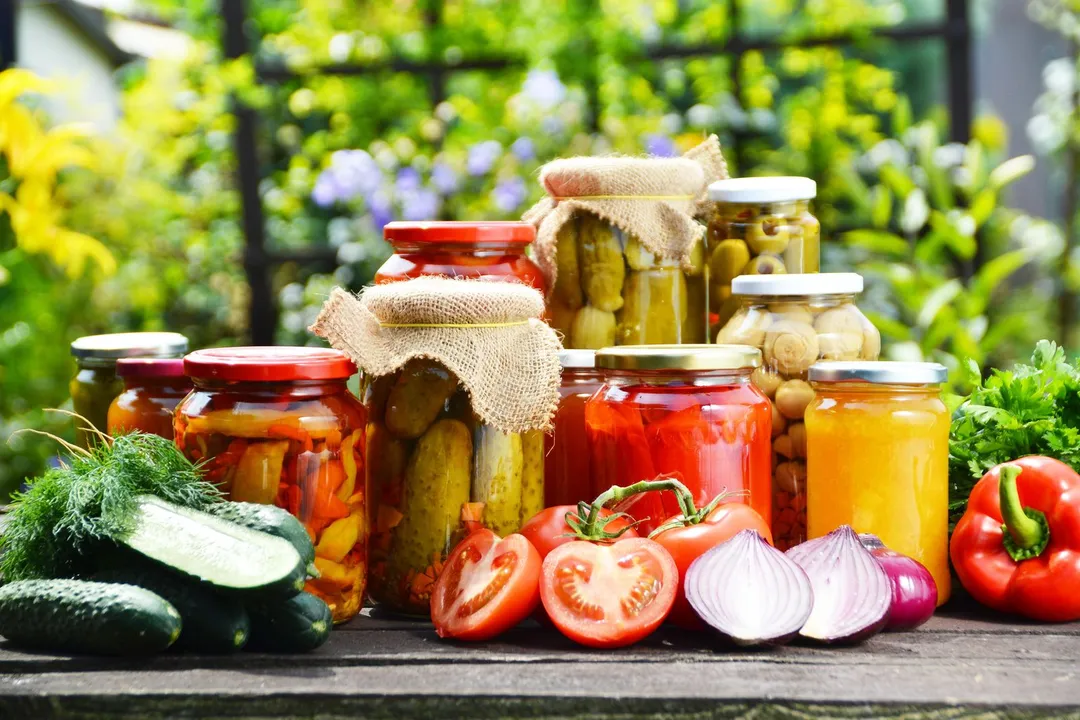
The ability to store food safely for long periods, far beyond the reach of seasonal harvests or seasonal military campaigns, fundamentally changed human logistics and daily life. The person credited with developing this preservation technique, which became the foundation of modern canning, was a Frenchman named Nicolas Appert. [4][6] He achieved this breakthrough around 1809, succeeding after years of intense experimentation driven by a critical need from the highest levels of government. [4][10]
# Napoleon’s Need
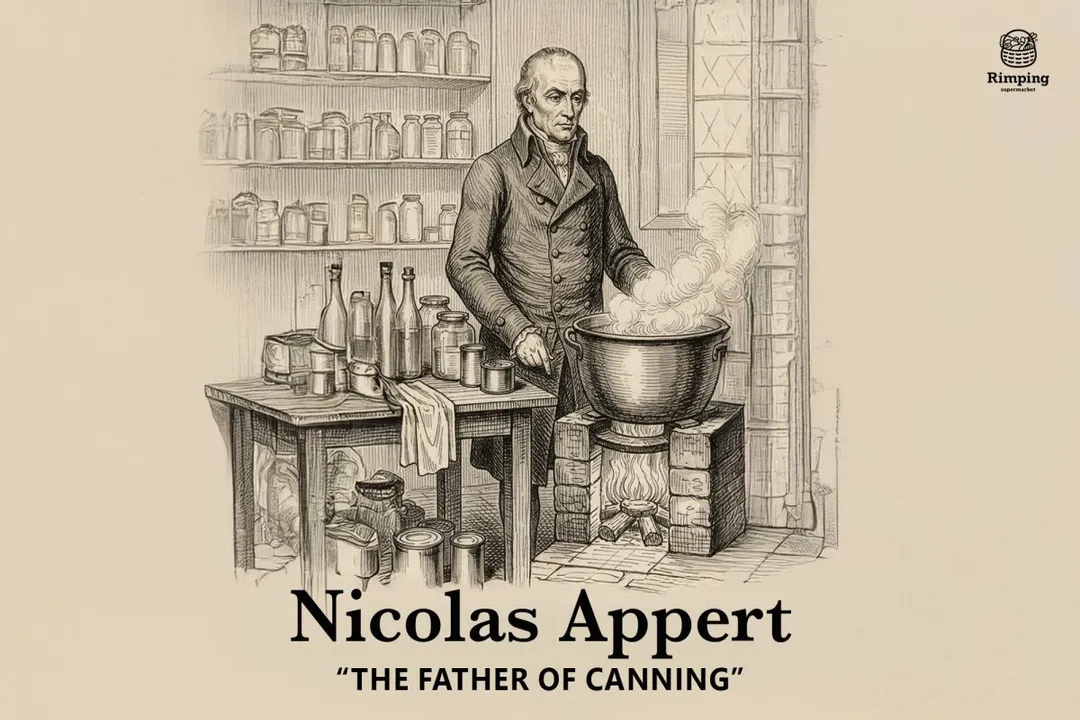
The impulse behind Appert's success was not just scientific curiosity, but military necessity driven by the Napoleonic Wars. [6][3] In 1800, Napoleon Bonaparte, then First Consul of France, offered a substantial prize—12,000 francs—to anyone who could devise an effective and economical method to preserve food for his advancing armies. [1][10] Armies marching across continents were frequently plagued by supply shortages and food spoilage, leading to significant losses. [3]
Appert, who was originally a confectioner and pickle maker in Massiac, France, took up this challenge. [1][4][9] He began his experiments sometime around 1795 and continued his work for roughly fifteen years before announcing his success. [10] When he presented his findings to the government in 1810, he was awarded the first half of the promised prize money, with the remainder contingent on the success of his preservation methods over a longer trial period. [1][10] The French government recognized the strategic importance of his work immediately. [1]
# Appert’s Method
Appert’s genius lay in observation and persistence rather than understanding the underlying biology, as germ theory was still decades away from being established. [3] His process involved using thick, clear glass bottles—often wine bottles—to hold the food items, which ranged from vegetables and fruits to meats and milk. [4][10]
The crucial steps involved:
- Filling: The food was placed into the bottles. [1]
- Sealing: The bottles were then tightly sealed. Appert typically used corks, which were secured with string and then covered with a sealing compound, often made of wax or lead. [1][6]
- Heating: The sealed containers were submerged in boiling water for specific durations, which varied depending on the type of food being preserved. [1][3][10]
Appert famously knew that his method worked—the food remained edible months or even years later—but he did not know why. [3] He was effectively killing the spoilage agents through heat processing without knowing the existence of microorganisms like bacteria. [3] This practical success predated Louis Pasteur's later microbiological findings by over half a century. [3] Appert’s initial trials showed that even food sealed with corks that had been boiled for an hour remained preserved, suggesting the heat application was the key mechanism. [10]
It is worth noting the empirical nature of his successful technique. For high-risk, low-acid foods like meat, Appert had to apply significant heat for long periods, a necessary step for safety that he discovered through trial and error, inadvertently achieving the sterilization required to defeat anaerobic bacteria like Clostridium botulinum, even though he had no concept of them. [1] This contrasts sharply with modern home canning, where the reliance on specific temperature/time charts for low-acid foods, often requiring a pressure canner, emphasizes the scientific controls we now employ to manage those invisible threats that Appert bypassed through sheer empirical diligence.

# Glass to Tin
While Appert’s process was a revolutionary success, it faced immediate practical limitations. Glass bottles, while excellent for sealing and heat tolerance, were inherently fragile and heavy, making them ill-suited for military transport across rough terrain. [6]
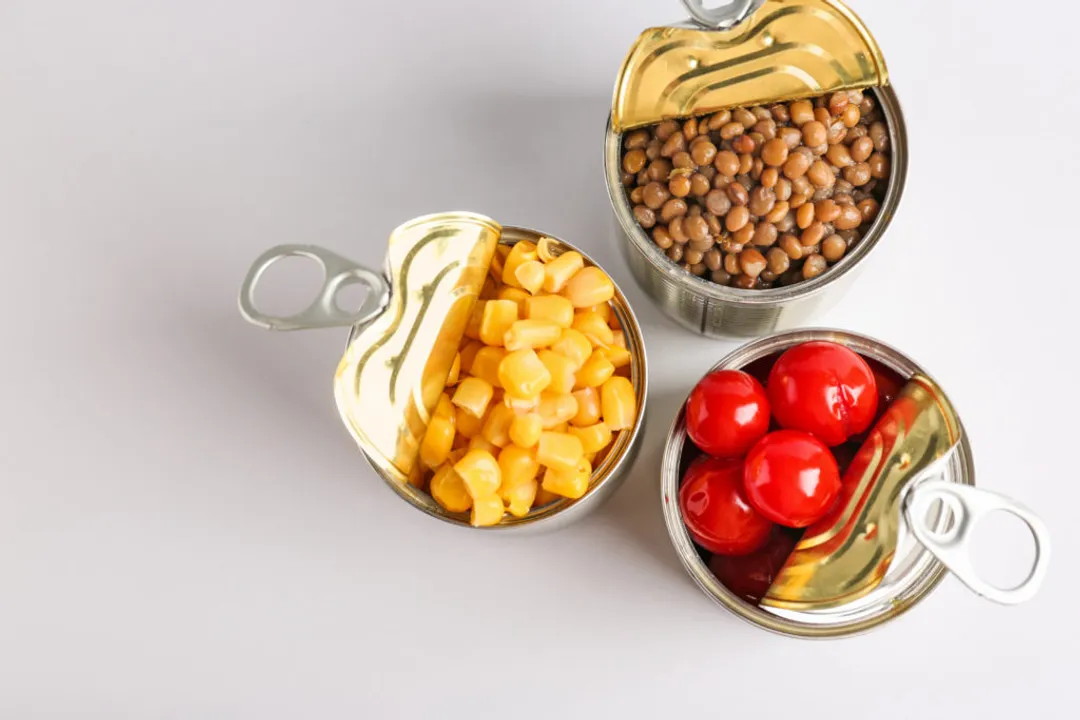
The next great leap came quickly and involved a change in material rather than the process itself. In 1810, the same year Appert received his full payment, an Englishman named Peter Durand secured a patent for preserving food in containers made of tin-plated iron. [1][3][6] This innovation replaced the breakable glass with durable metal, creating the direct ancestor of the modern tin can. [3][6]
The transition from patent to commerce was relatively swift. Bryan Donkin, also in England, began producing and selling food in these new tin containers around 1813. [1][6] These early cans were quite different from today's versions; they were thick-walled, heavy, and required a hammer and chisel to open, as the familiar can opener was not invented until decades later. [6]
The timeline of preservation method maturation looks something like this:
| Year | Inventor/Nationality | Key Innovation | Container Material |
|---|---|---|---|
| 1809 | Nicolas Appert (French) | Heat processing knowledge | Glass Bottles |
| 1810 | Peter Durand (English) | Patent for metal container design | Tin-plated Iron |
| c. 1813 | Bryan Donkin (English) | First commercial production | Tin Cans |
Appert himself continued to operate his successful canning factory in France, providing preserved foods for various public institutions. [1] He published his findings in his book, L'Art de conserver les substances animales et végétales (The Art of Preserving Animal and Vegetable Substances), in 1812, ensuring his methods became widely known, even if the container material eventually shifted away from his original glass. [1][4]
# Scientific Validation
For many years, the canning process remained an industrial secret or an empirically proven trick, lacking the scientific underpinning that would cement its safety for future generations. It took the work of Louis Pasteur in the latter half of the 19th century for the "why" behind Appert’s success to be fully understood. [3] Pasteur’s research on fermentation and spoilage confirmed that microscopic living organisms were responsible for food degradation and that heat—if applied correctly—could eliminate them. [3] This scientific validation confirmed that Appert’s method, based on heating sealed containers, was scientifically sound, establishing canning as a true method of food preservation rather than just a lucky accident. [3]

# American Jars
While the metal can dominated commercial and military preservation due to its durability, the technique returned to glass for domestic use, largely thanks to developments in the United States. [7] The evolution from Appert’s corked bottles to the modern home canning jar involved another set of innovators. [7]
The Ball Brothers played a significant role in perfecting the glass jar canning system in the US. [7] By the late 19th and early 20th centuries, they were instrumental in refining the seal and design of the glass jars, making home preservation safer, more accessible, and more repeatable for the average household. [7] Their work standardized the process, moving away from the messy wax seals and unreliable corks of Appert's original design to the reliable, reusable, screw-top canning jars common today. [7] This American refinement democratized the preservation concept, bringing the ability to store food safely from the factory floor directly into millions of kitchens. [7]
In essence, while Nicolas Appert invented the process—the concept of hermetically sealing food and applying heat to make it shelf-stable—the packaging that enabled modern commercial trade evolved through tinplate, and the domestic appliance evolved through standardized glass jar systems. [1][3][7] Appert, the confectioner turned preservation pioneer, remains the foundational figure whose empirical discovery solved a massive logistical problem for Napoleon and laid the groundwork for a significant portion of the modern food supply chain. [6][10]
#Videos
Nicolas Appert and the Invention of Canning - YouTube
Related Questions
#Citations
Nicolas Appert - Wikipedia
How Did We Can? | About
The Father of Canning Knew His Process Worked, But Not Why It ...
The practice of canning was invented by Frenchman Nicolas Appert ...
Canning | Home Preservation, Safety & Benefits | Britannica
How Canned Food Revolutionized The Way We Eat | HISTORY
From Appert to the Ball Brothers: a history of canning
Nicolas Appert and the Invention of Canning - YouTube
Food preservation - La Naucelloise, canning regional products
The History of Nicolas Appert : Father of Canning