Who is the father of food processing?
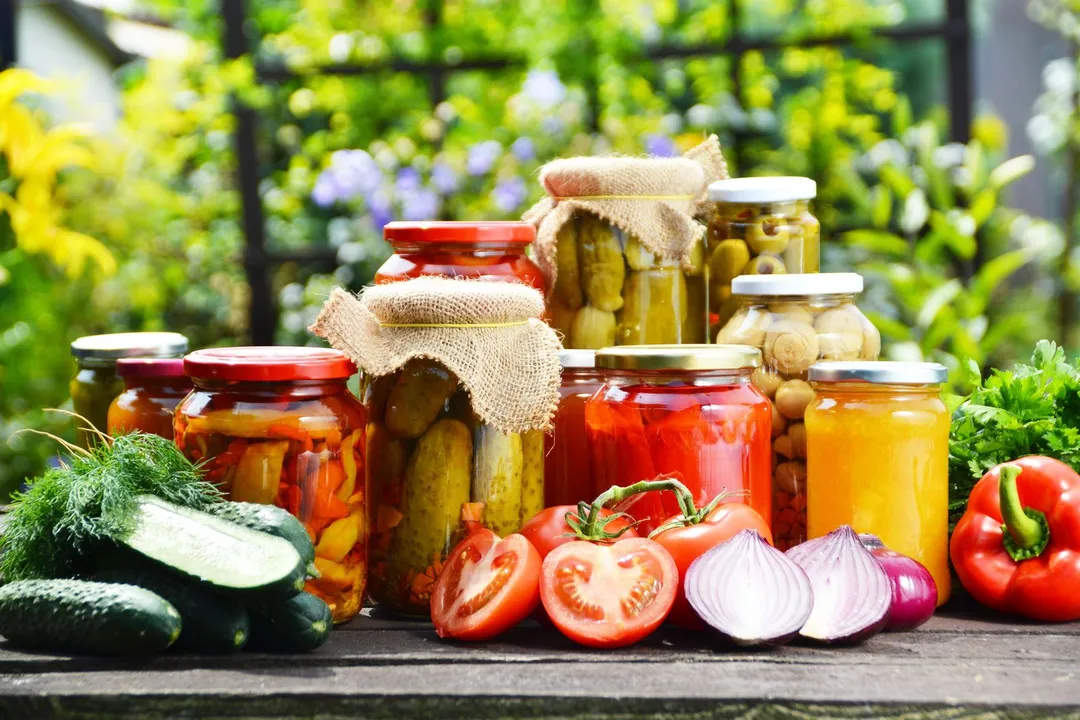
The title often bestowed upon the figure who revolutionized how we store and consume food, thereby extending its availability far beyond seasonal limits, is Nicolas Appert. While methods like drying, salting, and fermentation have kept food edible for millennia, Appert’s breakthrough in the early 19th century introduced the concept of hermetic sealing combined with heat, a technique that set the stage for all modern large-scale food preservation. It is this precise, repeatable, and scalable method—canning—that earns him this significant title in the history of processed foods.
# Napoleon’s Need
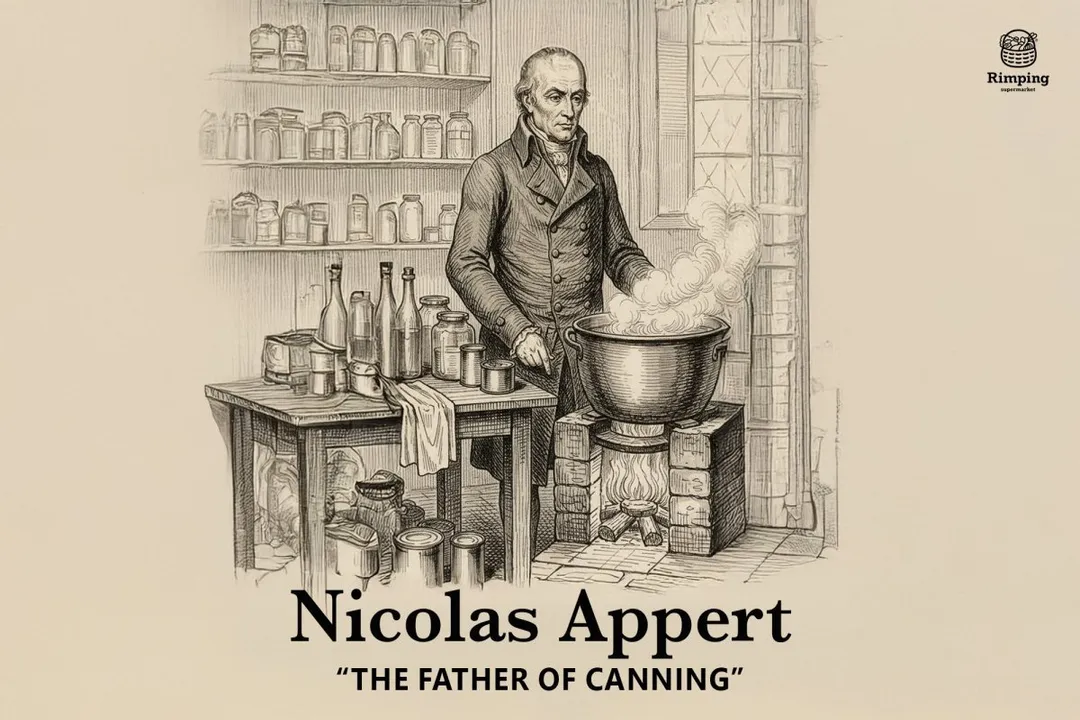
The urgency driving Appert's innovation was not academic curiosity but military necessity. In the late 18th and early 19th centuries, feeding large armies far from home presented a massive logistical challenge. Food spoilage led to sickness, reduced troop readiness, and staggering waste. During the wars of the French Revolution and the subsequent Napoleonic era, securing reliable food supplies was paramount to military success.
In 1809, recognizing this critical problem, Napoleon Bonaparte offered a substantial monetary reward—12,000 francs—to anyone who could devise a practical, effective method for preserving food in large quantities for extended periods. This cash incentive was essentially an early form of government-backed food technology research and development funding, aimed squarely at solving an immediate logistical crisis.
# The Confectioner

Interestingly, the man who would solve this monumental military problem was not a scientist or a military quartermaster, but a confectioner and brewer named Nicolas Appert. Appert, born in Châlons-sur-Marne, France, had hands-on experience with the instability of perishable goods through his trade. His background in brewing and confectionery likely provided him with an intuitive understanding of how heat and sealing could affect liquids and solids.
Appert spent nearly fifteen years experimenting with various preservation techniques before presenting his findings to the French government. His experiments involved testing different materials—including corked glass bottles—and varying the amount of heat applied to seal the contents.
When he finally presented his successful method to the French Society for the Encouragement of National Industry in 1809, he demonstrated his technique by opening jars of peas, beans, meat, fish, and milk that had been preserved for over a year and declaring them perfectly edible. He received the 12,000 franc prize in 1810.

# Empirical Sealing
Appert’s revolutionary technique involved placing food—either raw or slightly cooked—into thick glass bottles, sealing the neck of the bottle with a cork secured by wire or string, and then submerging the sealed bottles in boiling water for a specific duration. This heating process was the key, driving out the air and stabilizing the contents.
What is fascinating, and perhaps counterintuitive by modern standards, is that Appert had no idea why his method worked. He operated purely on empirical observation: if the food stayed good, the process was successful. He believed spoilage was caused by air, and his heating process seemed to neutralize this effect, but he could not articulate the role of microorganisms.
This reliance on practical, repeated testing, rather than theoretical knowledge, is a defining feature of his genius. In a way, Appert’s process mirrors how many modern food technology innovations begin: observing a tangible result—food that lasts—and then reverse-engineering the precise scientific principle. While centuries separated Appert from Louis Pasteur, whose germ theory would later explain the mechanism of sterilization, Appert achieved the practical result decades before the supporting science existed. It speaks to an incredible level of observational skill that he perfected the heating time necessary to achieve preservation without understanding bacteria or enzymes.
# Metal Containers
While Appert's method was sound, glass bottles presented logistical problems for large-scale military use: they were heavy, fragile, and difficult to transport across rough terrain. The need for a more durable container soon became apparent.
The transition from glass to metal marked the true birth of the modern tin can. Soon after Appert's success, around 1810, an Englishman named Peter Durand patented the idea of using sealed tinplate containers instead of glass. While Durand patented the tin container, the actual adoption and mass production took time.
This evolution is an important distinction: Appert invented the process (heat sterilization and sealing), while Durand adapted it to a more practical packaging format. The initial cans were crude; soldiers sometimes had to break them open with a hammer and chisel because the simple method for opening cans had not yet been invented. The can opener itself wasn't patented until about 48 years after the tin container was introduced.

# Impact on Preservation
The immediate impact of Appert’s invention was military, yet its long-term effect reshaped civilian life, consumption patterns, and global trade. For example, while the earliest processed foods were meat and vegetables for the army, the technology rapidly expanded to preserve fruit, which could then be used to supplement diets or be made into jams and jellies.
Consider the sheer scale of the change. Before Appert, food preservation meant reducing water content (drying), creating an environment hostile to microbes (salting/sugaring), or fermenting. These older methods often drastically altered the food's taste, texture, or nutritional profile. Appert’s method, however, aimed for preservation with minimal change to the original quality of the product. Although he didn't have modern nutritional analysis, the goal was clearly to keep the food like the fresh product.
Here is a simple comparison illustrating the shift Appert introduced:
| Preservation Method | Primary Mechanism | Flavor Alteration | Transportability | Historical Context |
|---|---|---|---|---|
| Salting/Drying | Water removal | High (very salty/dry) | Good | Ancient to Pre-1800s |
| Fermentation | Microbial competition | High (acidic/alcoholic) | Moderate | Ancient to Pre-1800s |
| Appert's Canning | Heat sterilization/Sealing | Low to Moderate | Good (with tin) | Post-1810 |
The ability to maintain flavor and nutrition while achieving long shelf life completely changed the economics of agriculture and trade. Suddenly, regions could specialize in growing specific crops, knowing their harvest could be safely stored and shipped globally, rather than needing to process everything locally and immediately. This established the infrastructure for the modern global food system, where fresh produce from one hemisphere can be enjoyed in another months later, albeit in a processed form.
# A New Era of Food Science
Appert himself never fully grasped the scientific underpinnings of his success, focusing on the practical application and passing his knowledge to others. After his initial success, Appert published Le Livre de tous les ménages (The Book for All Households) in 1810, detailing his methods for others to replicate. He established a factory to manufacture preserved goods, making his innovation accessible.
However, it took decades for science to catch up and officially credit the microorganisms Appert was unwittingly destroying. It wasn't until the 1860s that Louis Pasteur's work on fermentation and spoilage provided the scientific explanation for why boiling food in sealed containers prevented decay. Pasteur demonstrated that heat killed the microscopic life that caused putrefaction, and the airtight seal prevented new life from entering.
In recognizing Nicolas Appert as the "father of food processing," we are acknowledging the person who bridged the gap between traditional food preservation and modern food science. He provided the tangible method—the repeatable technology—upon which the entire multi-billion-dollar industry of safe, long-shelf-life packaged foods would eventually be built, long before the textbooks could explain his success. His legacy is a testament to the value of empirical problem-solving in the face of grand challenges.
Related Questions
#Citations
Nicolas Appert | Biography & Facts - Britannica
Nicolas Appert: The Father Of Canning - CrewSafe
The practice of canning was invented by Frenchman Nicolas Appert ...
The History of Nicolas Appert : Father of Canning
"The Father[s] of Canning"? Narrating Nicolas Appert/American ...
Napoleon Bonaparte "The Father Of Canned Food"! - Dima Sharif
The Father of Canning Knew His Process Worked, But Not Why It ...
Nicolas Appert Facts for Kids
Short History of Processed Foods