What technique ensures a stable, velvety mouthfeel when incorporating olive oil into a blender-made gazpacho?
Answer
Slowly drizzling the olive oil in after the vegetable base is already smooth
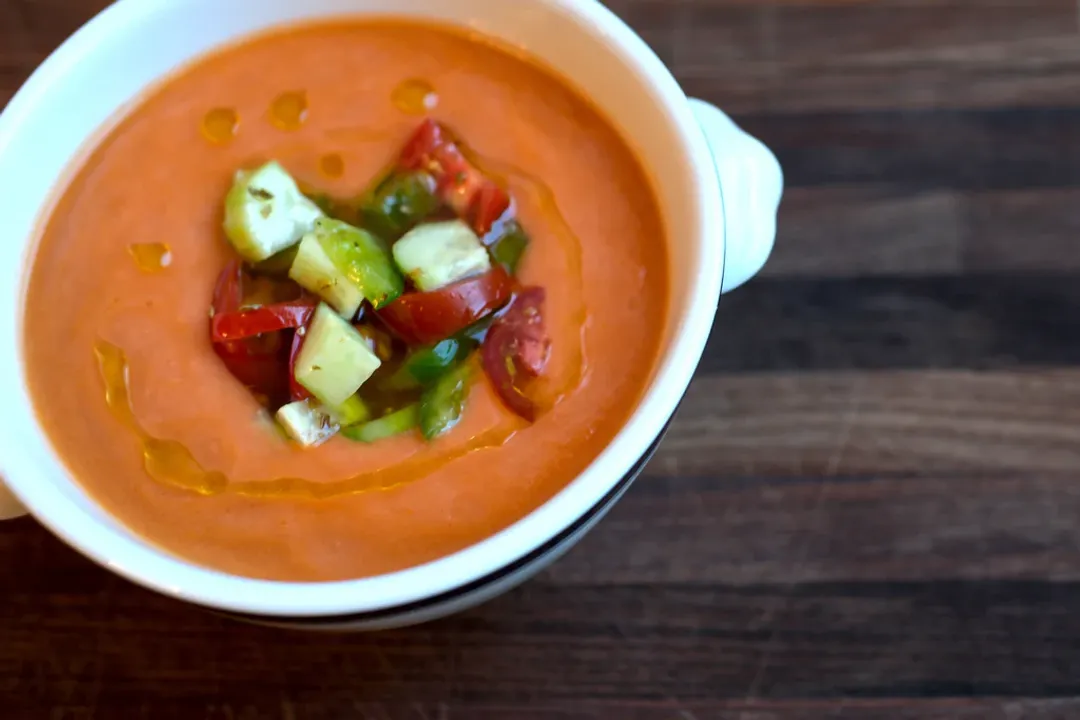
Achieving a creamy, integrated texture, rather than an oily separation on top, requires careful emulsification technique, particularly with high-powered blenders. The correct procedure involves blending all the raw vegetables, vinegar, and seasonings thoroughly until the base is completely smooth. Only then should the olive oil be incorporated gradually, by slowly drizzling it in while the blender is operating at a medium speed. This slow introduction allows the oil droplets to disperse finely and suspend evenly throughout the mixture, creating a naturally thickened, velvety soup structure.
Related Questions
Where does the chilled bowl of blended vegetables known as gazpacho fundamentally originate?What introduction was a crucial turning point transforming the color and flavor profile of early gazpacho?What is the indispensable primary function of good quality extra virgin olive oil in gazpacho?What technique ensures a stable, velvety mouthfeel when incorporating olive oil into a blender-made gazpacho?What components were likely crushed using a mortar and pestle in the earliest iterations of gazpacho?Why is gazpacho widely accepted as a cold soup despite arguments equating it to a liquid salad?What primary contribution do cucumbers make to the overall gazpacho composition according to the component breakdown?Given its Andalusian origin, what type of vinegar is typically favored in gazpacho recipes to provide necessary acidity?What is the non-negotiable serving requirement that transforms gazpacho into an authentic experience?If swapping traditional red tomatoes for sweeter alternatives like yellow tomatoes, how must the flavor profile be adjusted?What purpose do customary garnishes, such as finely diced croutons, serve when topping smooth gazpacho?