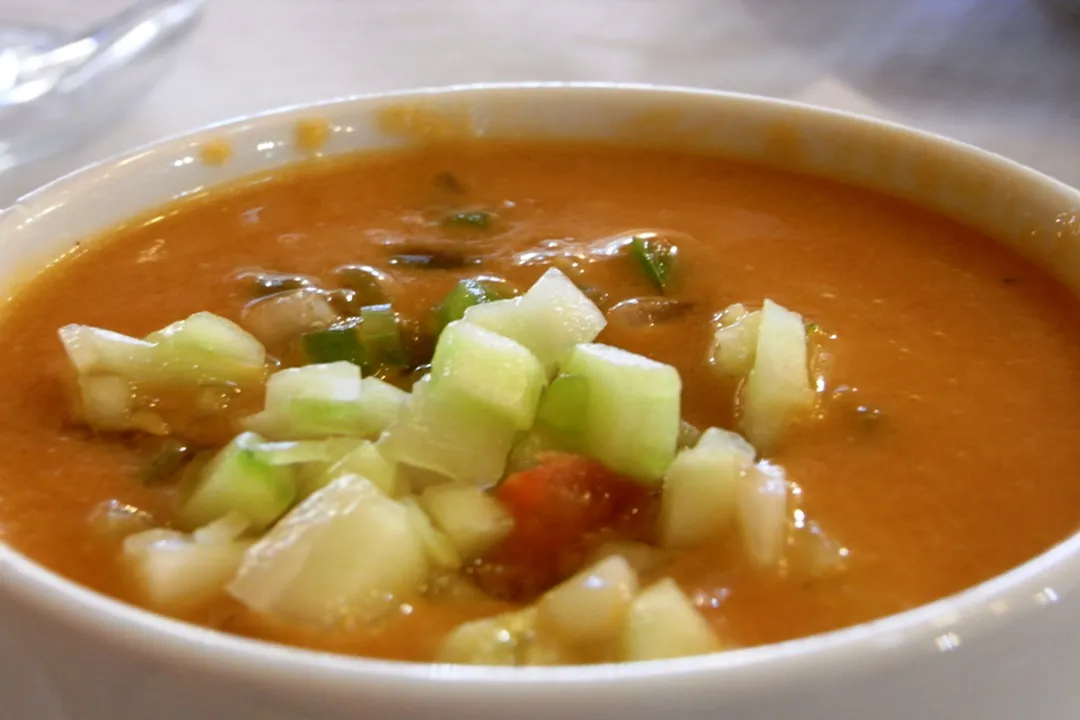
What exactly is gazpacho soup?
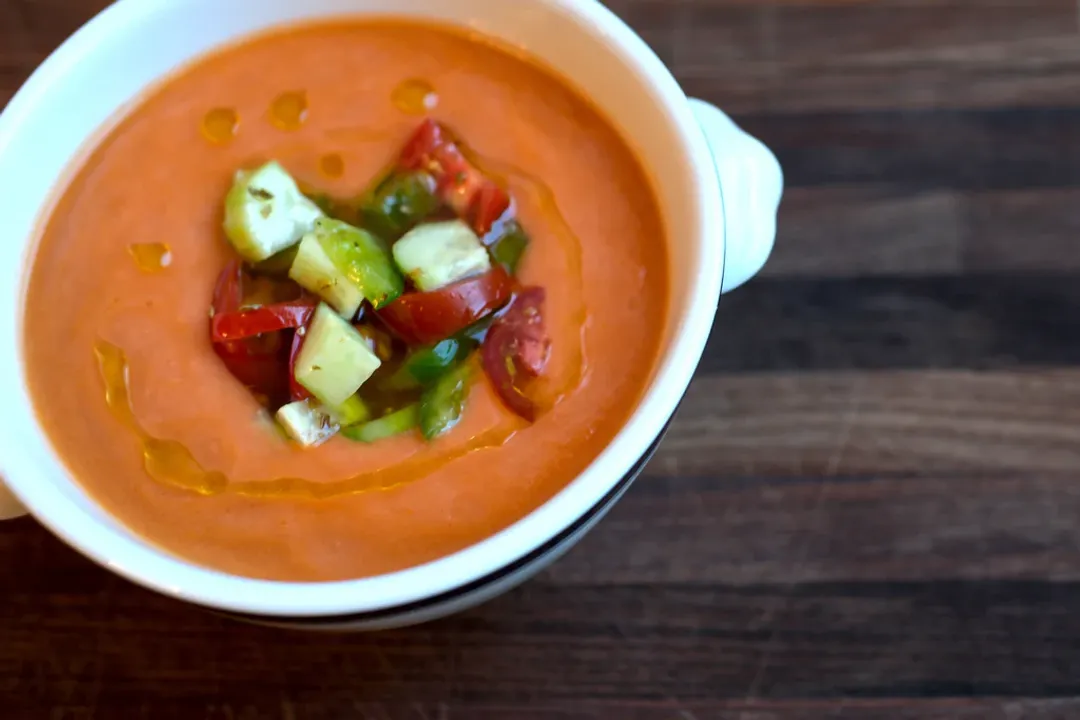
That vibrant, chilled bowl of blended vegetables is known around the world as gazpacho, a dish instantly signaling the arrival of summer heat. It is fundamentally a cold soup originating from the southern Spanish region of Andalusia. [1] Unlike cooked soups, gazpacho relies entirely on the freshness and quality of its raw ingredients, which are typically tomatoes, cucumbers, peppers, onions, and garlic, blended together with olive oil, vinegar, and water. [1][2][3]
# Roots History

The history of gazpacho stretches back centuries, evolving from a simple, nourishing staple of agricultural workers in southern Spain. [1] Early iterations likely involved crushing stale bread, garlic, and olive oil with water using a mortar and pestle. [1] These initial versions were far simpler than the bright red, tomato-centric preparations recognized today. [1] The introduction of tomatoes from the Americas was a crucial turning point, transforming the dish's color and flavor profile into what is recognized globally as classic gazpacho. [1] While the modern, tomato-heavy version is strongly associated with Spanish cuisine, the original foundation was much more humble, serving as a way to stretch minimal ingredients into a thirst-quenching meal. [1] Its regional status in Andalusia gives it a deep cultural authority; it is not merely a recipe but a cornerstone of regional identity, particularly during the hottest months when raw, cooling foods are essential. [1]
# Essential Ingredients
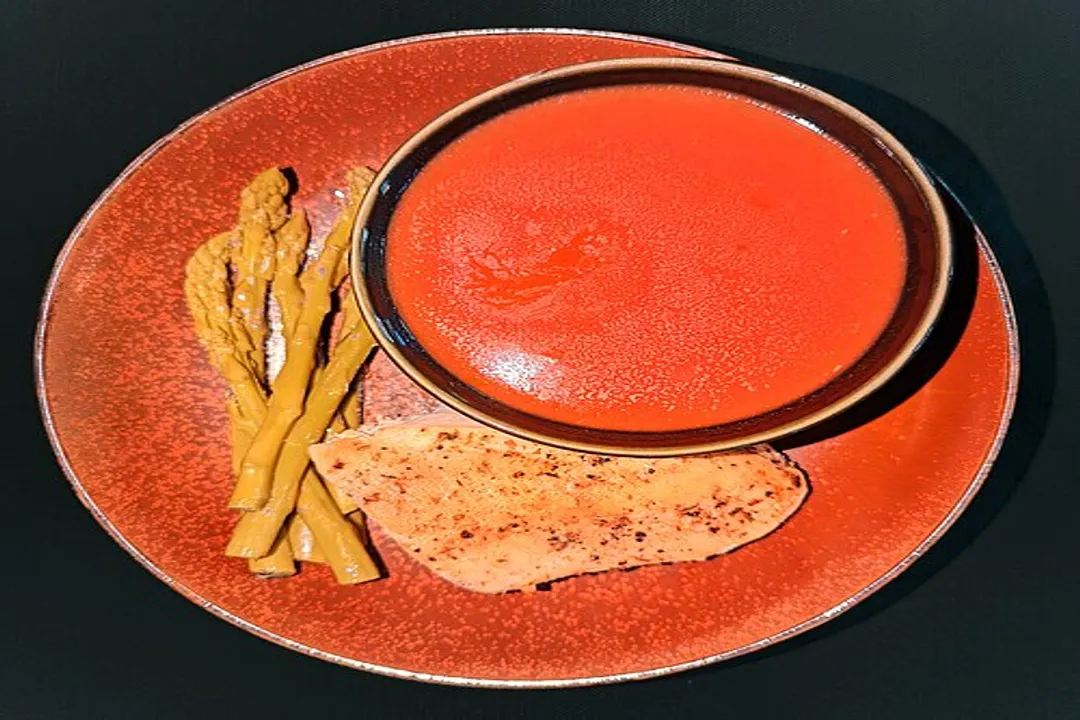
The magic of gazpacho lies in the balance of its components, where quality directly dictates the outcome. [2][6] The foundation is almost always the tomato, which provides both body and the characteristic color. [1][3] However, a truly excellent gazpacho requires more than just tomatoes. Cucumbers add necessary water content and a cool crispness, while peppers—often green—impart a distinct, slightly vegetal edge. [2][3] Onion and garlic are critical for providing depth and that signature pungent warmth that balances the sweetness of the ripe produce. [1]
The liquids that bind this mixture are just as important as the vegetables. Good quality extra virgin olive oil is indispensable, adding richness and mouthfeel. [2][6] Vinegar, usually sherry vinegar given the Andalusian origin, provides the necessary acidity to cut through the richness of the oil and ripeness of the tomatoes. [6] Some recipes call for soaking stale bread in the mixture to thicken the soup, which was particularly common in historical preparations to create a heartier dish. [2][3] Even the water content is sometimes considered an ingredient, used to adjust the final consistency. [2]
Here is a breakdown of how core components contribute to the final product:
| Component | Primary Function | Flavor/Texture Impact |
|---|---|---|
| Tomatoes | Base, color, body | Sweetness, acidity, main bulk |
| Cucumber | Hydration, freshness | Cool, watery counterpoint |
| Bell Pepper (Green) | Aromatic depth | Slightly sharp, vegetal notes |
| Garlic/Onion | Pungency, savoriness | Sharpness, depth of flavor |
| Olive Oil | Emulsifier, richness | Mouthfeel, luxurious body |
| Vinegar | Acidity | Tanginess, preservation of color |
| Bread (Optional) | Thickener | Creaminess, substance |
# Texture Management
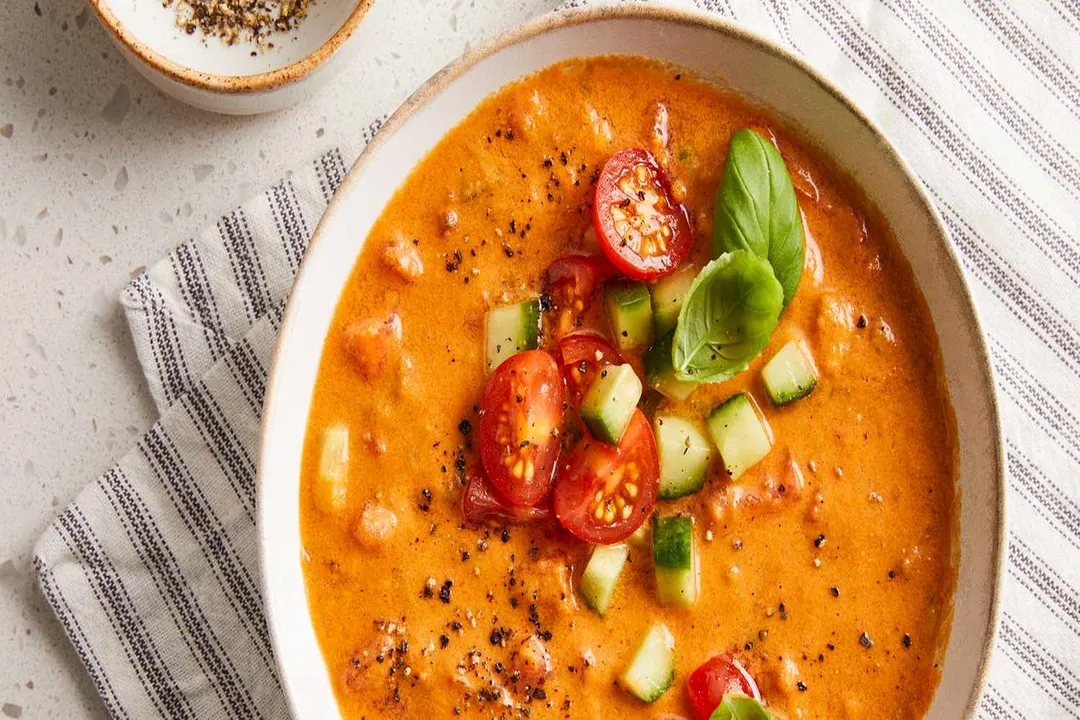
A significant point of discussion surrounding gazpacho is texture. The traditional method often involved crushing the ingredients with a pestle in a large bowl, resulting in a coarser, more rustic texture. [2] Modern preparations frequently turn to a blender or food processor, aiming for a smoother consistency. [2][3] Chef John’s approach, for instance, leans towards blending everything until it is smooth, though some variations maintain a slightly chunkier profile. [6][10]
The decision between a perfectly smooth puree and a slightly textured blend often comes down to personal preference and the intended use of the soup. [2][3] If the goal is an elegant starter course, maximum smoothness achieved through blending and perhaps even straining might be preferred. [2] If it is intended as a backyard refresher, a bit of bite from less-blended vegetables might be welcome. [3]
One technique that profoundly impacts texture, especially when using high-powered blenders, involves how the oil is incorporated. Simply dumping the oil in at the start often results in a separated or oily layer floating on top rather than a creamy emulsion. A practical tip for achieving a stable, velvety mouthfeel is to blend all the vegetables, vinegar, and seasonings first. Only once this vegetable base is smooth should the olive oil be slowly drizzled in while the blender is running on a medium speed. This slow introduction allows the oil droplets to break down finely and suspend evenly throughout the mixture, creating a naturally thickened, integrated soup without needing excessive amounts of bread or thickening agents. [2][3]
# Soup Salad Line
Gazpacho often sparks debate regarding its culinary classification. Is it truly a soup, or is it closer to a salad or even a salsa? [5][7] The definition of soup typically implies a liquid food, often cooked, served warm or cold. [5] Gazpacho fits the "liquid food served cold" criterion for soup. [1] However, because it is made from entirely raw, uncooked ingredients, some argue it shares DNA with a salad. [5] One perspective notes that traditional gazpacho functions as a liquid salad because the components are essentially mixed raw vegetables suspended in a dressing of oil and vinegar. [5]
Comparing it to a salsa, while both are raw vegetable preparations, salsa is generally served as a condiment or dip, often thicker and meant to accompany other foods, whereas gazpacho is intended to be eaten as a standalone dish, often in a bowl. [7] A smoothie, by contrast, usually contains fruit and dairy or a significant amount of ice, which gazpacho generally omits. [7] Despite these comparisons, the most widely accepted designation remains cold soup. [1][5] It is distinct because its volume and composition are meant to satisfy as a meal or substantial course, unlike a salsa or simple vegetable dip. [7] For example, a recipe might use a ratio of six cups of tomato to only one cup of cucumber and half a cup of pepper, establishing a liquid base rather than a chunky mixture. [10]

# Modern Twists
While the classic Andalusian recipe is fiercely defended, the framework of gazpacho—a cold, emulsified raw vegetable puree—lends itself beautifully to modern innovation. [3] The core technique remains, but the ingredients can shift dramatically based on seasonality and creativity. [3]
One notable deviation involves substituting the primary vegetable base. Watermelon gazpacho, for instance, swaps out many of the traditional savory components for the sweet, juicy melon, often brightened with mint or feta cheese. [3] This introduces a flavor profile that leans closer to a chilled fruit soup, though the addition of vinegar, cucumber, and olive oil often keeps it tethered to the gazpacho tradition. Similarly, a gazpacho relying heavily on yellow tomatoes or carrots will yield a different color and sweetness profile compared to the deep red traditional version. [3]
When moving away from the classic formula, achieving flavor harmony requires mindful adjustment. When swapping out the acidity of standard red tomatoes for sweeter alternatives like yellow tomatoes or fruit, you must compensate for the lost tang. A simple adjustment here is to slightly increase the volume of sherry vinegar or introduce a touch of citrus juice, like lime, to ensure the final product doesn't taste flat or overly sweet. [6] This balancing act between the fat (oil), the acid (vinegar), and the sugars (ripe vegetables) is what separates a good modern variation from one that merely tastes like blended salad dressing.
# Serving Style
Gazpacho must be served cold. [1] This is non-negotiable for the authentic experience, as the chilling process allows the flavors to meld and mellow, transforming the sharp edge of the raw garlic and onion into a pleasant background note. [2] It is commonly served in bowls or deep glasses. [2]
Garnishes are a customary addition, providing textural contrast to the smooth soup. [2] Common accompaniments, often served on the side for diners to customize their bowls, include a drizzle of the best quality olive oil, finely diced croutons, or small, finely minced pieces of the same raw vegetables used in the soup—cucumber, pepper, or onion. [2][3] These toppings introduce a necessary element of crunch that the smooth base lacks. [2] The presentation might vary; some enjoy it as a pure, chilled liquid refreshment, while others prefer it dressed up as a light lunch with bread on the side. [2][10] The most traditional preparation, however, emphasizes simplicity: the chilled soup, perhaps a splash of oil, and a few accompanying diced vegetables. [2]
Related Questions
#Citations
Gazpacho - Wikipedia
Gazpacho - Simply Recipes
Easy Gazpacho Recipe - Love and Lemons
What's the difference between gazpacho and normal soups?
Classic Gazpacho Soup - American Vinegar Works
It is incomprehensible that anyone could see a similarity ... - Reddit
Is gazpacho a soup, a salad, a smoothie, or a salsa? - Quora
What is gazpacho soup? - Facebook
Chef John's Gazpacho Recipe - Allrecipes
Best Gazpacho Recipe - The Pioneer Woman