What is Porto's famous dish?
The culinary identity of Porto is inextricably linked to a single, formidable creation, a monument of meat, bread, and sauce that demands attention and appetite. While Portugal offers a rich array of regional specialties, from sun-drenched seafood along the coast to hearty inland stews, the dish that defines the northern capital is unmistakable: the Francesinha. [1][2][4] To visit Porto and not engage with this sandwich is to miss a central piece of the city’s gastronomic story, one that is as much about history and pride as it is about its ingredients. [4]
# Sandwich Layers
The Francesinha is not merely a sandwich; it is an architectural undertaking involving multiple layers of bread and protein, all bound together under a blanket of dairy and a signature sauce. [1][4] At its foundation, it typically features slices of bread layered with various cured meats and cooked cuts. [4] Common fillings include steak or roast beef, ham, smoked sausage, and linguiça (a type of smoked sausage). [1][9] Some versions incorporate mortadella or other cured meats to add complexity to the textural profile. [4] This generous stack of ingredients is then typically topped with melted cheese, forming a molten crown over the meat edifice. [1][4]
The experience of eating a Francesinha is, by necessity, a sit-down affair requiring cutlery. [3] It is rarely, if ever, consumed on the go. The sheer density and the liquid nature of the sauce mean that this dish demands dedication. A proper serving almost always comes accompanied by a generous portion of french fries, which serve the dual purpose of acting as absorbent sponges for the excess sauce and providing a necessary, crisp counterpoint to the richness of the main event. [1][3][4]
# Sauce Secrets
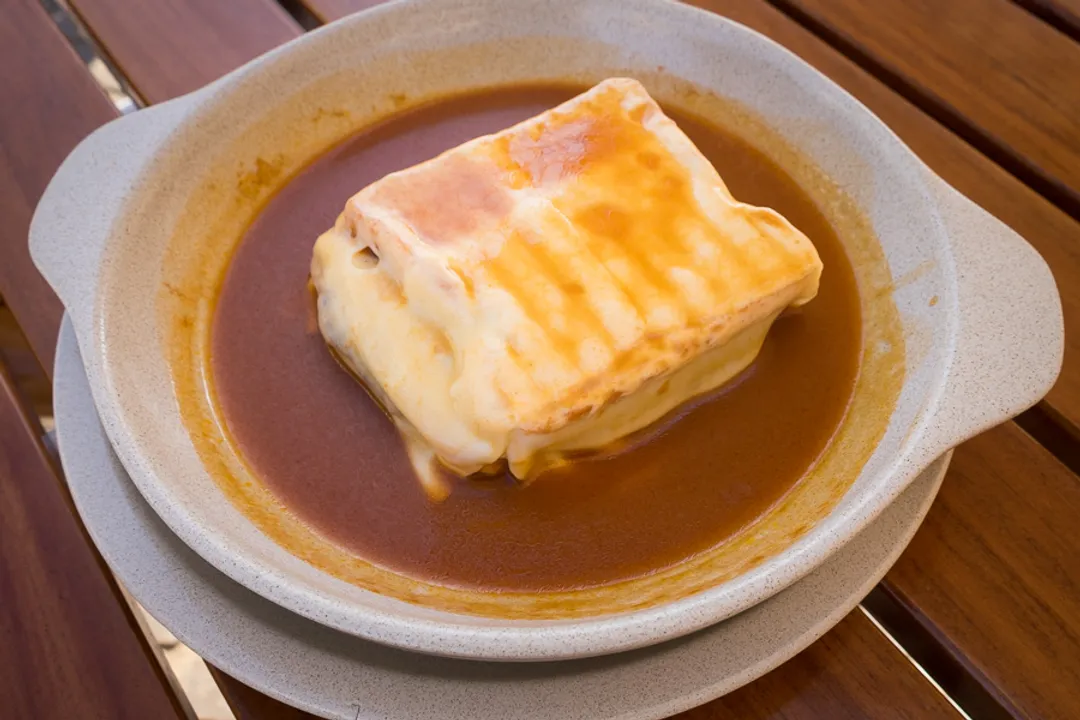
If the structure of the Francesinha defines its shape, the sauce dictates its soul. This is the element that truly separates Porto’s creation from any standard club or steak sandwich found elsewhere in the world. [1][9] The sauce is a complex, often intensely flavorful concoction that varies subtly from one establishment to the next, leading to fierce local loyalty for specific tascas or restaurants that claim the best recipe. [1]
While exact recipes are closely guarded secrets, the foundation is generally recognized as a thick, rich mixture often based on beer, tomato, and sometimes red wine or port wine, heavily seasoned with piri-piri or other spices. [1][9] This combination results in a sauce that is savory, slightly sweet, and carries a definitive, lingering heat. [1] It is the heavy application of this sauce—drenching the entire sandwich until it is swimming—that gives the dish its iconic, slightly messy appearance and its intense flavor profile. [4]
# Historical Roots
Understanding the Francesinha requires acknowledging its relatively recent, yet powerful, origin story. It is often cited that this massive sandwich was conceptualized in 1959 by Daniel da Silva. [4] The story goes that he sought to adapt the well-known French croque monsieur for the tastes of Portuguese workers who had been returning from trips to French-speaking territories, making it more robust and suited to local palates. [4]
The name itself, meaning "little French girl," is a nod to its inspiration, though the Porto version vastly exceeds its French cousin in scale and flavor intensity. [4] It quickly became a beloved staple in Porto, evolving from a simple adaptation into a symbol of the city's culinary grit and innovation. [4] Considering the context of post-war Europe and the specific ingredients available and favored in Northern Portugal at that time, the Francesinha emerged as a unique response to an evolving local identity, transforming a simple lunchtime item into a veritable feast. [4]
# Caloric Context

It is important to view the Francesinha not as an everyday lunch, but as an indulgent, energy-dense meal reserved for specific occasions. Given the components—multiple types of meat, bread, cheese, and a rich sauce—this dish carries a significant caloric load, a feature often acknowledged with a knowing wink by locals and visitors alike. [9] This intensity stands in contrast to the lighter, more frequently consumed diet often associated with Portugal’s coastal regions, which lean heavily on fresh grilled fish. The Francesinha is a true embodiment of a hearty, cold-weather meal meant to sustain a person through heavy labor or an evening out; attempting to eat one followed by a substantial dinner is an ambitious venture. [5]

# Other Flavors
While the Francesinha rightly claims international recognition for Porto, the city’s traditional cuisine runs much deeper, anchored in dishes that speak to the region’s history and proximity to both the Douro Valley and the Atlantic Ocean. For a true taste of local heritage, one must look toward dishes predating the sandwich’s 1959 debut.
# Tripe Tradition
Perhaps the second most historically significant dish associated with Porto is Tripas à Moda do Porto, or Tripe Stew prepared in the Porto style. [1][5] This dish provides a stark contrast to the indulgent nature of the Francesinha, being a deeply traditional, slow-cooked stew. Legend connects this dish to the departure of ships carrying supplies for the voyages of discovery in the 15th century, where the less desirable cuts of meat, specifically tripe and beans, were left for the local populace. [1][5]
This stew is typically made with tripe, white beans, carrots, and various sausages, simmered for hours until the texture is incredibly tender and the broth is deeply flavorful. [5] It represents the culinary ingenuity born from necessity, utilizing every part of the animal, a common theme in historic European cooking that Porto proudly maintains. [1]
# Codfish Staples
As with much of Portugal, bacalhau (dried and salted codfish) remains a ubiquitous ingredient in Porto’s kitchens. [5][9] While cod is prepared in countless ways across the country, Porto offers its own beloved interpretations. Dishes like Bacalhau com Natas (cod baked with cream) or simpler grilled preparations showcase the versatility of this essential ingredient, grounding the local diet outside of the rich, heavy specialties. [5] The emphasis here shifts from heavy frying and saucing to simple, quality ingredient presentation, often flavored with olive oil, onions, and parsley. [9]
# Porto Dining
Navigating the world of Porto’s famous food requires a few practical considerations to maximize enjoyment. When approaching a Francesinha, the pairing is almost as important as the main event itself. Because of the sauce’s density and richness—the combination of fat, spice, and strong flavor—a light, crisp beverage is essential to cleanse the palate between bites. [1] Many aficionados strongly recommend pairing the dish with a cold, local draft beer, whose carbonation and slight bitterness cut through the heaviness far more effectively than wine might. [1] This consideration for balance is key to enjoying the dish fully without being overwhelmed by its sheer weight.
Another point of local culinary context involves how one approaches the sandwich structurally. Unlike a traditional sandwich meant to be picked up, the Francesinha’s construction—with its melted cheese and abundant sauce—demands the use of a knife and fork. [3] Trying to handle it manually is a messy endeavor that risks losing crucial components into the pool of sauce on the plate.
Furthermore, while the Francesinha is the undeniable star, recognizing the difference between a modern tourist favorite and a deep-rooted local tradition adds depth to the experience. If you seek the quintessential, perhaps older, Porto flavor profile, looking for restaurants advertising Tripas alongside their Francesinha menu suggests an establishment that honors the city’s full culinary history, not just its modern icon. [1][5] This duality—the celebratory excess of the sandwich versus the humble, historic depth of the tripe—is what truly defines eating in Porto. It allows a visitor to appreciate both the city’s flair for the dramatic and its respect for its past. [4][5]
# Final Thoughts
Porto’s signature dish is a powerful statement on a plate, a multilayered creation born from a specific moment in time yet wholly embraced by the city’s modern identity. [4] The Francesinha provides the immediate, loud answer to what one must eat, but the city’s gastronomic landscape is also colored by the deep, resonant flavors of its historical stews and its reliance on the Atlantic’s bounty. [1][5] To truly know Porto through its food is to appreciate the bold, brash success of the sandwich while respecting the enduring, slower-cooked traditions that built the city’s kitchen culture.
Related Questions
#Citations
Eat Porto! - Lisa Germany
The 9 typical Porto dishes you should try! - Lety goes on
The 6 Best Street Foods In Porto | Eating Europe
Francesinha: The Story Behind This Iconic Portuguese Meal
29 Traditional Portuguese Foods to Try in Portugal
What to eat in Porto: 5 Traditional Dishes You Must Try - Travendly
5 Must-Tries When You Visit Porto Porto is a special city — where ...
Franceschina, Porto's Famous Sandwich - Not Quite Nigella
The Flavours of Porto and Traditional Portuguese Dishes