What are five traditional foods?
The concept of traditional food often conjures images of recipes passed down through generations, deeply embedded in the history and geography of a specific place. These dishes are more than just sustenance; they are edible stories, anchoring communities to their past and reflecting local agricultural capabilities and historical influences. [2][8] A dish becomes traditional when it is consistently prepared and consumed within a culture over a long period, often becoming symbolic of national or regional identity. [2] Understanding these five examples from different corners of the world offers a glimpse into the diversity of human culinary heritage.
# Defining Tradition
What elevates a recipe from mere cooking to a true traditional food? It generally involves a deep-seated connection to regional ingredients and historical continuity. [2] Traditional foods are often those that utilize readily available local resources, which historically meant they were simple, hearty, and reflective of the land’s bounty. [8] For instance, in many European contexts, traditional meals were built around staple grains, root vegetables, and preserved meats, necessary due to limitations in storage and transport before modern refrigeration. [2] Conversely, in coastal regions, seafood naturally forms the backbone of the traditional diet. [8]
The importance of traditional foods is not just about taste or history; many sources also point to inherent nutritional benefits. [4] Foods prepared traditionally, often from scratch using whole ingredients, can offer superior nutrient profiles compared to highly processed modern alternatives. [4] This connection between history and health is a fascinating area where old methods often align with modern nutritional wisdom.
# Spanish Paella
One internationally recognized traditional dish that beautifully represents a region's terroir is Paella, originating from Valencia, Spain. [3][6] The essence of paella lies in its pan—a wide, shallow vessel from which the name itself is derived—designed to maximize the surface area for the rice to cook evenly and develop a prized crust on the bottom called socarrat. [3]
Authentic Valencian paella typically relies on specific ingredients that reflect the local environment, primarily rice grown in the region, and traditionally includes chicken, rabbit, and sometimes duck, along with fresh green beans and perhaps some snails. [3] Seafood paellas, paella de marisco, are immensely popular elsewhere, but purists often reserve the term "paella" for the Valencian version. [3] The cooking process itself is a ritual; the flavors of the meats and vegetables are built up in layers before the liquid and rice are added, demanding careful heat management to achieve the perfect texture. [3] The commitment to these specific components—from the type of rice to the cooking vessel—is what cements paella’s place as a true traditional food, even as variations spread globally. [2]

# Scottish Haggis
Moving north, the famed Haggis of Scotland stands as perhaps one of the most culturally significant, and often misunderstood, traditional foods. [3][5] It is a savory pudding containing sheep's pluck (heart, liver, and lungs), minced with onion, oatmeal, suet, spices, and stock. [3] This mixture is traditionally encased in the animal's stomach, though nowadays synthetic casings are common. [3]
The historical context behind haggis is deeply tied to resourcefulness; in times when every part of the animal needed to be used, offal was combined with hearty fillers like oatmeal to create a nourishing meal. [2] It is famously associated with the poet Robert Burns, who memorialized it in his poem, "Address to a Haggis," marking its deep integration into Scottish cultural celebrations, particularly Burns Night. [3] While the ingredients might seem challenging to modern palates accustomed to leaner cuts, its flavor profile—rich, peppery, and earthy—is what has allowed it to endure as a national symbol. [3]
# Japanese Sushi
Sushi, originating in Japan, represents a more refined, ingredient-focused tradition. [7] While often associated simply with raw fish today, the term sushi technically refers to the vinegared rice (shari) that accompanies the topping (neta). [7] The tradition evolved from a method of preserving fish by fermenting it in cooked rice, a process called narezushi, which is quite different from the fresh, rapidly prepared versions popular now. [7]
Modern sushi, such as nigiri (a slice of fish over hand-pressed rice) or maki (rolled sushi), emphasizes precision, balance, and seasonality. [7] The preparation requires considerable skill; a sushi chef spends years mastering the proper preparation of the rice, the correct cutting techniques for different types of fish, and the art of assembling the pieces. [7] The selection of ingredients is paramount, focusing on freshness and complementary textures, making the tradition as much about technique and respect for the ingredients as it is about the final taste. [7] Other related traditional foods like tempura (lightly battered and deep-fried seafood or vegetables) and ramen (a wheat noodle soup) also showcase Japan’s commitment to distinct culinary structures. [7]
# Austrian Wiener Schnitzel
From Central Europe, the Wiener Schnitzel represents a classic that has achieved international fame while maintaining strict traditional parameters in its homeland of Austria. [3] This dish is essentially a thin, boneless cut of veal, lightly pounded, breaded, and pan-fried until golden brown. [3]
The "Wiener" designation is legally protected in Austria, meaning that for a dish to be labeled Wiener Schnitzel, it must be made from veal. [3] If made with pork, it must legally be called Schnitzel Wiener Art (Viennese style). [3] This legal protection demonstrates how seriously the cultural integrity of a traditional food is taken. The process demands that the breading must puff up slightly away from the meat during frying—a result of gentle, precise cooking—creating a crisp shell surrounding tender meat. [3] It is typically served simply, perhaps with a wedge of lemon and potato salad, allowing the quality of the veal and the crispness of the crust to shine. [3]
# Hungarian Goulash
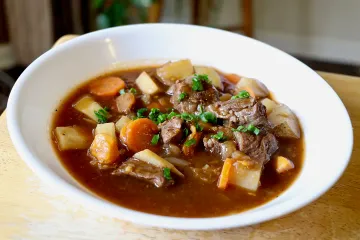
Goulash (Gulyás) is a staple of Hungarian cuisine that evolved from the simple stew cooked by herdsmen (gulyás means herdsman) over open fires centuries ago. [3][5] While often translated simply as "stew," the authentic Hungarian version is more of a hearty soup characterized by the generous use of paprika, which imparts its distinctive color and flavor. [3][5]
The primary ingredients usually include beef, onions, and, crucially, large amounts of high-quality Hungarian paprika. [3] While many international variations incorporate thickeners like flour or potatoes to make it a denser stew, the traditional gulyásleves is meant to be soupier. [3] This dish illustrates how geography dictates tradition; the cultivation of paprika in the region became central to the national flavor profile, making its absence in a true goulash unthinkable. [2]
# Culinary Lineage and Adaptation
Considering these five examples—Paella, Haggis, Sushi, Wiener Schnitzel, and Goulash—a pattern emerges regarding continuity and adaptation. While traditions are fiercely guarded, as seen with the veal requirement for Wiener Schnitzel, [3] they are never entirely static. [2] The fact that ancient narezushi evolved into modern sushi showcases a necessary flexibility for a recipe to survive centuries. [7] A helpful way to view this is not as a test of purity, but as a spectrum of authenticity. When attempting to recreate these dishes at home, one must decide where on that spectrum they wish to land. For example, if you are making Goulash outside of Hungary, sourcing true Hungarian sweet paprika is the most essential step to honor the tradition, even if local market constraints mean you use beef instead of the historical mix of meats. [2][3] This commitment to the defining flavor element is often more important than adhering to every single historical ingredient, especially when sourcing becomes difficult or expensive.
# Preserving Authenticity Locally
The study of traditional foods also highlights how global trade has complicated—and sometimes enriched—local practices. While a recipe might be inherently tied to ingredients found only in one valley, the modern cook often has to make conscious decisions about substitutions. [2]
For example, a home cook looking to make an Irish staple like Colcannon (mashed potatoes with kale or cabbage) might easily find the potatoes and cabbage, but the quality of the dairy—the butter and milk—will dramatically affect the final traditional texture and flavor profile. [1] One practical tip for anyone wanting to honor these traditions is to focus your efforts and budget on the single most defining ingredient of the dish, rather than trying to perfectly replicate every component that might rely on highly specific regional sourcing. If you are making Wiener Schnitzel, invest in the best veal you can find; if making Goulash, invest in the best paprika. This targeted approach respects the spirit of the original recipe’s necessity while acknowledging the realities of modern commerce. [3]
Another interesting point arises when comparing the resourcefulness of dishes like Haggis, which embraced all parts of the animal, with modern health-conscious trends. Many traditional diets, including those associated with many of the world’s healthiest populations, favored organ meats and nutrient-dense preparations like bone broth, which is now seeing a major resurgence. [4] This suggests that the wisdom embedded in these old culinary habits often predates our current understanding of nutrition, offering us a valuable, time-tested guide to preparing food that truly sustains us. [4] The five dishes highlighted here, from the simple rice foundation of Paella to the complex spice blends of Goulash, all serve as tangible links to the past, connecting us not just to a flavor, but to the environment and history that forged it. [2][8]
Related Questions
#Citations
117+ Traditional Dishes from Around the World - The Storied Recipe
Traditional food - Wikipedia
Traditional Food Around the World: 50 Famous Dishes You Have To ...
Traditional Foods and Their Health Benefits – Fourteen Foods to Try
What is your favorite traditional food? (preferably something simple)
What are some traditional dishes from your country, and ... - Quora
50 Traditional Japanese Foods: Top Traditional Dishes - byFood
Origins of traditional food from across the world - Explore Worldwide