Which parts of the lobster tend to cook faster than the thickest tail muscle?
Answer
The claws and knuckles
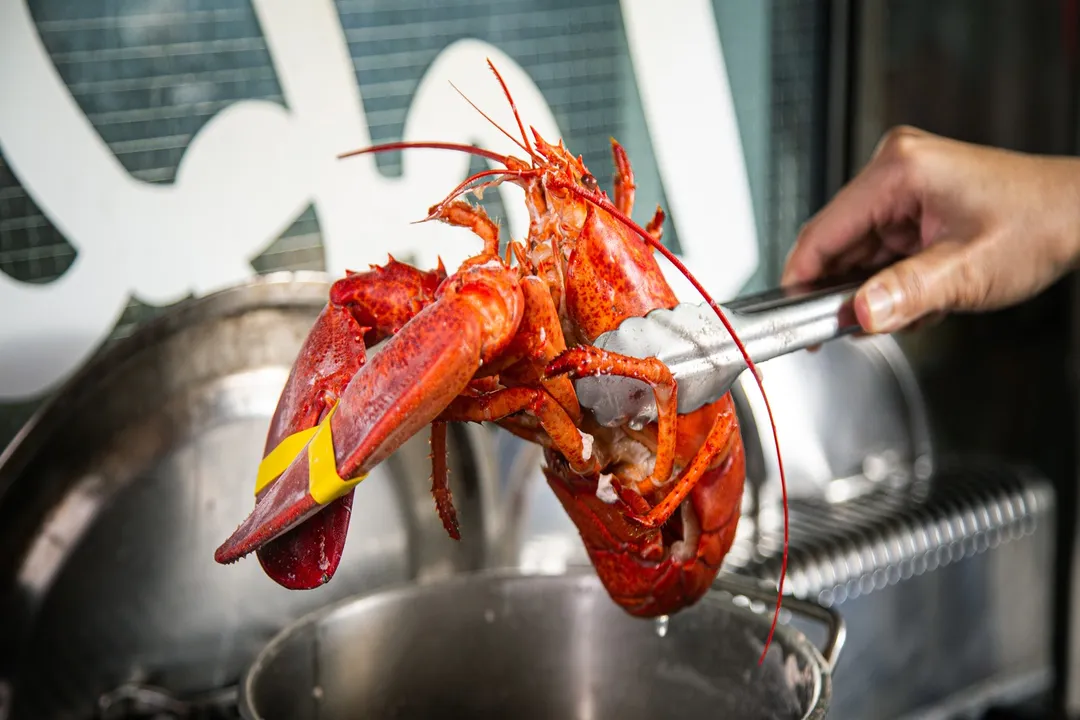
A key challenge in cooking lobster lies in the variation of muscle mass and thickness throughout the animal, leading to uneven heating rates. Generally, thinner sections and extremities of the lobster receive heat more rapidly and cook through sooner than the dense core of the main tail. Specifically, the meat found in the claws and the knuckles, which are generally smaller and less substantial than the primary tail muscle, will reach proper doneness earlier. Consequently, a diner might find that the claw meat is perfectly firm and white while the thickest part of the tail remains translucent and gummy, necessitating targeted heating or a strategy that accounts for this disparity.
Related Questions
What visual cue indicates that lobster meat has not finished cooking?What mouthfeel describes undercooked lobster meat when bitten into?What internal temperature should the thickest part of the lobster tail reach?If using a skewer, what color should the juices run to confirm full cooking?How is the texture of overcooked lobster typically described?What biological process transforms raw, transparent lobster protein into white meat?Which parts of the lobster tend to cook faster than the thickest tail muscle?What is the desired mouthfeel when properly cooked lobster meat yields?What concept allows chefs to pull lobster off the heat slightly early?What characteristic distinguishes spoiled lobster from gummy undercooked lobster?