What biological process transforms raw, transparent lobster protein into white meat?
Answer
Denature and coagulate
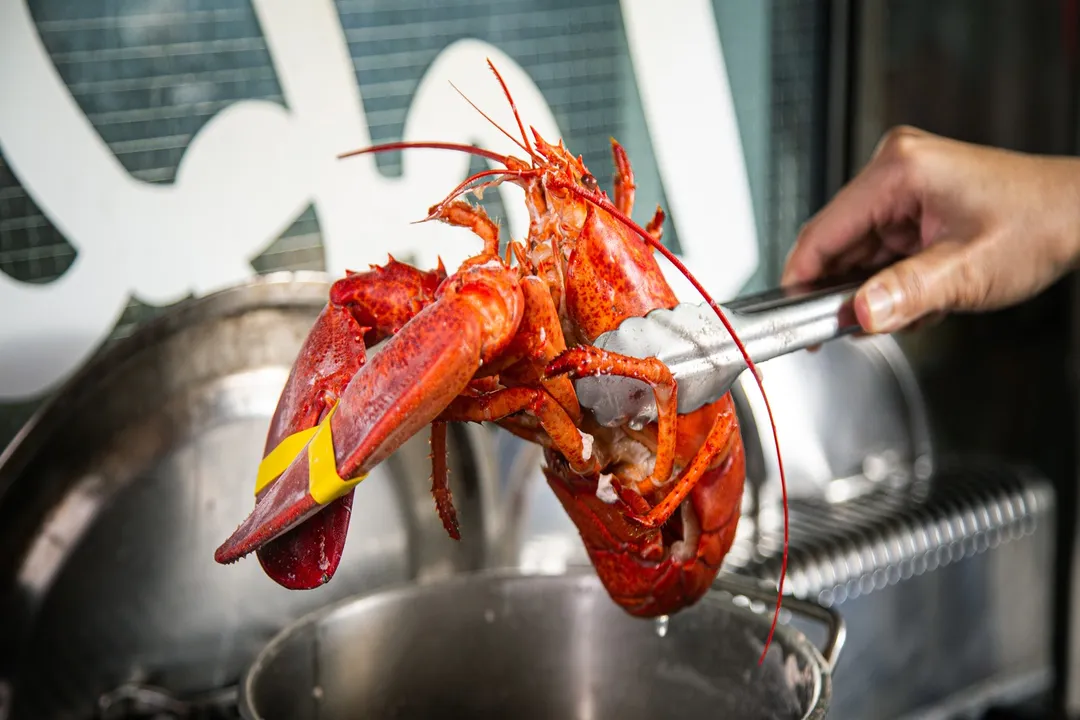
The physical change observed when cooking lobster meat is fundamentally a biochemical reaction involving its constituent proteins. In its raw state, these proteins maintain a structure that allows light to pass through easily, leading to a transparent appearance. When subjected to sufficient heat, the proteins undergo denaturation, meaning their complex folded structures begin to unwind. Immediately following this unfolding, coagulation occurs, where these unfolded protein chains link together, forming a dense, three-dimensional network. This new, stable structure effectively traps and scatters light, which is perceived by the eye as the solid, opaque white color characteristic of perfectly cooked shellfish.
Related Questions
What visual cue indicates that lobster meat has not finished cooking?What mouthfeel describes undercooked lobster meat when bitten into?What internal temperature should the thickest part of the lobster tail reach?If using a skewer, what color should the juices run to confirm full cooking?How is the texture of overcooked lobster typically described?What biological process transforms raw, transparent lobster protein into white meat?Which parts of the lobster tend to cook faster than the thickest tail muscle?What is the desired mouthfeel when properly cooked lobster meat yields?What concept allows chefs to pull lobster off the heat slightly early?What characteristic distinguishes spoiled lobster from gummy undercooked lobster?