Did Americans invent chips?
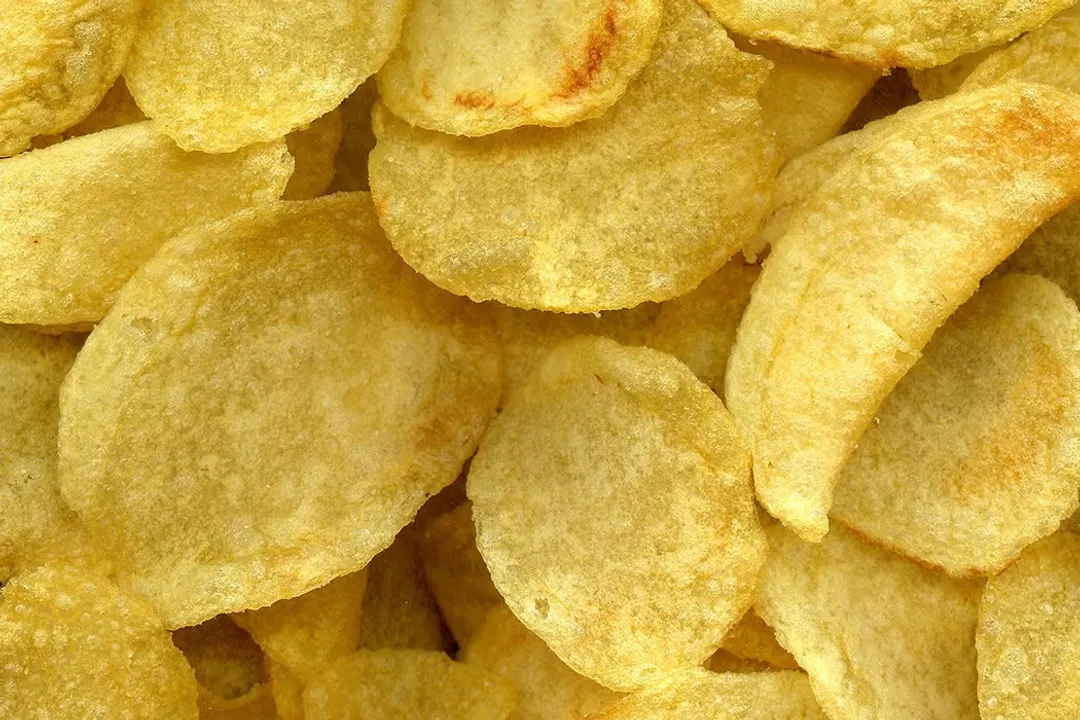
The widely accepted narrative surrounding the creation of the potato chip points directly toward a dispute over perfectly fried potatoes, taking place in a popular New York resort town during the mid-19th century. While the snack is a global phenomenon today, the origin story is deeply rooted in American culinary folklore, specifically tied to an African American chef named George Crum.
# The Famous Tale
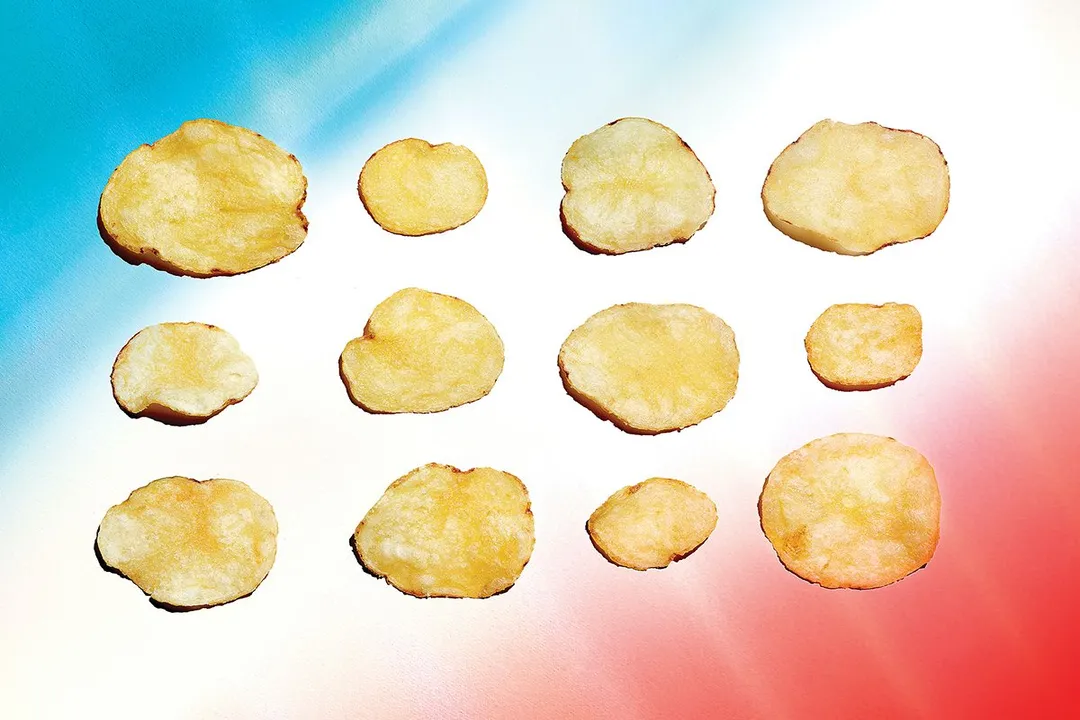
The story commonly told places the invention in Saratoga Springs, New York, during the summer of 1853. George Crum, who was working as a chef at the Moon's Lake House, allegedly faced a repeat complaint from a demanding patron. This diner, whose identity is sometimes cited as railroad magnate Cornelius Vanderbilt, repeatedly sent his plate of French-fried potatoes back to the kitchen, claiming they were sliced too thickly and not crisp enough.
Frustrated by the persistent requests for thinner slices, Crum decided to teach the customer a lesson. In an act of culinary spite, he sliced the potatoes as thin as humanly possible—so thin they could not possibly be eaten with a fork—fried them until they were crisp and brown, and then heavily salted them. The intent was to create a dish too difficult to eat, yet the outcome was the opposite of Crum's intention: the customer loved the extremely thin, crispy potatoes.
# Saratoga Springs Setting
Saratoga Springs was an important location for this alleged invention because, by the 1850s, it was a premier vacation destination, drawing wealthy patrons who expected high-quality dining experiences. The Moon's Lake House, where Crum worked, was known for its fine cuisine, making it a plausible stage for a high-stakes culinary disagreement. Crum, whose birth name was actually George Speck, was a well-regarded chef at the establishment. His heritage is noted as being part African American and part Native American, adding a unique background to the figure credited with this simple, yet revolutionary, food item.

# Doubt Cast
Despite the compelling nature of the George Crum narrative, historians and food writers often approach the story with a degree of skepticism. The tale, while popular, suffers from a lack of contemporary written evidence confirming the event occurred exactly as described in 1853. Many food historians view the story as a convenient, romanticized origin myth that was solidified over time, rather than a verified historical fact. In fact, many sources suggest that the "Crum story" became an easily digestible narrative that overshadowed the actual, more gradual evolution of the snack. The version involving Cornelius Vanderbilt is sometimes omitted or altered in retellings, further suggesting the story is apocryphal or at least heavily embellished.
# Precursors Found
The idea that Crum invented the concept from scratch is likely inaccurate when looking at culinary history preceding 1853. Thinly sliced, fried potatoes existed before Crum’s supposed moment of inspiration. The general concept of slicing potatoes thin and frying them was known in Europe, and a similar recipe appeared in an English cookbook over a decade earlier. A cookbook published in England in 1817 contained a recipe for "Potatoes fried in Slices or Shavings". Furthermore, descriptions of similar preparations can be found in French culinary texts from the early 19th century. The YouTube link associated with the topic also references a chef named Monsieur Mallard, who supposedly fried thin potato shavings in Paris decades before Crum's supposed invention, suggesting the technique was circulating.
What Crum and his establishment likely perfected was not the concept of the thin slice, but the specific style—the incredibly thin, crisp, heavily salted version—and introduced it to a high-profile American audience.

# Early Form
The very first commercially sold potato chips were not the bagged snack we know today; they were thick-cut, heavy, and sold locally. In the decades following the Saratoga legend, the snack became known as "Saratoga Chips". These early chips were often sold in barrels or tins, requiring customers to scoop out the amount they wished to buy. Because they were cooked in animal fat and lacked modern preservation, they spoiled quickly, keeping them largely a regional delicacy rather than a national product.
It is a fascinating point to consider that for nearly 50 years, this item remained largely a local specialty, suggesting that the American penchant for convenience snacking did not immediately follow the supposed invention. The speed with which we now adopt popular foods contrasts sharply with the slow drip-feed adoption of Saratoga Chips; it took decades for the innovation to move beyond that specific resort town.
# Industrial Shift
The true transformation of the potato chip from a restaurant specialty to a national commodity required industrialization and a change in packaging. This movement began in the early 1900s. One key development was the introduction of machinery that could peel and slice potatoes much more efficiently than manual labor.
However, the most critical factor for mass distribution was packaging. Early packaging, as mentioned, was problematic, leading to stale product. The game changed when Laura Scudder in Monterey Park, California, began packaging chips in wax paper bags, which kept the product fresh longer and allowed them to be shipped farther distances. This innovation, which occurred around the 1920s, moved the potato chip out of the barrels and into the hands of grocery stores nationwide. Around the same time, other entrepreneurs like Herman Lay were beginning to distribute chips regionally across the South.

# Cultural Context
When examining whether "Americans" invented the chip, we must distinguish between the initial culinary preparation and the industrialized, packaged snack that defines the product globally today. If the question is about the specific, highly salted, paper-thin slice served in a fine dining setting, then George Crum, an American chef working in America, holds the strongest claim to that specific iteration, regardless of historical debate over its precise date. If the question refers to the standardized, mass-marketed, shelf-stable product, then American entrepreneurs like Laura Scudder and Herman Lay were the inventors of the distribution system, which arguably had a greater impact on the chip's current ubiquity than the initial recipe itself.
It is worth noting the racial and cultural dimensions of the story. Crum's status as an African American chef in the 19th century—even one working in a prestigious establishment—often made his achievements harder to document and preserve accurately in mainstream historical records compared to his white contemporaries. This lack of primary documentation makes the story easily susceptible to myth-making or, conversely, easy dismissal. The fact that the story centers on a perceived slight—a customer's complaint leading to innovation—also aligns neatly with the American mythology of spur-of-the-moment, customer-driven invention.
If we look at the chronology of major American packaged food inventions, the chip's development timeline shows a fascinating lag. For instance, while the cracker industry was well-established, and even canned goods were common by the mid-1800s, the potato chip needed over half a century of refinement—both in cooking technique (like frying in pure lard versus fat that spoiled) and packaging—before it could truly flourish. This illustrates that the idea is only the first small step; practical engineering and distribution are the true engines of mass food success. Considering that the earliest known commercialization of the chip in the US seems to center around the 1890s with vendors like William Tappenden in Cleveland, this places the product firmly in the American consumer landscape long before the national brand era of the 1920s.
# Flavor Expansion
The standard chip—salty, plain—remained the dominant flavor for decades, partly due to the packaging limitations. Early wax paper bags could not contain strong aromas or moisture effectively without affecting the chip's texture. However, the next major American innovation came from Joe "Spud" Murphy in Ireland, who developed the technology to add seasoning directly to the chip during manufacturing in the 1950s. This shows that while America might have laid the foundation for the chip itself, the next significant evolution in flavor profile came from overseas, before being rapidly adopted back into the American market.
This highlights an interesting historical dynamic: the basic food format (the chip) was perfected in the US, but the flavor enhancement that made modern chip varieties possible was an international iteration that was quickly integrated. The early American chips, sold primarily in local shops, would have been made daily, likely using only salt, whereas the flavor innovation required the precise, sealed packaging that the American industrialists had pioneered decades earlier.
# Modern Consumption Data
To put the modern impact into perspective, even if the invention is debated, the scale of American consumption is undeniable. The United States stands as one of the largest markets for potato chips globally. While the initial batch in 1853 might have consisted of a single plate's worth of slices, today the industry generates billions in revenue annually, showing an exponential growth curve driven by packaging improvements and constant flavor introduction.
In summary, the evidence strongly suggests that the concept of the thinly sliced, fried potato predates George Crum in Saratoga Springs. However, the widely accepted, singular origin story—the definitive moment of creation that led to the item being known nationally as the "Saratoga Chip"—is firmly rooted in New York in the mid-19th century and attributed to an American chef, George Crum. The final, crucial step that made the chip the staple it is today—the sealed packaging—was another American innovation pioneered by Laura Scudder. Therefore, while not the world's first fried potato, the modern, commercially successful, and recognizable potato chip is an artifact of American culinary history, born from a moment of alleged petulance and refined by industrial ingenuity.
#Videos
The Fake (and real) History of Potato Chips - YouTube
Related Questions
#Citations
Who Invented the Potato Chip? - History.com
Potato chips - Wikipedia
George Crum and the Potato Chip - Saratoga County History Center
This food history Friday is also Potato Chip Day. The ... - Facebook
The Story of the Invention of the Potato Chip Is a Myth - JSTOR Daily
5 Potato Chip Legends Who Changed The Game - Wise Snacks
The Fake (and real) History of Potato Chips - YouTube
The story of how the potato chip was invented is completely fabricated.
The Curious History of the Potato Chip - Smithsonian Magazine