Where did French fries originate in America?
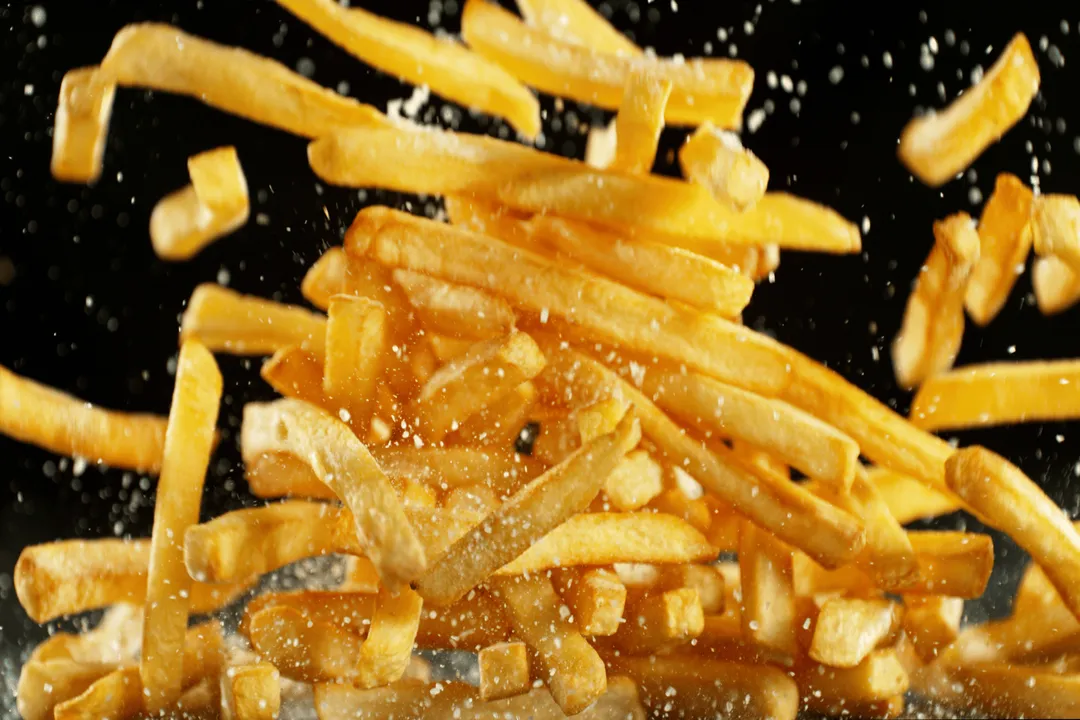
The query of where the humble potato, sliced and fried, first achieved its status as the quintessential American side dish often leads to a frustrating international argument. For many in the United States, the phrase “french fries” is simply the accepted term for the salty, crisp sticks accompanying burgers and sandwiches, a side so integrated into our dining that asking “Would you like fries with that?” has become a cultural marker. [2] Yet, the journey of this battered spud to American tables is layered with European claims, presidential dining habits, and the linguistic confusion of two World Wars. To understand its origin in America, one must first navigate the centuries-old transatlantic dispute over who actually invented the frite in the first place.[1]
# Staple Status
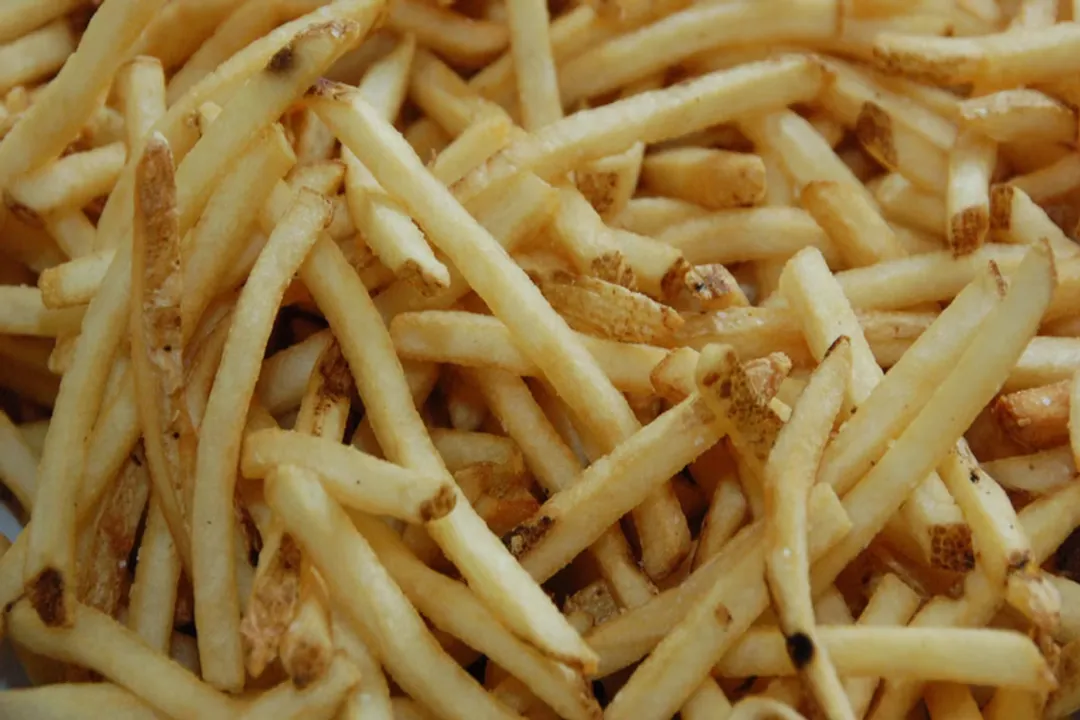
In contemporary American foodservice, the French fry is inescapable. Whether served at a diner, a pub, or a Quick Service Restaurant (QSR), the salty, hot, and fatty combination proves irresistibly popular. [2] Its economic efficiency—inexpensive to purchase, quick to cook, and easy to sell—cemented its role in the modern fast-food structure. [2] While alternatives exist, like apple slices or oven-baked versions, they fail to compete with the established favorite. [2][3] Interestingly, the average American consumes roughly thirty pounds of these deep-fried potato strips annually, showcasing an enduring national affinity. [3] However, this beloved item carries a name suggesting a French heritage, even as other nations contest the title of its birthplace.[1]
# Meuse Valley Narrative
The most persistent and detailed claim for the fry’s invention points not to France, but to the region now encompassing Belgium. [4] According to this narrative, which historians trace back to the late 17th or early 18th centuries, villagers near the Meuse Valley subsisted largely on small fried fish from the local river. [2] When winter’s frost sealed the waterways, forcing a halt to fishing, these resourceful villagers allegedly turned to slicing potatoes into the same fish-like shape and frying them in the available fat. [4] This provides a clear origin story: necessity driving culinary substitution. [2] While some historians express doubt over the historical documentation of this pre-1680 deep-frying tradition for peasant food—arguing the potato wasn't prevalent in the area until later, and peasants lacked the fat reserves to cook large quantities of potatoes—the story remains central to the Belgian claim. [1] Today, Belgium champions this heritage, hosting the world’s only French Fry Museum and consuming more fries per capita than their Gallic neighbors. [3]
# Parisian Street Food
The French counter-narrative suggests a later, more urban genesis centered in Paris. [1] This account posits that the modern deep-fried baton, or frite, was first sold by street vendors on the iconic Pont Neuf bridge around the 1780s, just preceding the French Revolution. [2][4] While references to simple fried potatoes exist in France from as early as 1775, the precise, deep-fried stick form became emblematic of Parisian street food later, in the 19th century. [1] One account traces a specific recipe for "Paris-style fried potatoes" (la pomme de terre frite à l'instar de Paris) to a Bavarian musician who learned the method in Paris in 1842 before taking the idea to Belgium in 1844. [1] In France, thick-cut fries are still known as pommes Pont-Neuf, suggesting a strong link to that locale. [1]
# Jeffersonian Introduction
Regardless of the initial European genesis—be it the frozen riverbanks of Belgium or the bridges of Paris—the fry’s path to American shores is significantly tied to one Founding Father: Thomas Jefferson. [3] While serving as the American Minister to France between 1784 and 1789, Jefferson undoubtedly encountered the dish in its European iterations. [3] Upon returning home, he is generally credited with introducing the concept to the United States. [3] Records show that in 1802, Jefferson served “potatoes served in the French manner” at a White House dinner. [1][2] This earliest American documented preparation, likely executed by his French chef, Honoré Julien, involved cutting potatoes into small slices and deep-frying them while raw (pommes de terre frites à cru en petites tranches). [1][3] The resulting shape, however, was likely not the familiar baton; a relative’s cookbook description suggested the potatoes were cut into flat rounds or "shavings round and round, as you would peel a lemon". [3]
It is worth noting the stark contrast between this initial introduction and the fry's modern status. Jefferson’s serving was part of a formal White House meal, indicating a high-end, culinary presentation associated with French refinement. [3] A single serving of a plain potato provides modest calories and is fat-free, but transforming it via the deep-fryer—as Jefferson’s chef did—and adding salt dramatically alters its nutritional profile, turning it into the high-fat, high-calorie item Americans consume today. [3] The fact that this elegant introduction did not immediately make fries a public sensation is telling; they would not gain widespread popularity in the US until decades later. [3]
# Naming the Fry
The most perplexing element in this origin story is the prefix “French.” If the frite originated in Belgium, why did the American lexicon adopt the French designation? Linguists and historians point to several possible explanations that arose between Jefferson’s White House serving and the early 20th century. [1][2]
The first printed mention of the phrase “French fried potatoes” in English occurred in 1856, long before either the World Wars or Jefferson's documented service. [1][2] Furthermore, the term “french fried” in the early 1900s was occasionally used more broadly to describe any food that was deep-fried, such as onion rings or chicken, perhaps suggesting the term indicated a method rather than an explicit origin country. [1]
The most common anecdotal explanation ties the name to American soldiers during World War I. [1][4] When the American Expeditionary Forces arrived in Belgium, they encountered the deep-fried potatoes. [4] Because French was the language spoken by the Belgian army at that time, the soldiers allegedly misattributed the dish to France, bringing the name “French fries” home with them. [1][4] This WWI association likely fueled the term’s widespread adoption in the US, eclipsing earlier, more nuanced references. [1] Interestingly, while many Americans now view this misnomer as a linguistic mistake—akin to calling Chinese checkers by its name—the Belgians often find the naming convention frustrating, as they consume more fries and boast a higher density of fry vendors per capita. [3]
The persistence of the "French" label, even when the evidence points strongly toward Belgium, suggests a powerful historical confluence in America. While Jefferson introduced the style from France, the sheer volume and cultural impact of American soldiers encountering the food during the Great War, likely in French-speaking Flanders, cemented the descriptor in the English-speaking military and then, subsequently, the general public. [1][3] It illustrates how wartime experience can override documented history in the popular imagination.
# Industrial Takeover
The final chapter in the story of French fries in America involves mass production and the rise of convenience. Though the concept was known by the late 19th century, the dish didn't become truly ubiquitous until the 1900s. [3] This change was not organic; it was industrial.
A major turning point came in the 1940s when the J. R. Simplot Company successfully commercialized the process of producing French fries in a frozen form. [1] This innovation was crucial, as the standard method requires two stages of frying for perfection: a lower-temperature cook followed by a high-temperature crisping. [1] Freezing allowed restaurants to skip the difficult, time-consuming initial blanching process. [1]
The adoption by the fast-food sector solidified the fry’s reign. When Ray Kroc’s McDonald’s contracted Simplot in 1967 to supply their frozen fries, it effectively nationalized the product, replacing the need for individual restaurants to cut and fry fresh potatoes daily. [1] This industrialization meant that the inexpensive, quick-to-prepare side could be offered consistently nationwide, driving the statistic that nearly 30% of the US potato crop went toward making frozen fries by 2004. [1] This relationship between agricultural commerce and fast-food franchising transformed the fry from a presidential novelty or a regional European street snack into a deeply entrenched American fast-food staple.
# Culinary Divergence
The American preference for fries—typically salted and dipped in ketchup—differs markedly from global consumption patterns. [3] For instance, in Belgium, fries are foundational to moules-frites (mussels and fries), often eaten with mayonnaise. [2] In the United Kingdom, the thicker-cut, traditional version is called "chips," usually served with fish. [1] Furthermore, regional American variations exist that push the definition further than a simple side. In Pennsylvania, for example, one might find chicken salad inexplicably topped with melted cheese and French fries. [3] It is a food history that demonstrates how an allegedly foreign concept can be entirely adopted, rebranded, industrialized, and then adapted to unique local tastes right here in the States.[3]
Related Questions
#Citations
French fries - Wikipedia
A Brief History of French Fries as the Ultimate Side - Pitco
Are French Fries Truly French? | National Geographic
The History of French Fries: From Belgium to America - Ms. Spudz