What does pintxos mean in Spanish?
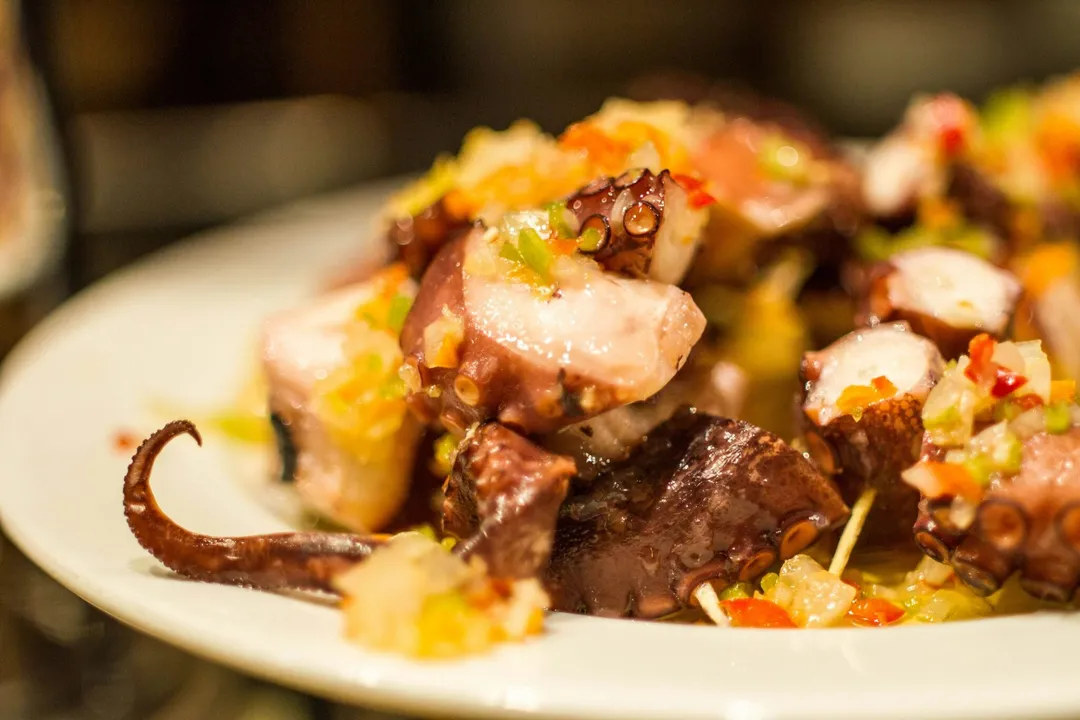
The term pintxos, often heard echoing through the bustling bars of Northern Spain, refers to much more than just a snack; it represents a distinct culinary culture and social tradition. At its most fundamental level, pintxos are small culinary creations, typically served on a piece of bread, that are pierced by a toothpick or skewer. [1][2] The very name offers a clue to its physical nature, as the Spanish word pincho translates directly to "spike" or "thorn". [1] While you might encounter simple bites like an olive skewered to cheese, the modern pintxo often presents an intricate, artistic composition that elevates the concept far beyond a simple appetizer. [2][6]
# Defining the Term
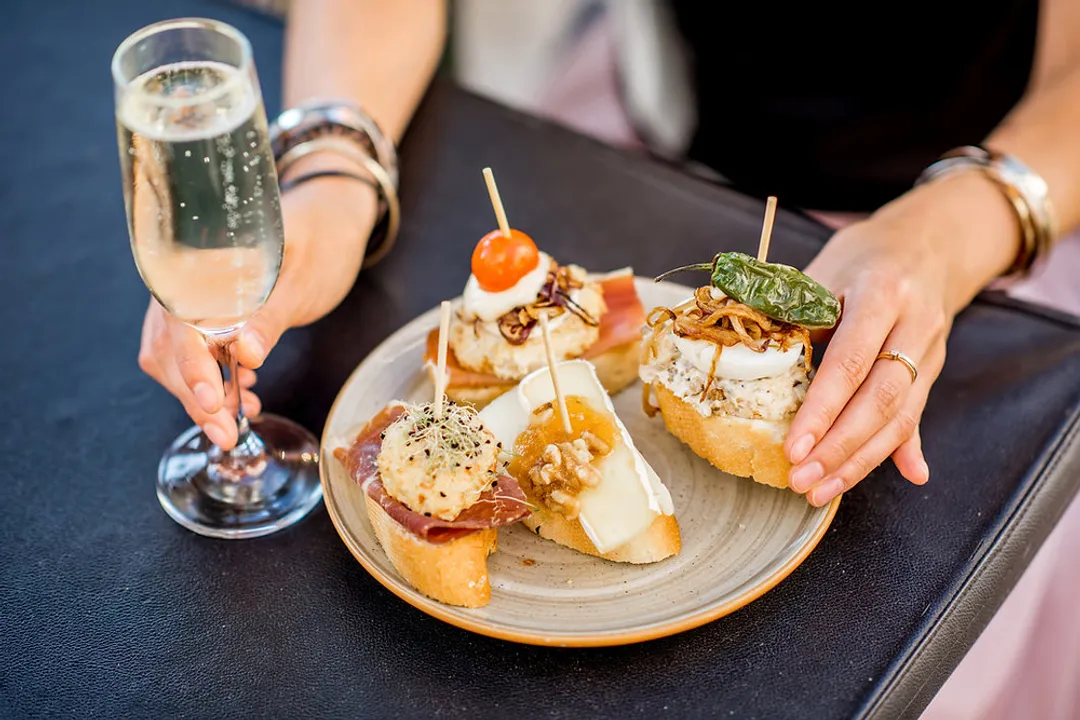
Understanding what a pintxo is requires recognizing the role of that central implement: the skewer. [1] While the food itself is the star, the method of presentation—pierced for stability and easy handling—is what gives the dish its name. [5] In many traditional settings, the skewer served a dual purpose: holding ingredients together and acting as a tally mark for the bartender. [5] When you finished eating, the bartender would count the skewers left on your plate to calculate your bill. [5] This simple physical characteristic sets the stage for the key differences when comparing pintxos to their more famous southern cousins, tapas. [7]
# Geographic Heartlands
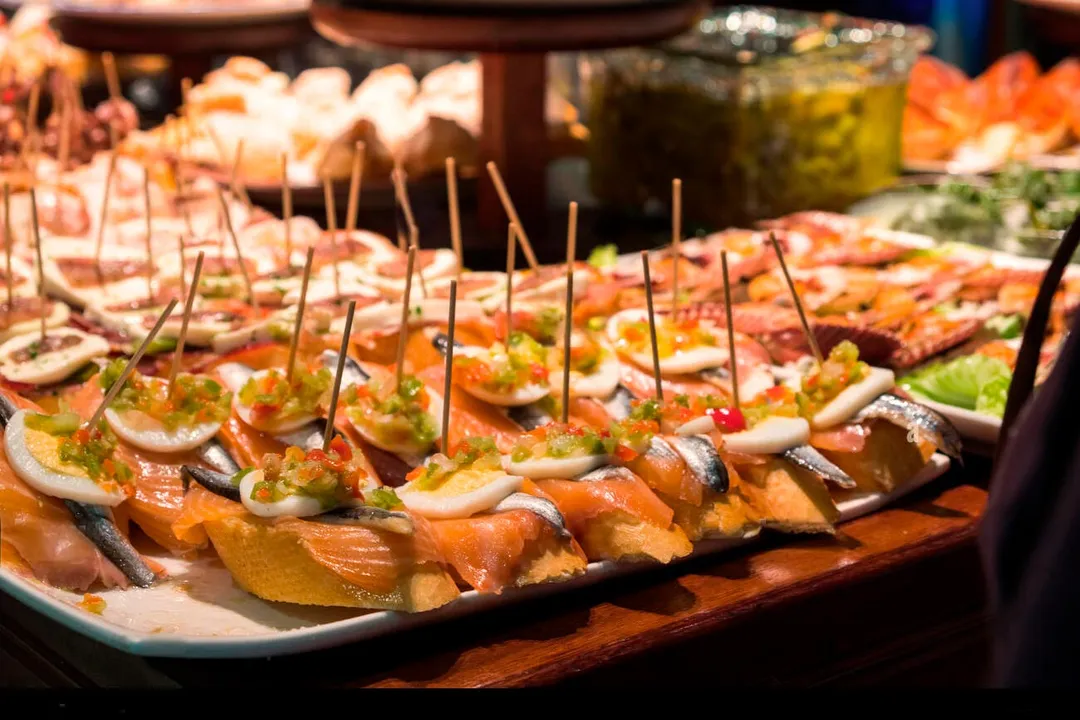
Although variations of skewered bites exist throughout Spain, the culinary phenomenon known as pintxos is most strongly rooted in and identified with the Basque Country and Navarre. [1][5] Cities like San Sebastián (Donostia) are world-renowned as meccas for this type of food culture. [5] In these regions, bars often dedicate their entire display counters to an array of these small bites, sometimes numbering in the hundreds. [6] While you can certainly find pintxos elsewhere, the concentration of quality and the intensity of the tradition are undeniably strongest in the north. [1] If you visit a pintxos bar in Bilbao or San Sebastián, you are experiencing the concept at its most authentic. [5]

# Pintxos Versus Tapas
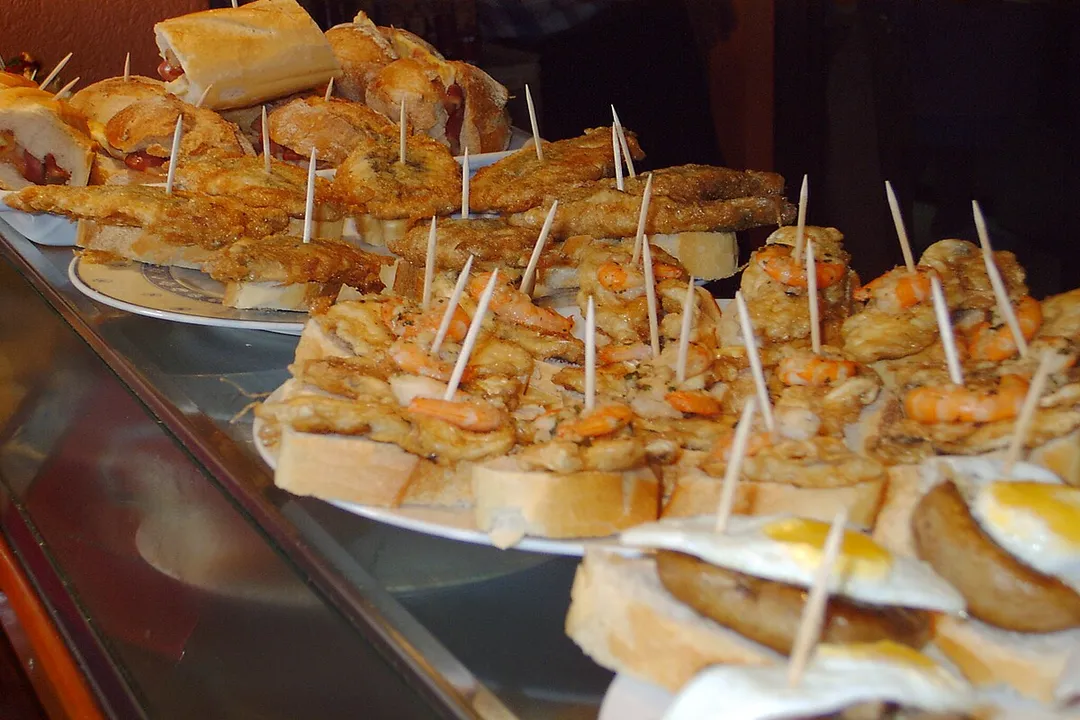
The comparison between pintxos and tapas is perhaps the most common point of confusion for visitors, as both involve small portions of food eaten standing up while socializing. [7] The primary difference often comes down to geography, presentation, and cost structure. [7]
Tapas, prevalent across much of central and southern Spain, traditionally involved a small plate of food served with a drink, sometimes offered for free, depending on the city or bar’s custom. [7] A tapa might simply be a small bowl of olives or a slice of tortilla. [7]
Pintxos, conversely, are generally presented as standalone items displayed on the bar top. [6] While they are often consumed alongside a drink, the food itself is usually priced per piece. [7] A helpful observation for the uninitiated traveler is to watch how the bill is tallied; in a dedicated pintxos bar, you often select what you want directly from the counter, and the stick or toothpick is the crucial element used later to determine the final cost, rather than the bartender guessing how many small plates you might have casually picked up. [5] Furthermore, pintxos tend to be more complex, often requiring more construction and ingredients than a typical tapa. [2][7]
| Feature | Pintxos (Basque Country/Navarre) | Tapas (Central/Southern Spain) |
|---|---|---|
| Presentation | Often skewered, elaborate constructions displayed on the bar. [6][7] | Generally served on a small plate; can be complimentary with a drink. [7] |
| Billing Method | Typically priced per item; skewer often used for counting. [5] | Varies; sometimes included with the drink cost. [7] |
| Complexity | Frequently involves multiple layers, premium ingredients, and preparation. [2] | Often simpler items (olives, nuts, cheese slice). [7] |
# Anatomy and Complexity
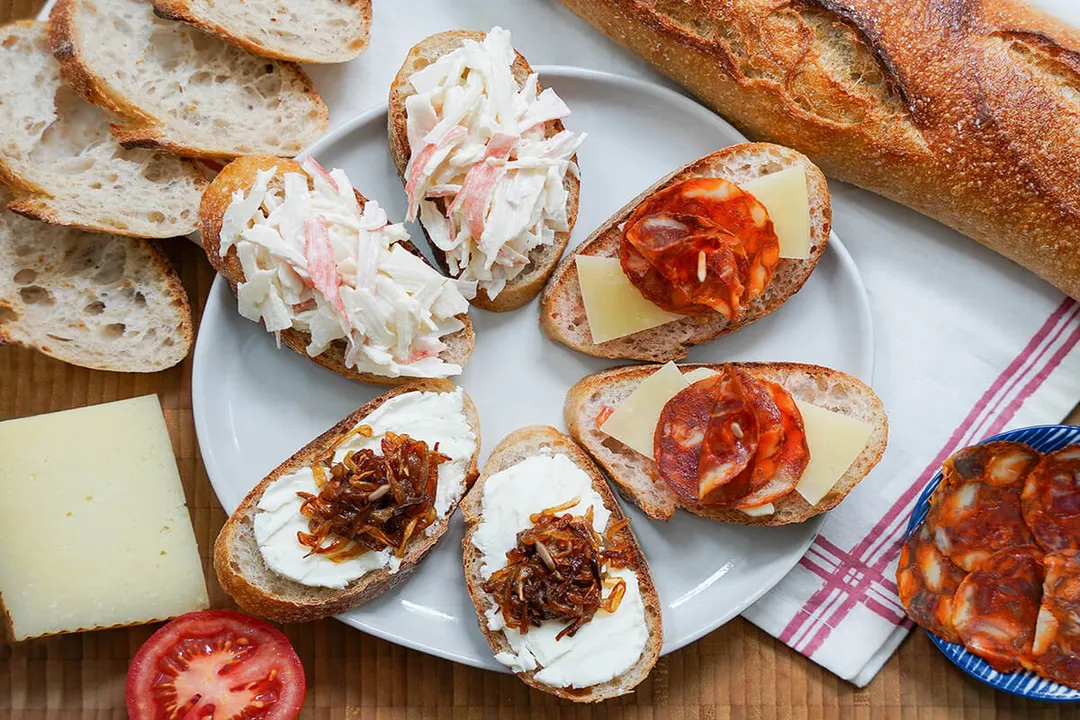
The ingredients used in pintxos demonstrate remarkable culinary inventiveness. [2] While the base is often a slice of baguette or similar bread, [2] what sits atop can range from the extremely simple to the highly sophisticated. You might find traditional pairings like cured jamón with cheese, or perhaps anchovies with peppers. [2][8] However, modern pintxos bars pride themselves on innovation, featuring everything from slow-cooked meats and seafood emulsions to miniature versions of complex main courses. [1][2] Some require only a toothpick to hold them together, [1] while others are so layered or topped that you might need a small knife and fork to manage them gracefully. [2] Interestingly, many of the cold pintxos are prepared in advance and simply kept fresh on the counter, but the best bars often feature a menu of hot pintxos made to order, similar to a sophisticated small-plate menu. [2]
# The Social Ritual
Eating pintxos is inherently a communal, mobile activity. It is less about sitting down for a long, single meal and more about a dynamic experience of movement and sampling. [6] In the Basque region, this tradition is often called txikiteo or poteo—moving from one bar to the next, sampling one or two signature pintxos and perhaps a small glass of local wine (txakoli) or cider (sagardoa) at each location before moving on to the next establishment. [6] This bar-hopping style allows patrons to experience a wider variety of bar specialties in a single evening. When navigating the crowded bars, a practical approach is to observe where locals gravitate; the bars with the longest, most vibrant displays are usually the ones worth sampling first. A general courtesy in these busy environments is to avoid lingering too long right in front of the counter if you aren't actively ordering, allowing others a chance to view the selection—it keeps the flow moving as intended. [6]
# Ordering Guidance
Navigating the ordering process for pintxos can initially feel daunting, but it usually follows a simple set of steps, though variations do exist between bars. [6]
- Grab a Plate: Upon entering, locate a clean plate, often stacked near the entrance or the start of the bar display. [6]
- Select: Take your plate and browse the offerings. You can either pick up the items yourself (especially if they are already skewered and ready) or wait for a server to assist you. [6]
- The Check: If you picked up the food yourself, make sure you keep all the used toothpicks or skewers, as these are used for billing. [5] If you ordered hot items from a menu, the server will bring them to you, and they will be rung up separately.
For the best experience, focus on the bar’s specialty items—the one or two pintxos they are famous for—rather than trying to consume ten mediocre ones. A truly great pintxos bar will have a few items that are truly exceptional, perhaps those that must be ordered hot from the kitchen, suggesting a commitment to quality over sheer volume. [2]
#Videos
What is a Pintxo? - YouTube
Related Questions
#Citations
Pincho - Wikipedia
What are pintxos? Discover Basque culture in San Sebastián
What are tapas, pintxos and cocas? - Segovia Wine Bar
What is a Pintxo? - YouTube
Pintxos: The Flavors Of Spain, On A Toothpick - NPR
What Are Pintxos Bars? - Unsettled
What is the difference between tapas and pinchos (pintxos)?
Pintxos | Traditional Assorted Small Dishes or Ritual From Basque ...
Spanish pintxos (with easy recipes) - Caroline's Cooking