What is the meaning of Chocos?
The term "Chocos" rarely presents a single, universal definition, instead acting as a linguistic chameleon whose meaning shifts dramatically based on geography, language, and context. In many English-speaking spheres, the word might be immediately associated with a specific brand of breakfast cereal, but looking toward its roots in Romance languages, particularly Spanish and Portuguese, reveals entirely different primary significations that relate far more to the sea than to the breakfast table. [2][8][9] Understanding this word requires tracing its presence across dictionaries, culinary traditions, and informal digital spaces.
# Word Origin
The root word, often seen in the singular form choco, suggests a connection to chocolate in some contexts. For instance, in English, choco can be seen as an unassimilated alteration of the word chocola, which points directly toward the cocoa product. [1] However, this chocolate association is often overshadowed when considering its usage in Iberian languages.
When looking at the plural form, chocos, the linguistic landscape pivots sharply. In Spanish, this term predominantly refers to a type of cephalopod, specifically cuttlefish. [2][3][4][6][9] This distinction between the singular choco (sometimes chocolate-related or singular cuttlefish) and the plural chocos (almost always referring to the marine animal in Spanish contexts) is an important nuance for language learners. [3][9] The presence of the term across multiple dictionary resources confirms its established, non-slang meaning in Spanish and Portuguese translation tables. [2][3][4][6][8]
# Seafood Meaning
The most concrete and widespread definition for chocos outside of cereal aisles points to the sea creature, the cuttlefish. This usage is deeply embedded in the culinary traditions of Spain and Portugal. [9]
In Spanish, chocos is the common plural term for cuttlefish, particularly recognized in regions like Andalusia. [9] For someone traveling along the southern coast of Spain, encountering chocos on a menu is not a matter of stumbling upon a rare item; it is a staple seafood offering. This is evidenced by the inclusion of chocos in various Spanish-English translation resources, often pairing it with "cuttlefish" or "squid". [2][3][4][6] Portuguese translation tools also list chocos as corresponding to cuttlefish or squid. [8]
The cultural significance of this seafood item is substantial enough to merit dedicated encyclopedia entries and popular media representation, such as cooking demonstrations found online, suggesting its importance in local gastronomy. [5][9] The preparation methods vary, but the fundamental identification remains consistent: chocos are the cephalopods themselves, not a product derived from them, which is a key difference from the chocolate association. [9]
| Language Context | Primary Meaning of Chocos | Related Term/Singular | Common Association |
|---|---|---|---|
| Spanish/Portuguese | Cuttlefish (plural) | Choco | Seafood, Gastronomy |
| English (General) | Cereal brand (often capitalized) | N/A | Breakfast |
| English (Informal) | Chocolate/Slang | Choco | Sweetness, Slang |
This localized culinary dominance offers an interesting contrast to the general English understanding. If you hear a chef in Seville order a crate of chocos, they are expecting fresh seafood, whereas a parent in London asking for Chocos is anticipating a box of grain puffs. [1][9] The context of the speaker's location instantly disambiguates the term.

# Chocolate Link
While the maritime definition holds strong sway in Iberia, the connection to chocolate cannot be entirely dismissed, especially when considering the singular choco. As noted, choco can function as a shortened or altered form of words related to chocolate. [1] This is perhaps more prevalent in regions where Spanish or Portuguese influence is less direct in daily culinary terms, or simply as a casual abbreviation.
In many casual settings, shortening words is natural, and choco serves this purpose for the brown, sweet substance. The linguistic tendency to truncate longer words into familiar, often two-syllable forms makes choco a very intuitive abbreviation for chocolate. [1] While dictionaries might formally note this relationship, it often appears more frequently in informal spoken language or branding than in formal written translation tables dedicated to standard vocabulary. [1]
# Slang Terms
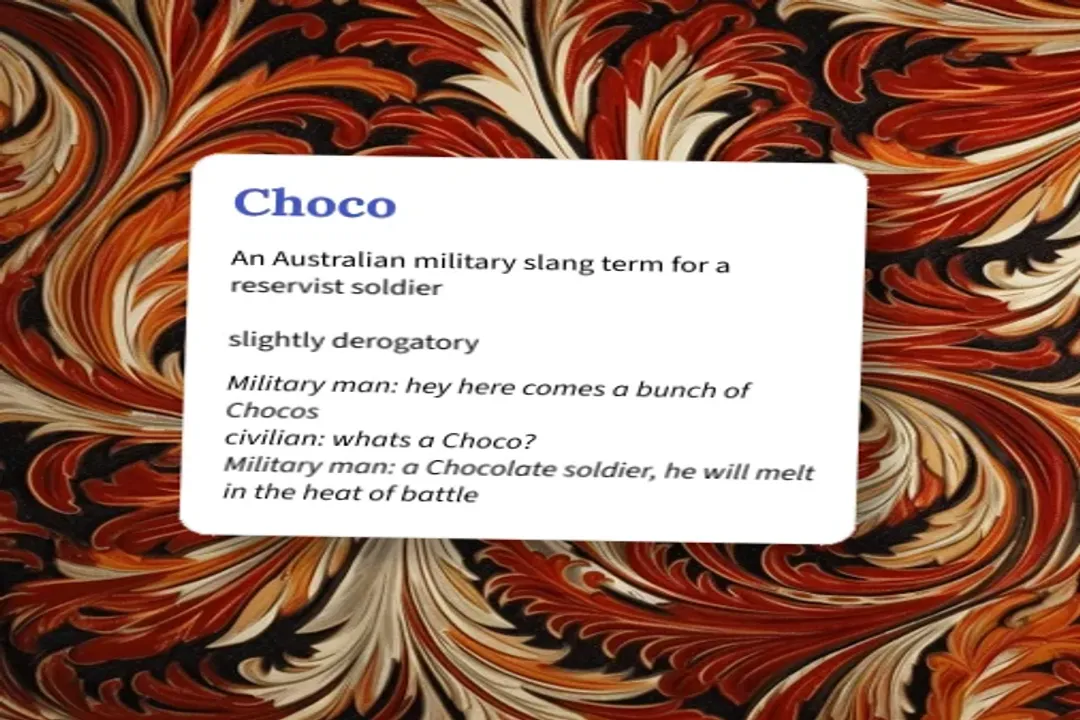
The digital age introduces another layer of meaning, often documented in user-generated slang dictionaries. Here, the term, frequently appearing as Choco in the singular, can take on various informal meanings totally unrelated to cephalopods or cocoa. [7]
These informal definitions tend to be highly context-dependent and specific to online communities or regional youth vernacular. They are characterized by their ephemeral nature; what is "cool" or meaningful on one platform today may vanish tomorrow. [7] Unlike the established culinary or linguistic definitions, which persist across decades and translation services, the slang usage of Choco serves as a marker for very specific, contemporary subcultures. For instance, one might find it used as a descriptor for a person or an object based on a shared, inside joke within a particular online group. [7]
It is worth noting that while the plural Chocos might occasionally appear in slang, the vast majority of informal definitions focus on the singular Choco. [7] This reinforces the idea that when the term is pluralized—Chocos—the default assumption in a Romance language environment should strongly lean toward the plural noun for cuttlefish. [9]

# Context Matters
The divergence in meaning highlights a significant point about language: single words, even when spelled identically, are rarely confined to one semantic field globally. The existence of three distinct, common meanings—seafood, chocolate derivative, and modern slang—means that communication relies heavily on environmental cues.
One original observation here is how the source of the information dictates the perceived importance of each meaning. A search on a major encyclopedia favors the established, verifiable entity (the cuttlefish). [9] A search on a general English dictionary points toward the shortened confectionery term. [1] Conversely, a search on a platform dedicated to contemporary slang reveals niche digital meanings. [7] A person aiming for clarity when discussing global vocabulary must first establish which "Chocos" they mean. For example, if writing a food guide for the Mediterranean, you must prioritize the cuttlefish definition, perhaps offering a sidebar clarifying that Choco can also mean chocolate elsewhere. [9] If you were designing a language app for tourists, you might create a dedicated module distinguishing El Choco (the fish) from El Chocolate (the sweet) to prevent ordering mistakes. [2][3]
Another key point of comparison is the grammatical function. In Spanish and Portuguese, chocos functions as a concrete noun referring to an animal that can be caught, bought, and eaten. [4][8][9] In English, while the seafood meaning exists, the plural is more commonly associated with a specific, branded food item, making the primary association one of commercial branding rather than raw material. [1] This difference in grammatical weight and cultural anchoring—wild catch versus processed food product—is what drives the confusion when the terms are cross-pollinated without context. The consistent documentation of chocos as cuttlefish across multiple, authoritative Spanish translation services underscores its status as the standard definition for that plural form in those languages. [2][3][4][6]
#Videos
Choco Meaning - YouTube
Related Questions
#Citations
CHOCO Definition & Meaning - Merriam-Webster
Chocos | Spanish to English Translation - SpanishDictionary.com
CHOCO | translation Spanish to English - Cambridge Dictionary
chocos - Spanish English Dictionary - Tureng
Choco Meaning - YouTube
English Translation of “CHOCO” | Collins Spanish-English Dictionary
Choco - Urban Dictionary
chocos | English Translation & Meaning | LingQ Dictionary
Chocos - Wikipedia