Is Prosecco basically Champagne?

The simple answer to whether Prosecco is essentially Champagne is a definitive no, though they share the glorious characteristic of being sparkling wine. [2][4][7] When you reach for a bottle of either, you are tapping into two distinct traditions rooted in different grapes, geography, and winemaking philosophy. [1][2][4] While both offer effervescence and celebration in a glass, treating them as interchangeable overlooks the fascinating technical and historical reasons why one is labeled Champagne and the other Prosecco. [5][7] Understanding these nuances reveals why they taste different, age differently, and command different price points. [2][4]
# Grape Source
The fundamental ingredient, the grape itself, creates the first major divergence between these two celebrated drinks. [4][5] Champagne is strictly beholden to three primary white and black grape varieties grown within its specific French appellation: Chardonnay, Pinot Noir, and Pinot Meunier. [2][5] These grapes provide the backbone for the complexity and aging potential Champagne is famous for. [4]
Prosecco, conversely, is dominated by a single varietal: Glera. [2][4][5] Italian regulations mandate that Prosecco must contain at least 85 percent Glera grapes. [2][5] Glera is known for yielding wines that are aromatic, light, and full of fresh fruit characteristics. [4] This reliance on Glera is what imparts Prosecco's signature profile of green apple, honeydew melon, pear, and sometimes white flowers or citrus zest. [2][4] The difference here is akin to comparing a white Bordeaux blend primarily featuring Sauvignon Blanc to one dominated by Sémillon—the foundational character is set before fermentation even begins. [1]
# Making Method
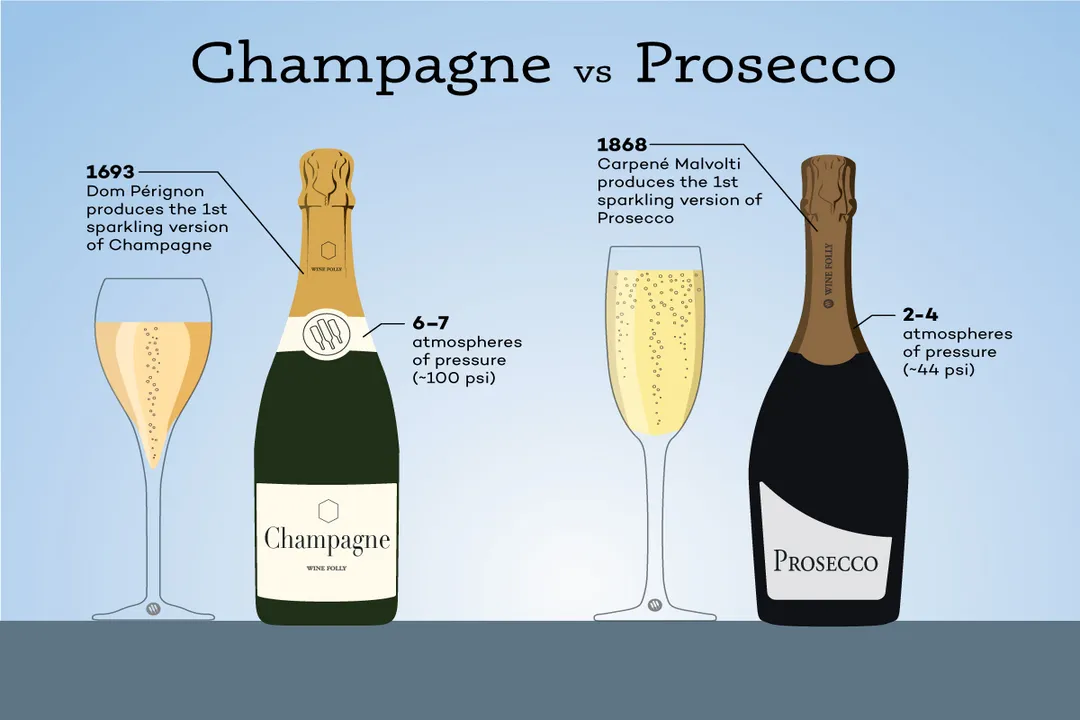
Perhaps the most significant technical difference—and the one that most profoundly affects texture, flavor, and cost—is how the bubbles are created. [4][5] Champagne is made using the Méthode Champenoise, often simply called the traditional method. [2][4][5]
This process requires the secondary fermentation, which creates the carbonation, to happen inside the individual bottle. [2][4] After this in-bottle fermentation, the wine spends time aging on its lees (dead yeast cells), which contributes to the classic biscuity, toasty, and nutty notes characteristic of true Champagne. [2][5] This hands-on, time-intensive process is a major contributor to Champagne’s higher cost and refined complexity. [4]
Prosecco, on the other hand, almost exclusively relies on the Charmat method, also known as the tank method. [2][4][5] In this system, the secondary fermentation that creates the fizz occurs in vast, pressurized stainless steel tanks, not in the bottle. [2][5] Once the desired pressure and effervescence are achieved, the wine is filtered and then bottled. [4] Because this method is faster, less labor-intensive, and requires less aging time, it allows producers to bring high-quality, fresh-tasting sparkling wine to market much more efficiently. [2] This mechanical efficiency is why Prosecco often has a more immediate, fruit-forward character, prioritizing crispness over the yeasty depth found in Champagne. [4]
# Regional Rules

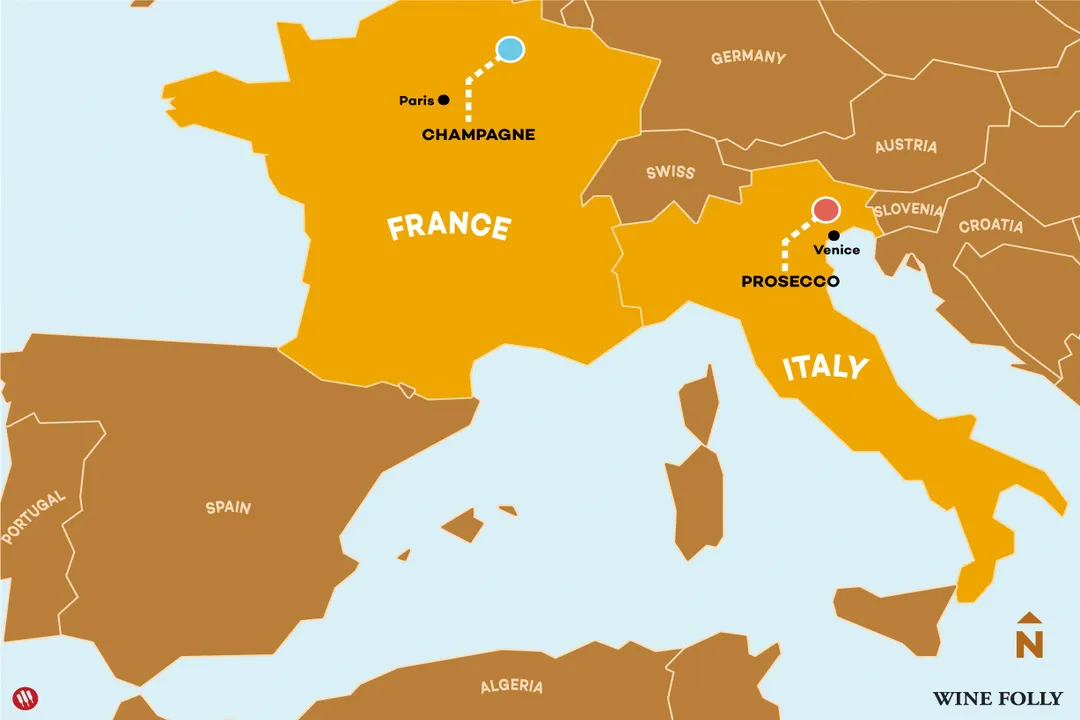
Both wines are subject to strict geographical regulations, which is why you cannot legally call a sparkling wine made in California "Champagne" or one made in the Veneto region "Prosecco" if it doesn't meet the necessary criteria. [5][6]
Champagne is intrinsically linked to its namesake region in Northeast France. [2][4][5] To carry the Champagne designation, the grapes must be grown, pressed, and bottled only within the Champagne region's boundaries, adhering to its strict rules regarding pruning, yield, and aging time. [4][6]
Prosecco hails from Northeast Italy, primarily in the Veneto and Friuli Venezia Giulia regions. [2][4][5] The highest quality tier, Conegliano Valdobbiadene Prosecco Superiore DOCG, comes from a more specific hillside area. [2][5] While the Charmat method is faster, the regulatory framework ensures that wines bearing the DOC or DOCG status maintain specific quality benchmarks for their style. [5]
# Flavor Profile
The divergence in grape and production method results in distinctly different tasting experiences. [2][4]
Champagne generally presents a richer, more savory profile. [4] You often taste notes derived from the extended contact with yeast: brioche, almond, toast, and sometimes mushroom or chalk minerality. [2][5] The bubbles in Champagne, created slowly in the bottle, are often described as finer and more persistent. [2]
Prosecco is celebrated for its brightness and immediate appeal. [4] Its primary flavors center on fresh fruit—think crisp green apple, honeydew melon, and sometimes honeysuckle or soft citrus. [2] It is generally perceived as lighter in body and texture compared to the often richer mouthfeel of Champagne. [4]
# Sweetness Misinterpretations
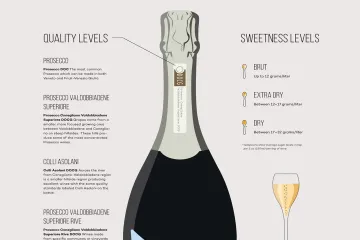
One area where the comparison can become confusing for casual drinkers involves sweetness levels, which are designated by terms like Brut, Extra Dry, or Dry. [5] It is a common, yet critical, mistake to assume that Extra Dry Prosecco is drier than Brut Champagne. [5] In fact, the sweetness scales are not aligned between the two regions. [5] For instance, a Prosecco labeled Extra Dry actually contains more residual sugar (around 12–17 grams per liter) than a Champagne labeled Brut (which typically has under 12 g/L). [5] If you prefer a truly dry, less sweet sparkling wine, look for Brut or Extra Brut in both categories, but know that Prosecco's Dry designation is sweeter than Champagne's Extra Dry. [5] This inversion of expectation can lead to surprising pairings or unexpected sips at a tasting event. [5]

# Price Point
The structural differences in winemaking directly translate to economic differences on the shelf. [2][4] The Méthode Champenoise requires significant cellar space, time (often years for non-vintage Champagne), and labor costs associated with riddling and disgorging each bottle individually. [4] This makes Champagne inherently more expensive to produce. [2]
The Charmat method allows Prosecco producers to turn grapes into finished, sparkling wine far more quickly—sometimes in just a few months. [2][4] This efficiency of scale and speed means Prosecco can generally be purchased at a substantially lower price point than its French counterpart, making it an incredibly popular choice for parties, large gatherings, or simply weeknight refreshment. [2][4] Considering the volume of production, if one were to calculate the required aging time versus the finished volume for a typical year's output, the difference in required cellar real estate alone for Champagne versus Prosecco production would likely account for a significant portion of the final price variance.
# Consumption Contexts
Deciding between the two often comes down to the occasion and desired outcome. [1] If you are looking for the absolute pinnacle of aged complexity, a bottle intended to develop further over years, or a wine to pair with richer foods like shellfish or creamy sauces, Champagne remains the gold standard. [2][4] Its structure supports significant aging and complex food matches. [5]
Prosecco shines when the goal is immediate enjoyment, freshness, and vibrancy. [4] It pairs beautifully with lighter fare, salads, appetizers, or spicy Asian cuisine, where its fruitiness and lighter body will not overpower the dish. [2] Its lively bubbles and approachable flavors make it an excellent aperitif that appeals to a broad audience, especially those less accustomed to the yeasty notes of traditional method wines. [1] Furthermore, the sheer volume of Prosecco produced means that finding a bottle for everyday consumption is rarely a challenge, unlike some prestige Champagne houses where allocation can be difficult. [2]
# Final Distinction
While both Prosecco and Champagne are exceptional sparkling wines that have defined their respective countries’ contributions to the category, they remain fundamentally distinct products. [7] Prosecco is Italian, Glera-based, and Charmat-processed, focusing on fruit-driven freshness. [2][4] Champagne is French, reliant on Chardonnay, Pinot Noir, and Pinot Meunier, and uses the time-honored traditional method to achieve layered, yeasty complexity. [5] The label on the bottle is not just a matter of pride; it is a precise indicator of the grape, the region, and the meticulous, yet different, technical processes that shaped the wine within. [4][6] They are cousins in the world of bubbles, but certainly not twins. [7]
Related Questions
#Citations
What is the difference between Prosecco and Champagne? - Reddit
Prosecco vs Champagne, What is the Difference?
Champagne vs Prosecco: The Real Differences | Wine Folly
Prosecco vs Champagne: Uncorking the Fizz without the Confusion
Prosecco vs Champagne: Key Differences & Similarities | WSJ Wine
Is Prosecco Champagne? Here's How to Tell Them Apart
Why is Prosecco often referred to as Italian Champagne even ...
What's The Difference Between Champagne And Prosecco?
Champagne vs Prosecco - YouTube
What's the Difference Between Prosecco and Champagne?