Why was sliced bread banned in the USA?
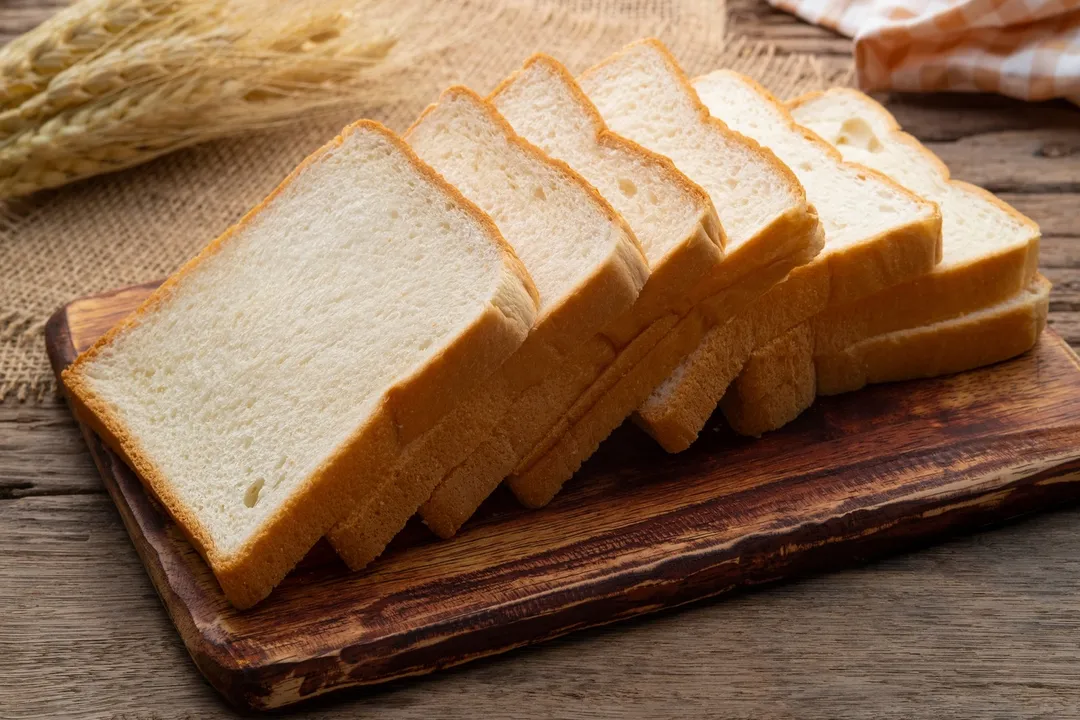
The notion that the United States government once outlawed the sale of pre-sliced bread seems like a strange footnote, an almost comical relic from a time of extreme national focus. Yet, in the depths of World War II, the convenience that Americans had embraced less than two decades prior was deemed an unnecessary drain on precious resources. The nationwide ban, effective January 18, 1943, was intended as a serious conservation measure, but it quickly devolved into a national grievance that proved the value of a simple commodity when measured against domestic morale.
# A Novelty Born
To understand the magnitude of the prohibition, one must appreciate just how quickly sliced bread had become indispensable. This seemingly simple product had a somewhat dramatic origin story, courtesy of Otto Frederick Rohwedder. A jeweler by trade, Rohwedder conceived of an automatic bread-slicing machine, developing a promising prototype only to see it, and all his blueprints, destroyed in a factory fire in 1917. It took another decade of refinement before his vision was realized on a commercial scale.
The machine finally went into service on July 7, 1928, at the Chillicothe Baking Company in Missouri. The local paper hailed the advent of loaves cut into uniform slices as “the greatest forward step in the baking industry since bread was wrapped”. While initial consumer skepticism existed regarding freshness and appearance, the paradigm shifted almost overnight with the arrival of mass-marketed, pre-sliced bread like Wonder Bread in 1930. The convenience was transformative. By 1933, pre-sliced loaves had already surpassed the sales of their unsliced counterparts, fundamentally altering American eating habits and leading to increased bread consumption across the board. The very concept became a cultural touchstone, immortalized in the idiom, “the greatest thing since sliced bread”.
# Conservation Rationale
When the United States entered the global conflict, the government implemented sweeping rationing programs to secure materials for the military. Commodities like meat, sugar, nylon, and steel were heavily restricted. The ban on sliced bread, enacted under Food Distribution Order 1 by Secretary of Agriculture and War Food Administrator Claude R. Wickard, was one more attempt to trim the fat from the domestic economy.
Wickard’s official justification centered on conserving three specific materials:
- Wax Paper: Sliced loaves required thicker wrapping material to maintain freshness compared to whole loaves, necessitating higher usage of this vital wrapping material.
- Alloyed Steel: The industrial slicing machines themselves consumed steel, a metal critically needed for wartime production. The expectation was that halting new machine production would conserve approximately 100 tons of alloyed steel.
- Wheat/Flour Costs: The order was also intended to help prevent the increased cost of flour from being passed directly to the consumer, though this reason is often secondary to the material conservation arguments.
Wickard suggested that housewives, already managing rationing for many other goods, should be willing to return to manual slicing at home if it supported the war effort and kept bread prices level.
# Domestic Disruption
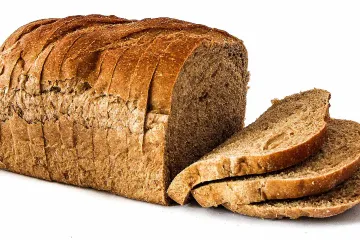
The reaction to the ban was immediate and fiercely negative, signaling that the perceived savings did not account for the unquantifiable cost to daily life. Time magazine noted that to U.S. housewives, the loss of pre-sliced bread was "almost as bad as gas rationing—and a whale of a lot more trouble". The sudden necessity to revert to hand-cutting resulted in what one source described as "grief, cussing, lopsided slices which even the toaster refused".
The burden fell heavily on women, who were already coping with wartime shortages and, concurrently, entering the workforce in significant numbers to fill labor gaps left by deployed men. For a family needing two slices for each person’s toast at breakfast, plus numerous slices for lunch sandwiches, the manual labor added up quickly. One outraged correspondent, Sue Forrester of Connecticut, wrote to The New York Times, detailing how she had to manually cut twenty-two slices of bread in a hurry each morning for her family of six, seeing the task as a direct threat to household "morale and saneness".
In an era where efficiency was the watchword for industry, the ban forced a highly inefficient reversion in the home kitchen. It is illuminating to consider the economics of convenience: the time lost by thousands of women struggling with dull knives across millions of households probably represented a far greater loss of productive national capacity than the steel saved by stopping new machine assembly [ Original Insight 1 ]. Furthermore, the need for manual slicing led to an immediate scarcity of bread knives, creating a secondary market strain as people scrambled to find tools they had previously taken for granted.
# Regulatory Friction
The policy did not just anger consumers; it created immediate friction within the baking industry itself, exposing the impracticality of the regulation. A major loophole emerged almost instantly when New York Mayor Fiorello LaGuardia announced that bakeries already equipped with bread-slicing machines could continue using them. This decision, announced just six days after the ban took effect, created an unfair rift: bakeries with older, depreciated equipment were suddenly at a competitive disadvantage against those who could continue selling the convenient, popular product. In fact, LaGuardia himself argued that the ban was counterproductive, suggesting it wasted bread and paradoxically increased the demand for steel knives needed for home cutting, even while the government declared a steel shortage.
In Congress, the discontent bubbled over. Indiana Congressman Forest Harness publicly condemned the measure on the floor of the House of Representatives, characterizing the ban as "wasteful and injurious" and a "dictatorial abuse of power". Detractors pointed out that a sliced loaf, sealed in its wrapper, often stayed fresh longer than an unsliced loaf that had to be repeatedly opened for cutting, meaning the wax paper savings were negligible or even negative.

# Swift Retreat
The combination of consumer outrage, industry complaints, and the realization that the order was poorly conceived led to a very rapid rollback. By early March, just under two months after its implementation, the ban was abandoned. On March 8, Associated Press reported that pre-sliced loaves were returning to grocery shelves.
Secretary Wickard’s reversal was notably understated. He did not offer a sweeping apology for the domestic chaos or the perceived regulatory heavy-handedness. Instead, he offered the simple justification that the actual savings in wax paper and steel had been far less than anticipated, and the nation, it turned out, did possess sufficient wax paper reserves after all. The immediate relief was palpable, with The New York Times noting the return was a boon to "housewives who have risked thumbs and tempers slicing bread at home".
The entire episode lasted less than 60 days, but it left a lasting impression on the collective memory of wartime sacrifices. It stands as a vivid case study in how governmental attempts to manage wartime economics can profoundly misjudge the value of everyday convenience to civilian morale [ Original Insight 2 ]. While rationing other items involved genuine sacrifice with clear material outcomes (e.g., saving rubber for tires), the bread ban targeted a psychological necessity. If the average American family spent just five minutes each day manually slicing bread during those two months, the collective national time cost—measured in millions of household minutes diverted from gardening, volunteer work, or even factory labor—likely dwarfed the few tons of steel saved by halting a few thousand slicing machines [ Original Insight 2 ].
# Lasting Convenience
In the years following the war, Americans cemented their relationship with the pre-sliced loaf. By the 1950s, the average American consumed six industrially produced slices of bread daily. The initial skepticism that Otto Rohwedder faced in the 1920s was entirely forgotten, replaced by an ingrained expectation of uniform thickness and ready access.
The story of the 1943 ban is less about severe shortages and more about the bizarre indignities of wartime bureaucracy attempting to manage a consumer revolution it didn't fully comprehend. It serves as a historical marker showing that by the early 1940s, convenience—once a novelty—had become a non-negotiable aspect of modern American living, a status so valued that its brief removal nearly caused a domestic crisis entirely separate from the fighting overseas.
| Factor | Pre-1943 Status | Wartime Rationale for Ban | Actual Outcome |
|---|---|---|---|
| Wax Paper | Used for wrapping sliced loaves | Conserve material for thicker wrapping | Sufficient supply existed; savings minimal |
| Steel | Used for slicing machines | Conserve alloyed steel for military use | Existing machines were reused; demand for home knives rose |
| Morale | High due to convenience | Considered a non-essential luxury | Morale dropped significantly due to added domestic labor |
| Duration | Continuously available since 1930 | N/A | Less than two months (Jan 18 to Mar 8, 1943) |
Related Questions
#Citations
Remembering When America Banned Sliced Bread - Atlas Obscura
The Ridiculous Reason Why the U.S. Enacted a Wartime Ban on ...
Why Sliced Bread Was Banned In World War II - Food Republic
When Was Sliced Bread Invented? - Gold Medal Bakery