What are some examples of local food dishes?

The world of food is an intricate map where every village, valley, and major city stakes its claim on a particular flavor profile, ingredient combination, or cooking technique. To seek out local dishes is to travel not just across geography, but through history, tradition, and community identity. These are the meals born of necessity, abundance, or cultural fusion, often remaining intensely localized even while the wider world embraces a few of their more famous cousins. Understanding these regional specialties reveals far more about a place than any guidebook can offer.
# American Roots

The United States, often casually reduced to burgers and fast food by outsiders, possesses a culinary landscape that is far more nuanced, a direct reflection of its vast geographical diversity and the waves of migration that shaped it. The foundation of American food rests with the indigenous peoples, who cultivated crops and cooking methods that persist today. Dishes like Frybread, a simple fried dough staple, and the Three Sisters Stew—named for the traditional intercropping of corn, squash, and beans—showcase early resourcefulness. The use of cornmeal remains a powerful legacy, evident in staples from the cornbread found across the South to grits, which African Americans further adapted into beloved Southern comfort food.
When European settlers arrived, they began the process of culinary translation, adapting Old World techniques to New World ingredients. This adaptation is key to understanding American food; it is rarely a direct copy of the cuisine that inspired it. For instance, while apple pie is an iconic American dessert with roots in English and Dutch fruit pies, it blossomed using locally abundant apples. Similarly, the hearty pot roast reflects British traditions adapted for American kitchens, using available root vegetables.
# Cultural Blending
The true character of American food emerges from how different cultures interacted and sometimes collided on the plate. The influence of African Americans on American cuisine is profound, establishing flavors synonymous with Southern culture. The tradition of fried chicken—specifically the "seasoned frying" technique involving marination—and the slow-cooking of hearty greens like collard greens are direct contributions. In Louisiana, this multiculturalism culminates in dishes like Gumbo, which incorporates West African use of okra as a thickener alongside French roux techniques and Native American staples. Other Louisiana icons, such as Jambalaya and Red Beans and Rice, further showcase this synthesis of African, Spanish, and French culinary threads.
Latin American flavors, particularly those from Mexico, have deeply imprinted themselves on American food, especially in border states, leading to fusion phenomena like Tex-Mex cuisine. Dishes like tacos, burritos, and enchiladas are now nationally ubiquitous, often incorporating American elements such as high quantities of melted cheese and beef, setting Tex-Mex apart from its traditional Mexican counterparts. Even Asian influences have been deeply woven in, creating entirely new local favorites. Think of Chop Suey, a classic American-Chinese invention, or the California roll, which swaps raw fish for avocado and cooked crab, creating a unique sushi variation.
It is fascinating to observe how American food culture often takes a foreign concept, strips away some of its traditional constraints, and combines it with local staples to create something simultaneously familiar and entirely novel. Take the Cuban sandwich from Florida; it’s a product of immigrant communities blending their traditional ingredients (ham, roasted pork) with local bread styles and the necessity of a pressable, griddle-cooked format. This continuous adaptation means that what a visitor eats in one American city can be completely foreign to a resident just a few hundred miles away.
# State-by-State Specificity

The granularity of American local food is staggering. While barbecue is broadly Southern, the style shifts dramatically by location—tangy, vinegar-based sauces define the Carolina style, whereas Texas leans toward slow-smoked beef brisket. [1] This ingredient focus is a direct result of the local landscape. For example, the appreciation for seafood is intense where it is fresh. The Maine lobster roll, featuring chilled lobster meat in a buttered, toasted split-top bun, celebrates the sweetness of the North Atlantic catch. [1] Conversely, the Pacific Northwest is famed for its salmon dishes, including cedar-planked or smoked preparations. [1]
This intense geographical tethering creates dishes that rarely travel well or are entirely unknown outside their immediate vicinity. Consider the Midwestern Hot dish, a casserole typically featuring ground meat, canned vegetables, and a starch binder like tater tots—a practical, one-dish meal born of convenience and cold weather, with the Tater Tot Hot Dish being a prime Minnesota example. [1]
In contrast, look at the Wisconsin Cheese Curds, which are best when eaten fresh and "squeaky," highlighting a regional dairy industry that demands immediate consumption rather than preservation. [1] This reliance on immediate availability sets a clear boundary for authenticity. A key original observation here is that the difference between American regional food often boils down to the "Three Cs": Catch, Crop, and Cattle. East Coast/Pacific Northwest specialties (clam chowder, salmon) are defined by the Catch. Midwestern dishes (Hot Dish, Sugar Cream Pie) rely on hardy Crops (corn, dairy) and ease of preservation. Southern classics (Shrimp and Grits, Fried Okra) are built upon the Cattle (pork/smoked meats for flavoring) and local growing seasons. [1] If an ingredient cannot be locally caught, grown, or easily preserved through the winter, the dish is unlikely to define a region unless it was imported by settlers, like the ingredients for Meat Loaf with Oatmeal in the Dakotas. [1]
Another compelling regional niche is the Jersey-Style Hot Dog, served with grilled potatoes, a specific combination you won't find standardized elsewhere in the country. [1] Similarly, Rochester, NY, lays claim to the Garbage Plate—a base of macaroni salad and home fries, smothered in meat sauce, mustard, and onions—a dish so specific it is often poorly replicated outside its origin. [4] Even a simple condiment can become localized; Fry Sauce, a blend of ketchup and mayonnaise, is most commonly associated with Utah and Idaho. [1] These hyper-local items represent culinary footnotes that locals cherish but which seldom make the national culinary textbook.
# Global Traditions Unveiled
Stepping away from the American melting pot reveals a world where local dishes are often deeply tied to festivals, religious ceremonies, or ancient agricultural cycles. [3] The concept of "local" expands from a state boundary to an entire nation or even a single city's traditional methods.
# Caribbean and South American Flavors
The Caribbean showcases food systems intersecting with global migration. Doubles from Trinidad, a street food made of chickpea curry between two pieces of flatbread, is cited as a dish that unites people across race and class lines. [3][4] In Puerto Rico, Pollo Frito (fried chicken without flour) offers a different preparation than its Southern US counterpart, while Haiti’s national dish is Soupe Joumou (pumpkin soup). [3] Venezuela’s Pabellón Criollo, a staple of rice, black beans, and shredded steak, grounds its national identity in simple, substantial ingredients. [3] Interestingly, the Colombian Arepa, a cornmeal flatbread, shares a conceptual similarity with the American cornbread but is distinguished by its pocket-style serving, allowing for infinite fillings like the creamy Reina Pepiada (chicken and avocado). [1]
# European Regional Definitions
Even in regions with globally famous cuisines, distinct local specialties persist. In Spain, while paella from Valencia is the iconic rice dish, other local gems exist, such as garbanzos con espinacas (chickpeas with spinach) or the lesser-known ajo blanco (a cold soup made from bread, almonds, garlic, and olive oil). [4] In Italy, while pizza and pasta dominate the international perception, true locality shines through. Naples holds the Pizza Napoletana, recognized as a Traditional Specialty Guaranteed (TSG) product, demanding San Marzano tomatoes and cooking in a wood-fired oven—a precise standard that contrasts sharply with American interpretations like Chicago’s deep-dish pizza. [1] Furthermore, in Florence, one might find lampredotto (a tripe sandwich), a dish tied explicitly to Florentine street food culture, which is virtually unknown elsewhere in Italy. [4] The comparison between Neapolitan pizza (soft, puffed crust) and Roman-style pizza (thin, crunchy) itself demonstrates that even within a single country, local variations define authenticity. [1]
Germany also shows this split. While many associate Germany with large sausages, specific regions hold their own: Swabian Maultaschen (a type of ravioli, often served in broth or fried with onions) is unique to the Swabian area. [4] In the Netherlands, the province of Fryslân offers Fryske dúmkes, biscuits flavored with anise seed. [4] The UK offers the comfort of steamed desserts like Steak and Kidney Pudding, where the pastry is steamed to a soft texture, unlike the crispy, flaky pastry of a standard steak and kidney pie. [4]
# Preserving Through Place
In regions with harsh winters, local dishes often center on preservation—curing, pickling, or hearty stewing—a contrast to the fresh, produce-forward Mediterranean diet. [3] For instance, Eastern European cuisines feature numerous cabbage preparations, including cabbage rolls and soups. [4] Poland offers Ogórkowa, a sour/pickled cucumber soup, which relies on the preservation technique of lacto-fermentation, similar to sauerkraut, to endure cold months. [4] Similarly, Norway’s Fårikål (lamb in cabbage) is a simple, heavily salted stew designed to be warming and make use of preserved meat stocks through the winter, relying only on lamb, cabbage, salt, and pepper. [4] This reliance on simple, preserved, or long-storing ingredients like root vegetables and salted meat forms a common thread among local dishes developed in colder climates, a functional necessity that became a cultural signature. [3]
# Local Culinary Diplomacy
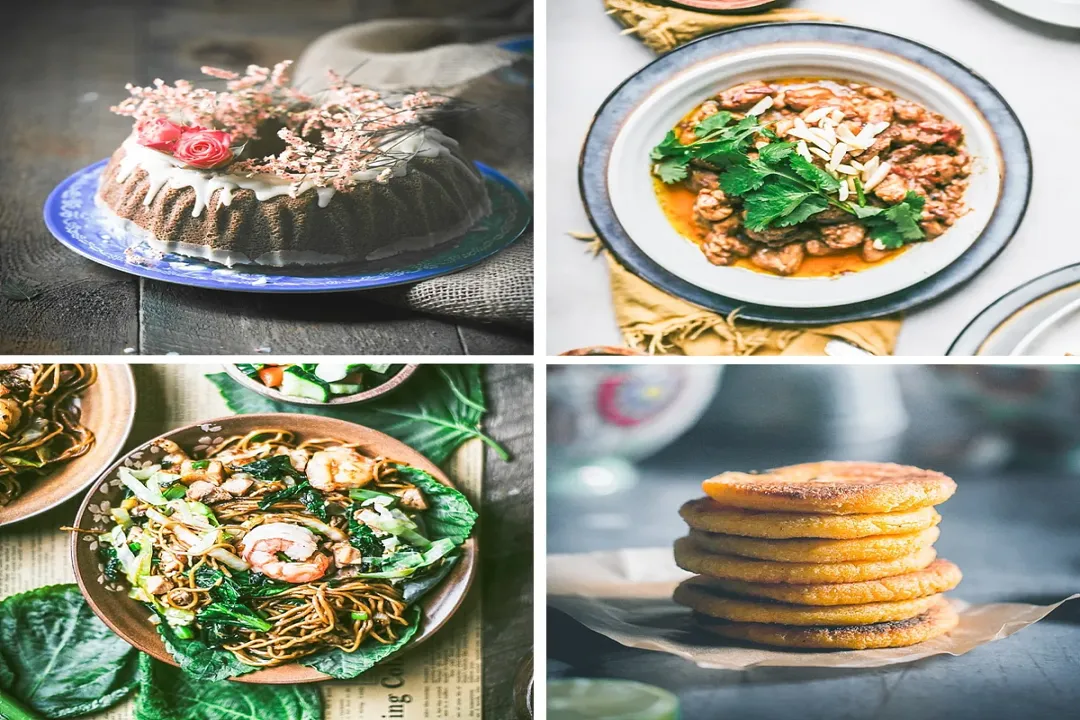
Examining the sheer variety illustrates the crucial concept that local food acts as a cultural ambassador. The presence of Chicken Tikka Masala in American menus, though originating from Indian roots and adapted in the UK, signals a global culinary exchange, yet it is the dishes not found elsewhere that carry the deepest localized meaning. [3]
Consider the Spam Musubi from Hawaii, which explicitly marries a globally available, long-shelf-life American processed food (Spam) with the local staple (rice) and Japanese influence (nori wrap), resulting in a dish that locals embrace as uniquely Hawaiian. [4] Similarly, Carne Asada Fries from San Diego or Seattle’s specific, sweet-sticky teriyaki are examples of Americanized dishes that have achieved such local saturation that they are now considered signatures of those cities, despite their hybrid origins. [4]
What defines a truly local dish is often its inaccessibility to easy replication or export. It requires a specific local ingredient, a historical context that cannot be shipped, or a community consensus on preparation. For example, the Belgian Trippe of Door County, Wisconsin, is a pork sausage fortified with cabbage, created by Walloon settlers to stretch limited pork supplies—a purpose and ingredient profile that makes it irrelevant outside that small pocket of the US. [4]
The depth of local food culture suggests a guiding principle for the curious eater: look for the dish that seems slightly inconvenient to make or source outside its home. That inconvenience often correlates directly with authenticity. [4] Whether it is the use of colatura di alici (an anchovy sauce) in coastal Italy, which carries a pungent smell that might deter an international cook, or the necessity of suet pastry for a true British steamed pudding, these hurdles are what keep the dish local. [4]
Ultimately, the examples found in every corner of the globe, from the smoky Kalua Pork of Hawaii to the sweet, dense Butter Mochi, [4] and from the smoky, subterranean preparation of Saudi Mandi cooked in the ground [4] to the simple, pure flavors of Icelandic Rúgbrauð (no-yeast rye bread), [3] all share one trait: they are food anchored to a specific place. They are history, terroir, and community served hot.
Related Questions
#Citations
The 93 Most American Recipes Ever | Taste of Home
117+ Traditional Dishes from Around the World - The Storied Recipe
Great regional dishes that are unknown to people outside the country
Traditional American cuisine: 100+ classic American foods to try
Authentic local dishes to try around the world - momondo Discover