Which is the national dish of Ireland?
The search for a single, definitive national dish of Ireland often feels like looking for a pot of gold at the end of a rainbow—everyone knows it’s there, but opinions on its precise location vary wildly. Unlike some nations that have officially declared their representative meal, Ireland’s culinary identity is rich, layered, and often defined by the region, the season, and the family table. However, through centuries of farming, famine, and cultural evolution, one hearty contender rises to the top of most lists, closely shadowed by a perennial comfort food favourite.
# Stew's Claim
The dish most frequently cited as Ireland’s national representative is Irish Stew (or stobhach in Irish). This slow-cooked, deeply warming meal speaks to the country’s agricultural history, traditionally using lamb or mutton—the more economical choice historically—alongside simple, readily available root vegetables like potatoes and onions, and sometimes carrots. Modern interpretations often incorporate beef and even a splash of local stout, such as Guinness, adding depth and a dark richness to the broth.
Its designation as the national dish speaks to its universality; nearly every household has a family recipe, passed down through generations, making it a common touchstone for many people growing up on the island. It offers a simple, honest meal, perfect for a cold day after exploring the rugged coastline or historical sites.
# Contenders for the Crown
While Irish Stew holds the top spot for many, another dish generates almost as much passionate support: Bacon and Cabbage. This combination is incredibly economical, requiring boiled bacon (a large, cured cut of pork, distinct from American-style bacon) served alongside boiled cabbage and potatoes. This pairing is so traditional that it often appears as a centerpiece meal for holidays, including St. Patrick’s Day.
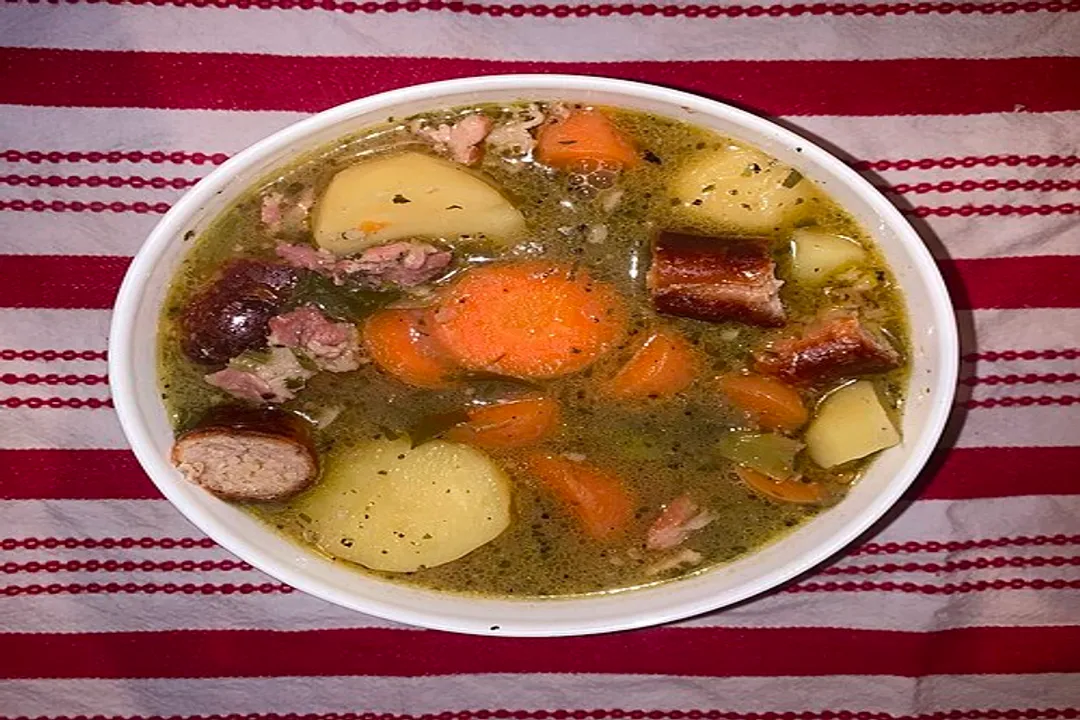
Further complicating a simple answer is the powerful presence of regional specialties. In Dublin, the dish of choice is often Coddle, a pragmatic, one-pot wonder made from leftover pork sausages, bacon pieces, and potatoes, traditionally simmered gently—a method derived from the French word caudle. Outside the capital, one might find Boxty, a potato pancake or bread celebrated particularly in counties like Cavan, Donegal, and Sligo.
The reality is that Ireland’s cuisine is marked more by its foundational ingredients and communal spirit than a single recipe. The debate over the one national dish often serves to highlight the diversity of beloved staples.
# Produce and Staples
The core of traditional Irish cooking revolves around hardy produce that thrived in the damp, temperate climate, a fact underlined by the historical agricultural focus. While many assume Ireland has always had a rich, diverse cuisine, the reality is that until recent centuries, diets were dictated by what the land could reliably offer.
The potato is arguably the single most crucial element that has defined the Irish diet for hundreds of years. After its widespread adoption in the 18th century, it became the primary caloric source for the majority of the population. This reliance made the population vulnerable, culminating in the Great Famine. This historical context shows that the humble potato, which underpins the stew, colcannon, champ, and coddle, is perhaps the most consistently central element to the working-class Irish diet across centuries, even if it doesn't constitute one singular "dish" itself.
Beyond the potato, bread is fundamental. Soda bread, made without yeast using buttermilk and baking soda, is a true cornerstone of Irish baking, providing a quick, rustic loaf that pairs perfectly with almost anything, especially soup or a bowl of chowder.
# Historical Shifts in Diet
The historical trajectory of Irish food reveals why certain modern dishes are popular while others are less common. For instance, while the island has abundant seafood, consumption is lower than in many other maritime nations. This is partly because, historically, fish was often associated with religious fasting days, and in leaner times, seafood, especially shellfish, was sometimes linked to poverty. Furthermore, during periods of English governance, Irish-owned shipping was restricted, impacting the availability of fresh fish for local consumption.
Another notable historical example concerns beef. Historically, Ireland produced large quantities of salted (corned) beef, but almost all of it was destined for export to provision navies and armies abroad. Consequently, for the mass of the local population, fresh meat became a luxury, solidifying the potato and bacon's roles as daily staples. The association of Corned Beef and Cabbage with the Irish identity is, somewhat ironically, more a feature of American Irish tradition, adopted by immigrants who had access to plentiful beef that the poor back home could not afford.
When looking at Bacon and Cabbage, the preparation itself offers a point of local clarity. The term "bacon" usually refers to larger cuts that are boiled, whereas the thinner slices ideal for frying alongside eggs and pudding are called rashers. Travelers should keep this distinction in mind; the preparation method often defines the dish, a lesson learned from necessity when flavor preservation was paramount.
# The Modern Table
The contemporary Irish table reflects this heritage while embracing global influences. Traditional dishes like stew, coddle, and the full Irish breakfast (or Ulster Fry) remain incredibly popular, often showcasing local, high-quality meats like Clonakilty sausages and puddings. However, modern life means that other foods feature prominently on contemporary tables. In recent decades, takeaways like curry, pizza, and increasingly, the Spice Bag (a bag of fried items with chips and spices), have become popular staples, particularly among younger generations, reflecting globalized eating habits. Even the simple Chicken Fillet Roll has been championed by some as a modern, if unromantic, national favourite.
Ultimately, determining a single national dish is less about picking one recipe and more about appreciating the resilience of a cuisine built upon high-quality local produce—be it the lamb in a stew, the buttermilk in a soda bread, or the potato that forms the comforting base of so many meals. The true national meal might simply be whatever is cooked with care, shared among friends, and served alongside a pint of stout.
Related Questions
#Citations
What is the national dish of Ireland?? : r/AskIreland - Reddit
Traditional Irish Food: 10 Must-Try Dishes - Insight Vacations
Traditional Irish Food - 12 must-try Irish Dishes - Hogans Irish Cottages
Irish cuisine - Wikipedia