What is shelf life vs. expiry?
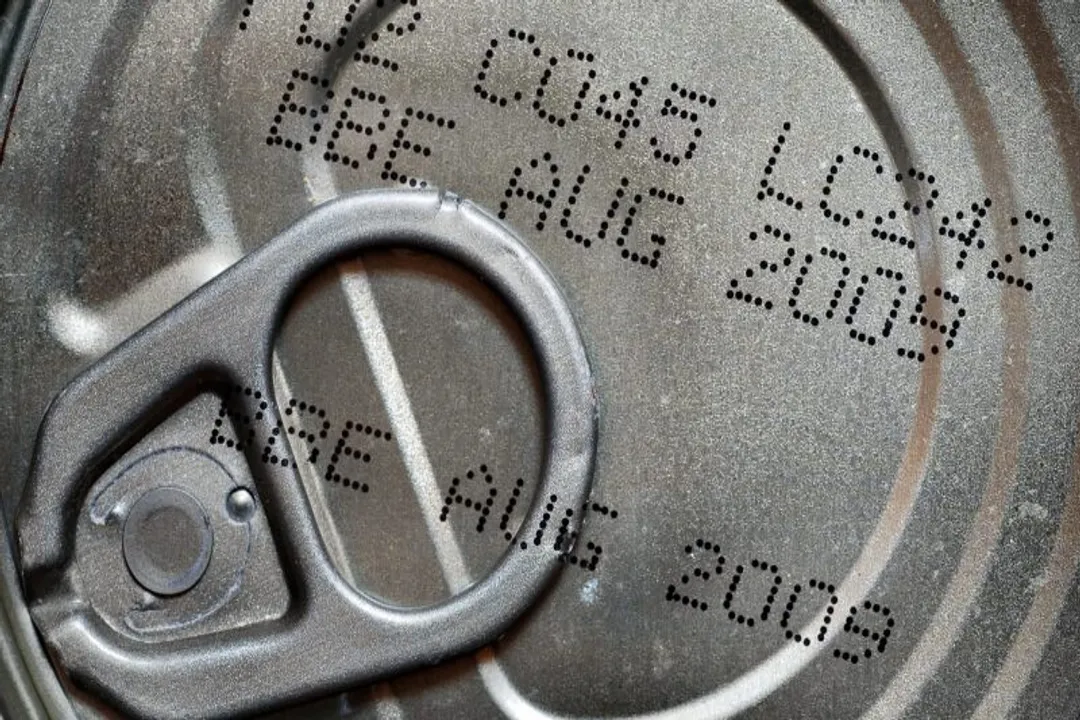
The distinction between an item's shelf life and its printed expiration date often causes confusion, yet understanding this difference is key to both safety and efficacy, whether dealing with everyday groceries or specialized laboratory reagents. While the terms are frequently used interchangeably in casual conversation, they signify separate concepts regarding product integrity over time. [2][5] Shelf life speaks primarily to quality, while the expiration date addresses the final boundary of guaranteed performance or safety. [1][4]
# Quality Focus
Shelf life describes the estimated period during which a product, when stored under recommended conditions, will retain its expected potency, quality, and performance characteristics. [4][9] This is an estimate based on stability testing performed by the manufacturer. [1] For a chemical standard, for instance, the shelf life indicates how long it remains within its certified specifications for accuracy and concentration, provided it has been kept sealed and within the required temperature range. [1]
This concept applies broadly across different product categories. In cosmetics, the shelf life relates to when the active ingredients might start to degrade, affecting texture, scent, or effectiveness, even if the product remains technically safe to use for a short time afterward. [7] For food items, a product within its shelf life period is expected to taste as intended, maintain its texture, and provide the nutritional value listed on the label. [2] It is a prediction about the product's best state. [3] If storage conditions deviate—perhaps a container is opened prematurely, or a food item is stored in a hot, humid environment—the established shelf life is immediately compromised. [9]
# Hard Deadlines
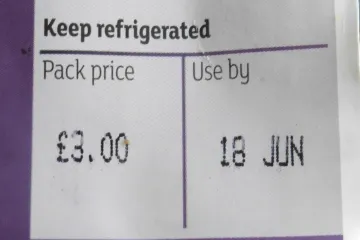
In contrast, the expiration date—sometimes labeled as "Use By"—serves as a hard deadline. [3][10] This date is the point past which the manufacturer can no longer guarantee the item’s safety or its stated potency. [4] When an expiration date is present, it usually signifies that the risk associated with continued use crosses an acceptable threshold. [2]
For chemical reference materials, the expiration date is a definitive cutoff; after this date, the material loses its certification for use in critical testing and should typically be discarded or carefully re-verified by an accredited method before any further use. [1] Similarly, many perishable foods and pharmaceuticals carry expiration dates because microbial growth or the breakdown of active ingredients poses a direct, quantifiable risk to the consumer after that specific day. [2] If a product has an expiration date, using it afterward moves the user from a realm of diminished quality into a realm of potential safety compromise. [5]
# Direct Comparison
The core difference lies in the consequence of crossing the date marker. Shelf life is generally about degradation of expected quality, whereas the expiration date is the final safety or potency anchor set by the producer. [4][5]
| Feature | Shelf Life | Expiration Date (Use By) |
|---|---|---|
| Primary Concern | Quality, potency, intended performance [1][4] | Safety and guaranteed certification/potency [2][4] |
| Nature of Boundary | Estimate; a point where quality begins to decline noticeably [3] | Hard cut-off; the final date guaranteed by the producer [1] |
| Impact of Crossing | Product may be less effective or enjoyable | Product use may be unsafe or invalid for compliance purposes [2][5] |
| Applicability | Many products, especially those sensitive to formulation degradation [7] | Highly perishable items, medicines, and certified analytical standards [1][2] |
It is insightful to note that many consumer goods carry a "Best By" or "Sell By" date, which generally aligns more closely with the shelf life concept—indicating peak quality—rather than an absolute safety expiration date. [10]
# Storage Impact
A critical, often overlooked element in this discussion is the absolute dependence of shelf life on proper storage. [9] A product’s labeled shelf life is valid only if it is stored exactly as instructed. For instance, a standard chemical solution might have a shelf life of two years when stored in a tightly sealed amber bottle in a climate-controlled environment. [1] If that same bottle is left open on a benchtop exposed to light and air for six months, its actual functional life may have ended immediately, regardless of the printed date on the label. [9]
This highlights a subtle point: shelf life is a potential, not a guarantee independent of user action. An expiration date, while still impacted by poor storage (which can hasten degradation), often represents a regulatory standard that assumes reasonable, if not perfect, conditions. [4] In a laboratory setting, understanding the difference means knowing that even a slightly cloudy chemical that is before its expiry date might have exceeded its shelf life due to improper handling, making it unfit for traceable measurement. [1]

# Consumer Actionable Guidance
When encountering a product near or past one of these indicators, consumers often face a decision point. For items marked "Best By," the quality loss is usually gradual. If your favorite cereal tastes slightly stale a week after the date, the primary concern is enjoyment, not illness, assuming it was stored correctly. [10]
However, when considering the quality vs. safety trade-off, one can develop a simple risk assessment: For ingestible items (like dairy, meats, or over-the-counter medicines) that have an explicit "Use By" or expiration date, the threshold for risk is low, and disposal is the safest path immediately after that date passes. [2] For non-ingestible items whose primary value is sensory or aesthetic—like certain paints, art supplies, or makeup that hasn't visibly separated—the assessment leans more toward the shelf life principle. If a tube of sealant is technically a month past its labeled date but remains pliable and the packaging is intact, its failure rate might still be very low, though this relies on personal tolerance for risk where performance is concerned. [7]
The context of the item dictates how strictly one must adhere to the printed marker. A highly potent pharmaceutical requires adherence to the expiration date for safety, while a less critical product allows a more nuanced interpretation based on observable shelf life characteristics.
# Chemical Specifics
The distinction is perhaps most rigidly applied in analytical chemistry and industrial standards. [1][4] In these fields, the precision matters more than taste or texture. A chemical reference standard must perform within its stated uncertainty range. If the shelf life suggests degradation over time, that degradation translates directly into measurement error. [1] If the expiration date is reached, the material is treated as uncertified because the rigorous testing required to confirm its concentration or purity is no longer valid. [9]
This area also illustrates that the shelf life can sometimes be extended through expert re-certification, whereas an expiration date, especially in regulated environments, usually requires the product to be retired entirely. [1] This capacity for re-validation only exists because the initial shelf life assessment was based on predictive models, not absolute finality, unlike the regulatory stop-sign that is the expiration date. [5]
The difference between shelf life and expiry date boils down to this: Shelf life is the manufacturer’s promise of peak performance under ideal conditions; the expiration date is the date they legally and safely step away from that promise. [4] Reading labels carefully and respecting the intended storage environment is the best practice for respecting both markers. [9]
#Videos
Difference between Shelf Life, Expiry date, Use before ... - YouTube
Related Questions
#Citations
Shelf Life vs. Expiration Date of a Chemical Standard
Shelf life vs expiry date: Do you know the difference between the two?
What is the difference between shelf life and expiration date - HiNative
Shelf Life & Expiration Date - U S Chemical
What is the difference between the shelf life and the expiration date?
Expiry date vs. shelf life The expiry date is always clearly ... - Instagram
Are "shelf life" and "expiration date" the same thing? : r/beautytalkph
Difference between Shelf Life, Expiry date, Use before ... - YouTube
Shelf life vs Expiration date | The Quality Forum Online
Shelf life vs. expiration date on medication: NetWellness