What is the shelf life?
The concept of shelf life touches nearly every purchased item we bring into our homes, laboratories, or workplaces, representing a fundamental measure of quality retention over time. [1][6] It is essentially a defined period during which a product is expected to remain suitable for its intended use, provided it is stored correctly. [1][8] While most people associate the term with groceries and knowing when to toss the milk, its application spans everything from perishable food to highly precise chemical reagents and even military equipment. [3][4][8]
# Defining Terms
At its simplest, shelf life denotes the length of time a specific product remains within its acceptable parameters before its quality or safety begins to decline unacceptably. [9] Different authoritative bodies offer slightly nuanced definitions depending on their context. For instance, general dictionary definitions often frame it as the time a product remains fit for sale or consumption. [2][6] The Cambridge Dictionary specifies this time frame for food and drink, during which they will retain their expected sensory properties, like flavor and texture. [6]
The perspective shifts significantly when examining specialized fields. In contexts managed by defense or logistics organizations, shelf life can refer to the duration a piece of materiel or equipment can be kept in storage before it requires mandatory inspection, servicing, or reconstitution to ensure it is fully functional. [8] This highlights that the parameter being measured—taste, potency, or mechanical reliability—dictates the term's practical meaning. [4][8]
It is also important to recognize that shelf life is not an absolute, universally fixed number; it is contingent upon the storage environment. A product stored in a cool, dark, dry place will invariably outlast the same product left on a sunny windowsill or in a humid basement. [5][10] The stated shelf life is almost always based on ideal, recommended storage conditions. [4]
# Food Dates
When dealing with food, the language surrounding shelf life becomes highly specific, often leading to consumer confusion regarding safety versus quality. [7] Regulatory bodies and industry groups work to clarify these labels because mishandling food dates is a major contributor to avoidable household waste. [5][9]
# Safety Versus Quality
In many regions, food labeling distinguishes between two primary indicators that relate to shelf life: the "Use By" date and the "Best Before" date. [7]
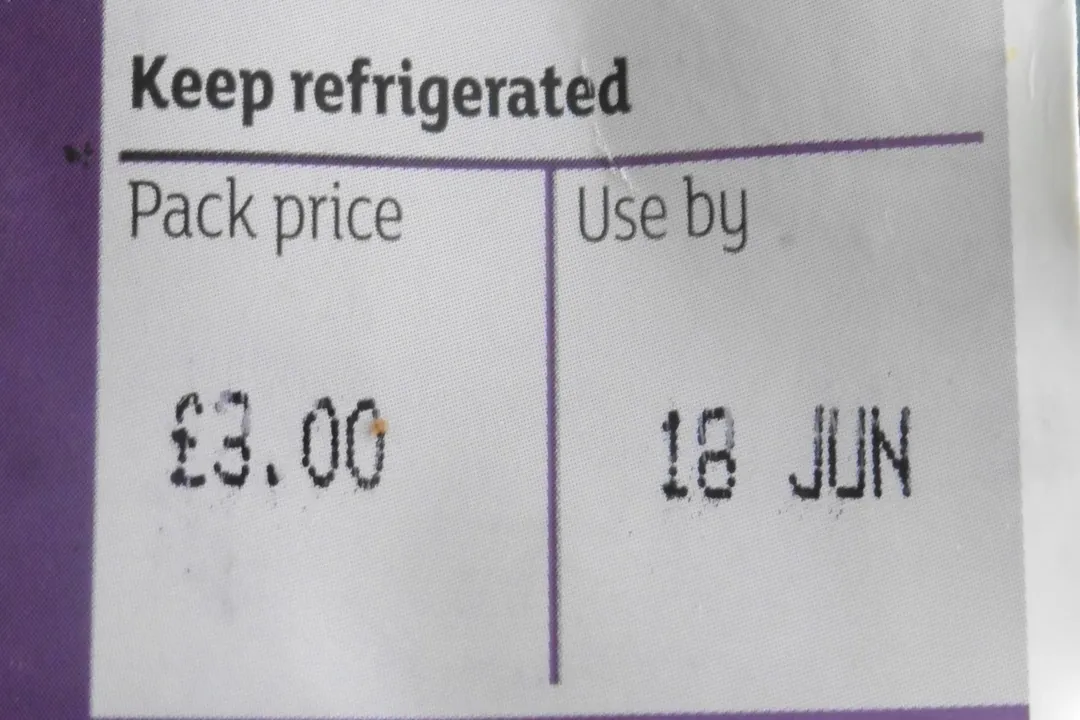
The Use By date is strictly tied to safety. Once this date passes, the food item may pose a health risk due to potential microbial growth, even if it appears or smells fine. [7][5] This date is most commonly found on highly perishable items, such as fresh meats, dairy products, and ready-to-eat meals. [5][7] For these products, the time frame reflects the manufacturer’s assurance that the item is safe to consume up to and including the date listed, assuming cold chain integrity has been maintained. [5]
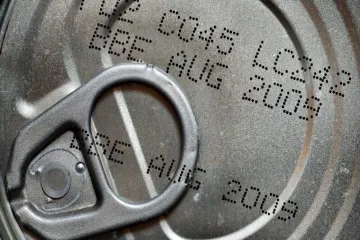
Conversely, the Best Before date relates to quality, not immediate safety. [7][6] A product purchased after its Best Before date is usually still safe to eat, but it might have lost some of its desirable characteristics. For instance, frozen vegetables might become slightly freezer-burned, or crackers might become stale. [7] The manufacturer is guaranteeing peak sensory performance up until this date. [6]
When considering refrigerated items, such as those regulated by the Chilled Food Association, the storage parameters are even tighter, making adherence to these dates more critical because the growth rate of spoilage organisms is accelerated at warmer temperatures. [5]
# Chemical Stability
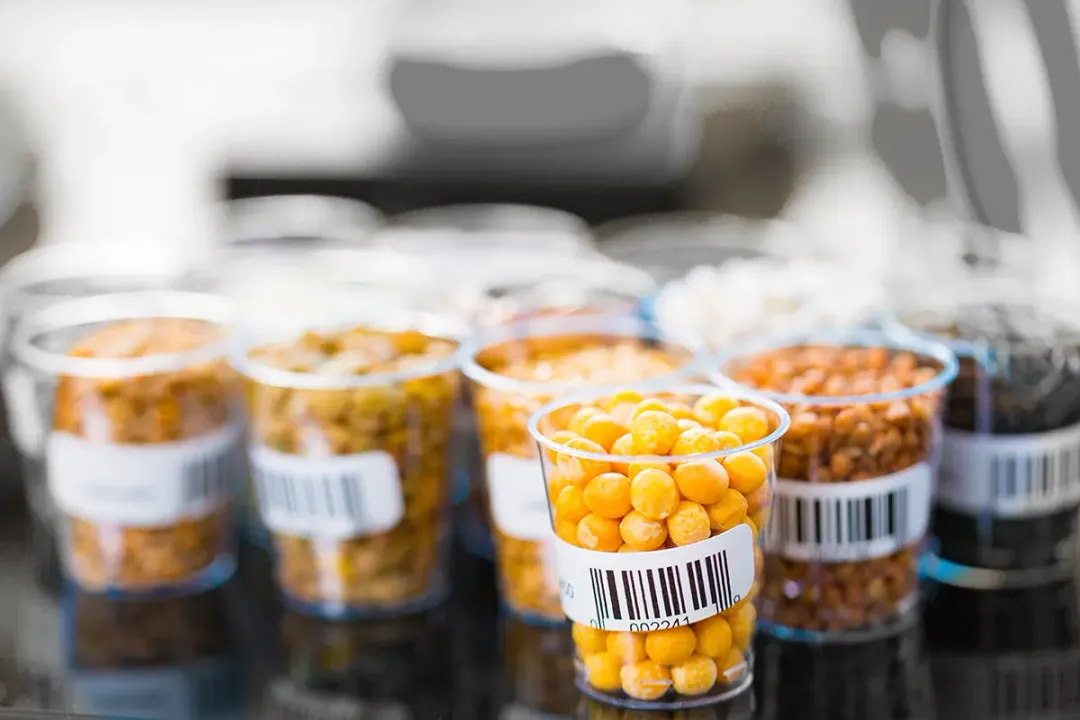
Moving away from the pantry, the concept of shelf life is formalized and rigorously tested in analytical and chemical contexts. [4][10] Here, the stakes are less about immediate physical wellness and more about the accuracy of measurements or the reliability of reactions.
For a chemical standard—a solution used to calibrate instruments or verify analytical methods—shelf life is the period during which it maintains its certified concentration or assay within a specified tolerance. [4] If a standard is certified to be , its shelf life ends the moment testing confirms it has drifted outside that range, regardless of how long it has been sitting on the shelf. [4] This requires ongoing stability testing, where samples are monitored over time to establish the degradation rate and, consequently, assign an accurate shelf life. [4]
It is common for manufacturers to assign an Expiration Date rather than a shelf life to these chemical products. [4] While often used interchangeably by consumers, an expiration date generally signifies the final day a product is guaranteed to meet its full specification, often leading to immediate disposal or reprocessing. [4] A shelf life, in contrast, often implies a period followed by a re-qualification period, especially in material science where items can sometimes be re-tested and re-certified if they remain visually sound. [8] The integrity of the chemical formulation, influenced by factors like hydrolysis, oxidation, or photo-degradation, must be guaranteed for that specified time. [3][10]
# Product Integrity
The overarching reason for defining and adhering to shelf life across all industries relates directly to product integrity. [9] When integrity is lost, the consequences vary widely in severity.
For a consumer product like shampoo, integrity loss means the emulsion separates, or the scent fades—an inconvenience. [9] For a batch of sterile medical supplies, integrity loss means sterility is compromised, posing a direct threat to patient health. [3] For industrial goods, it might mean lubricants break down, causing catastrophic machinery failure. [8]
Ultimately, trust is built on reliability. [9] When a company reliably marks a product with a time frame, they are placing a measurable commitment in front of the customer. [4] Deviating from that commitment damages the relationship between the producer and the end-user, often leading to product returns or brand abandonment. [9]
For consumers navigating the grocery store, understanding the relationship between storage and shelf life offers practical control. While the date printed on the yogurt container is calculated assuming it stays refrigerated (perhaps ), if you buy it, drive home in a hot car for 45 minutes, and then place it in a refrigerator set to , you have effectively used up a portion of its calculated shelf life before you even opened the door. [5] The duration begins counting down from the moment it leaves the controlled environment of the manufacturer or distributor. [5]
If we consider the typical lifespan of a common household staple, like canned beans, the chemical shelf life based on guaranteed nutrition and texture might be two to five years. [1] However, in a scenario where a household focuses intensely on preparedness, understanding that the safety aspect might extend almost indefinitely (provided the seal remains intact and no botulism-inducing swelling occurs), while the quality—the texture and flavor—will degrade noticeably after the initial five-year mark, helps in prioritizing consumption. The usable life extends far past the printed date, but the optimal life does not. [7]
# Assessing Decline
One critical point often missed in simple definitions is the difference between the rate of decline and the tolerance threshold for that decline. [4] Consider two items: a bottle of highly purified water and a bottle of Vitamin C tablets. Both have a shelf life.
The highly purified water's primary shelf life concern is container leaching or gas exchange; its chemical composition changes very slowly, meaning its shelf life might be determined by the packaging material failing, not the water itself. [10]
The Vitamin C tablets, conversely, degrade through oxidation. Their shelf life is determined by how quickly the active ingredient () breaks down. If the manufacturer allows for a $10%$ potency loss before marking it expired, that is their threshold. If a consumer decides $20%$ potency loss is acceptable for their needs, they have effectively extended the personal shelf life, even though the product has officially failed the manufacturer's specified life. [6][4] This subjective acceptance of decline is what differentiates typical food consumption from strict laboratory application. [4]
To put this into practical terms for the home, think about how you manage pantry rotation versus medicine cabinets. For food, which degrades variably based on ambient kitchen conditions, a first-in, first-out (FIFO) system based on the printed date is standard practice. For medicines, where potency failure can have serious consequences—especially for antibiotics or cardiac medications—adherence to the printed date is essential, as the degradation curve is steep and safety standards are non-negotiable. [3]
When assessing items that have passed their recommended date, adopting a structured evaluation process can prevent unnecessary waste while guarding against risk. This goes beyond simply smelling the milk.
# Home Assessment Checklist
Here is a framework to apply when evaluating items nearing or just past a printed date (excluding high-risk items like raw meats or infant formula, which should always be discarded if past their Use By date):
- Examine the Container: Check for any signs of compromise. Does a can show any swelling, denting, or rusting? Is the seal on a jar intact (the "pop" when opened)? If a plastic container is warped or has visibly absorbed moisture, the integrity is lost. [5]
- Evaluate Appearance: Look closely at the contents. Are there unexpected color shifts (e.g., greening, browning beyond expected aging)? Is there mold growth, even on the surface of dried goods? For liquids, has separation occurred that cannot be rectified by simple shaking?[7]
- Test Sensory Indicators (Smell/Texture): If the visual inspection passes, move to smell. A rancid or sour odor in fats, oils, or dairy is a clear failure indicator. For dry goods, a lack of expected aroma (like coffee or spices) signals quality loss even if safety remains. [6] For texture, test a small amount if safe—is the bread rock hard, or are crackers gritty?[7]
By applying these layered checks, you are assessing the three main failure modes of shelf life: container failure, visible spoilage, and unacceptable quality degradation—a more thorough method than relying solely on the number printed on the label. [9] The longevity of any stored item is truly a function of its initial quality multiplied by the consistency of its storage environment. [4][10]
Related Questions
#Citations
Shelf life - Wikipedia
SHELF LIFE Definition & Meaning - Merriam-Webster
Shelf Life - an overview | ScienceDirect Topics
Shelf Life vs. Expiration Date of a Chemical Standard
Shelf life - Chilled Food Association
SHELF LIFE | definition in the Cambridge English Dictionary
Shelf-life: Best before and Use by Dates
Shelf Life | www.dau.edu
What's Shelf Life & Why It's Important - Siena Development
[PDF] A Shelf Life Guide